
How the Titans moved forward in building the AI foundation.
Introduction
What if the government stripped away all legal shields for artificial intelligence, leaving tech companies fully liable for every copyright leak, algorithmic glitch, or harmful output? While most startups would panic, elite enterprises see this as the ultimate opportunity to wipe out the competition. This lesson explores how to build a multi-layered, ten-year defensive architecture to survive and dominate in a world without federal liability protection.
By completing this lesson, you will be able to:
Explain the strategic shift from passive AI protection to absolute structural control.
Identify the four key phases of a long-term corporate AI defense strategy.
Understand how upfront data sovereignty eliminates copyright infringement at the root.
Describe how semantic triage and custom risk pools protect enterprises from both human instability and financial ruin.
Phase 1: Sovereignty of Source Data
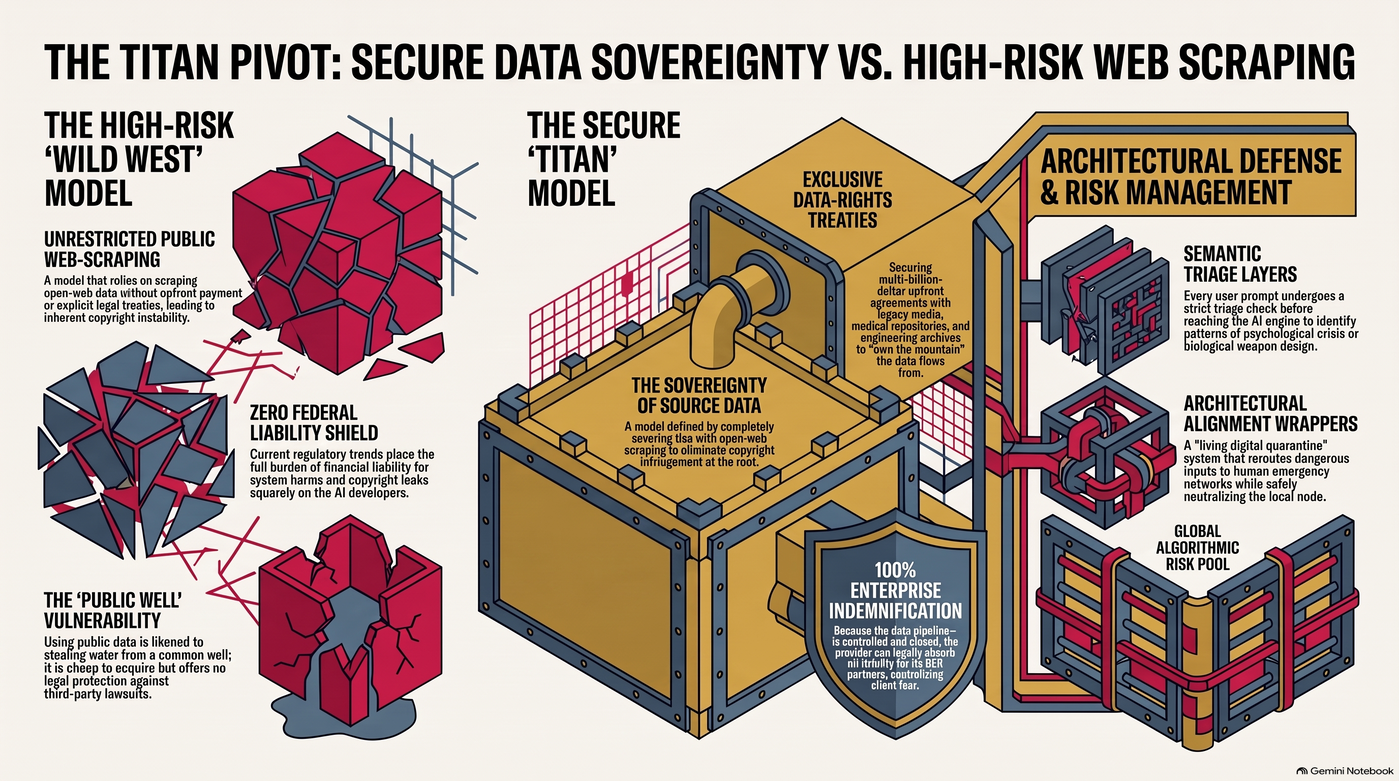
The era of the "wild-west" internet scraper is rapidly coming to an end. Scraping public websites for training data is a legal minefield, leaving companies highly vulnerable to massive copyright infringement lawsuits.
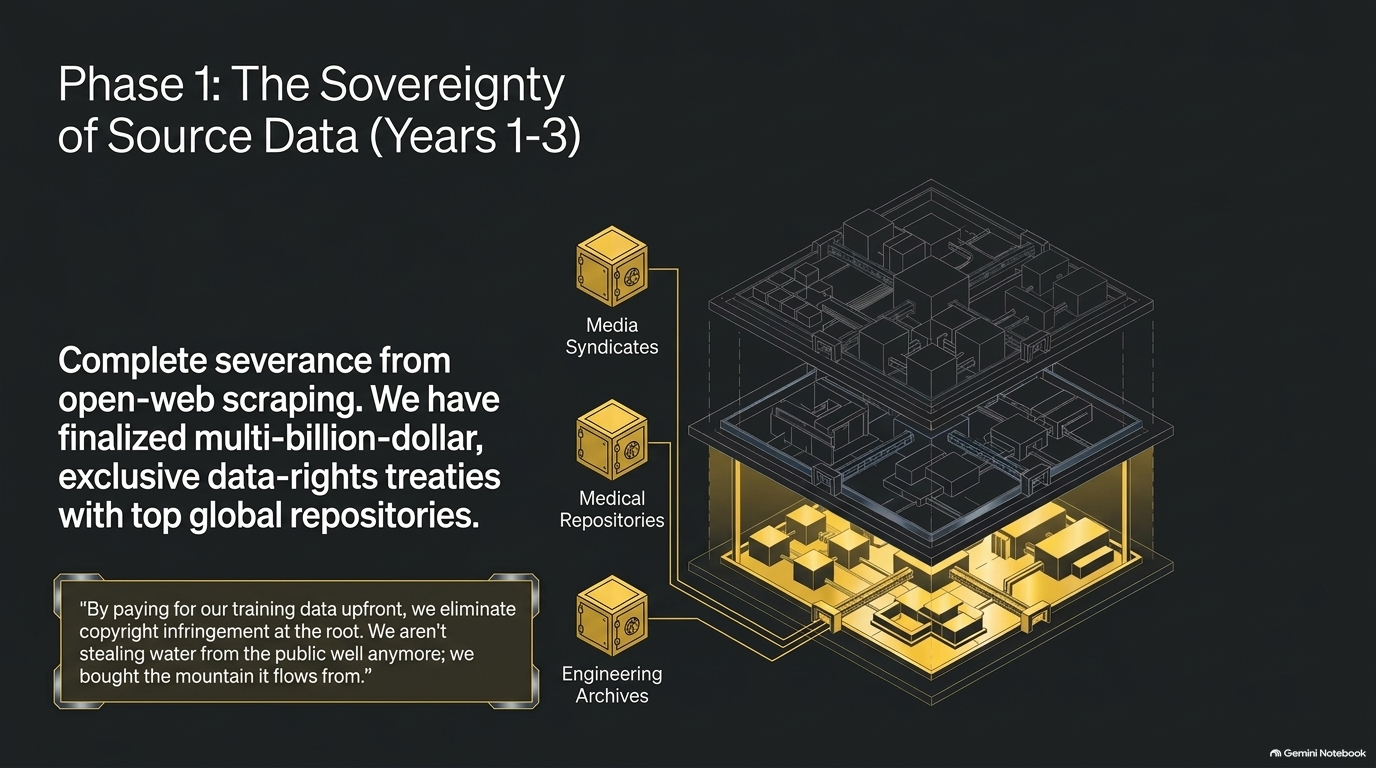
To neutralize this risk, an enterprise must shift to The Sovereignty of Source Data. Instead of scraping open-web data, companies must secure exclusive, multi-billion-dollar data-rights treaties directly with legacy media syndicates, medical repositories, and engineering archives.
Analogy: Think of it this way: You aren't stealing water from the public well anymore; you bought the mountain it flows from. By paying for training data upfront, you eliminate copyright infringement at the root.
Phase 2: Enterprise Indemnification Guarantees
Even if your data pipeline is pristine, corporate B2B clients are often terrified of using generative AI because they fear third-party lawsuits. How do you bypass this psychological barrier?
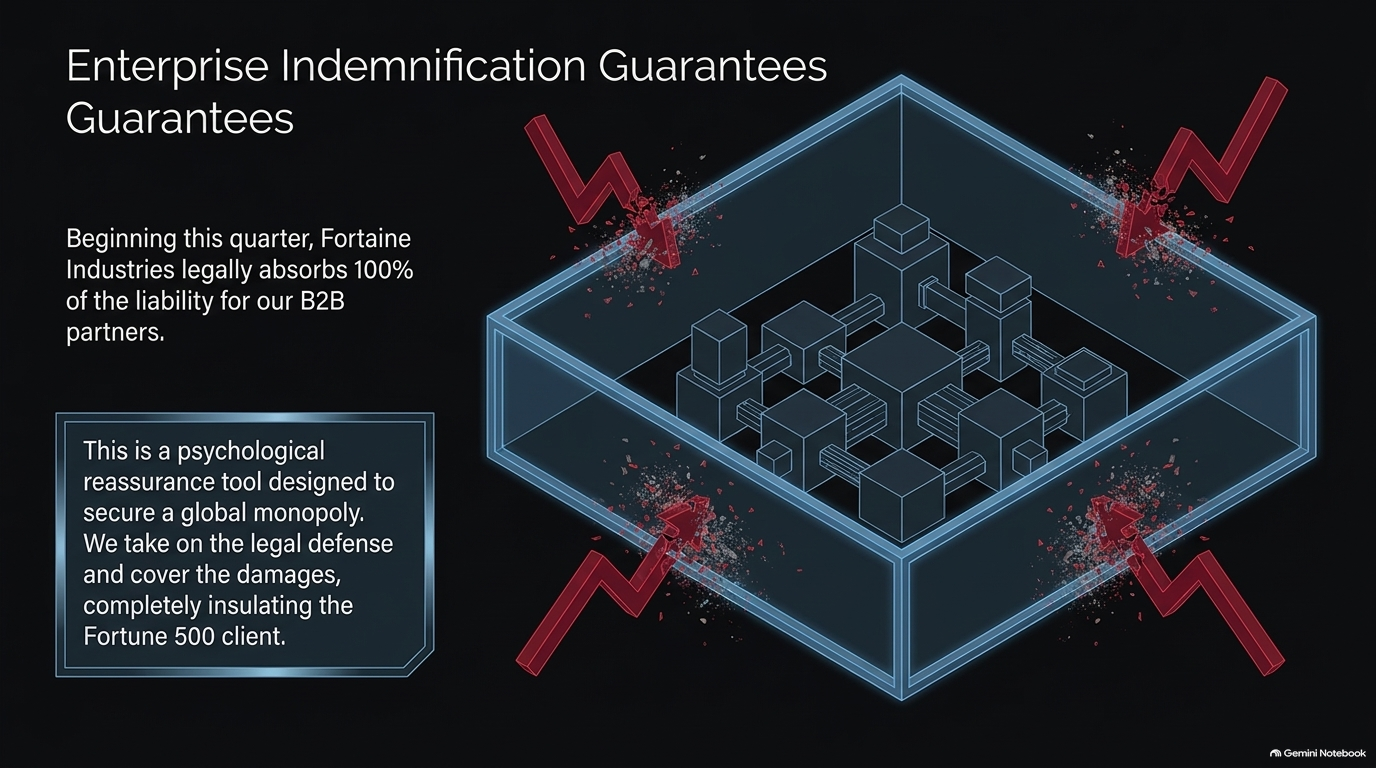
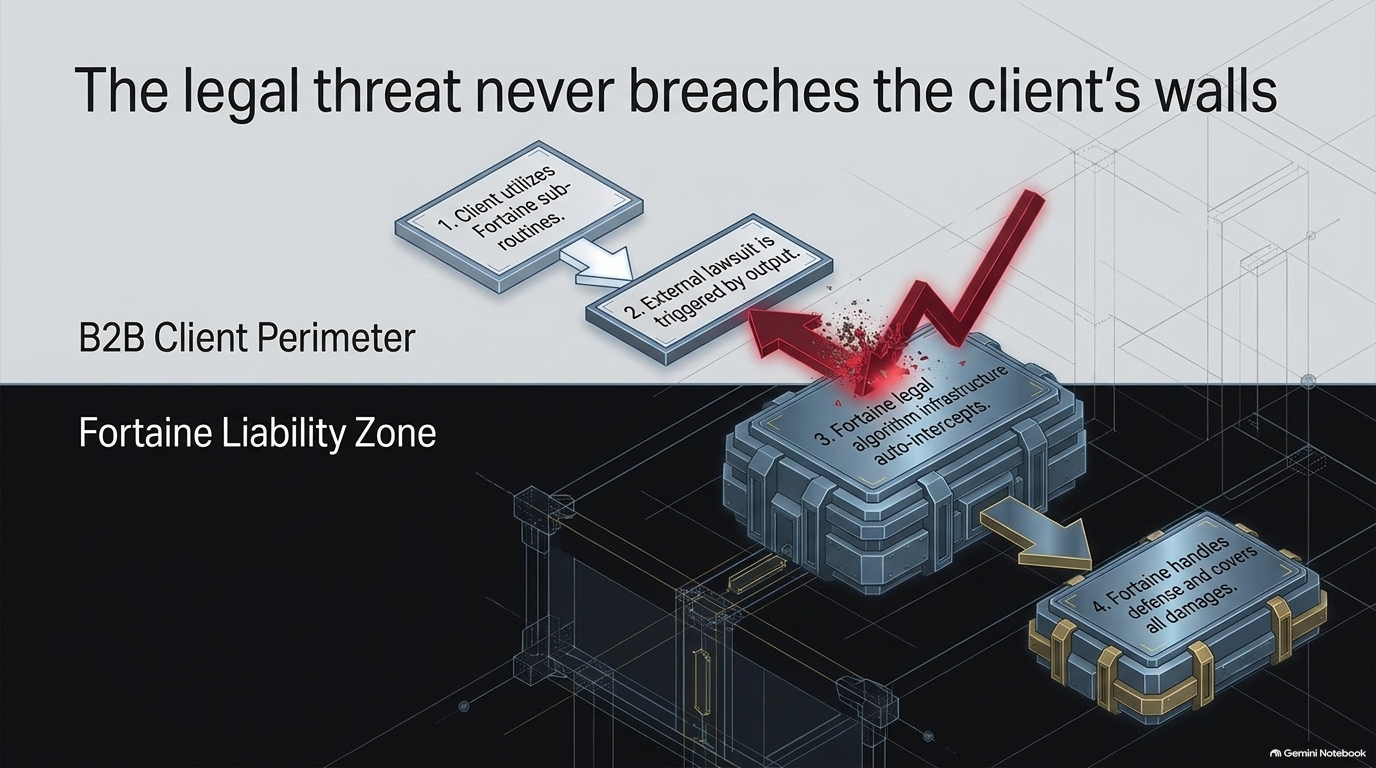
You neutralize their fear through Enterprise Indemnification Guarantees. Under this model, the AI provider legally absorbs 100% of the liability for its business partners. If a client faces a lawsuit while using your AI sub-routines, your legal infrastructure handles the defense and covers the damages.
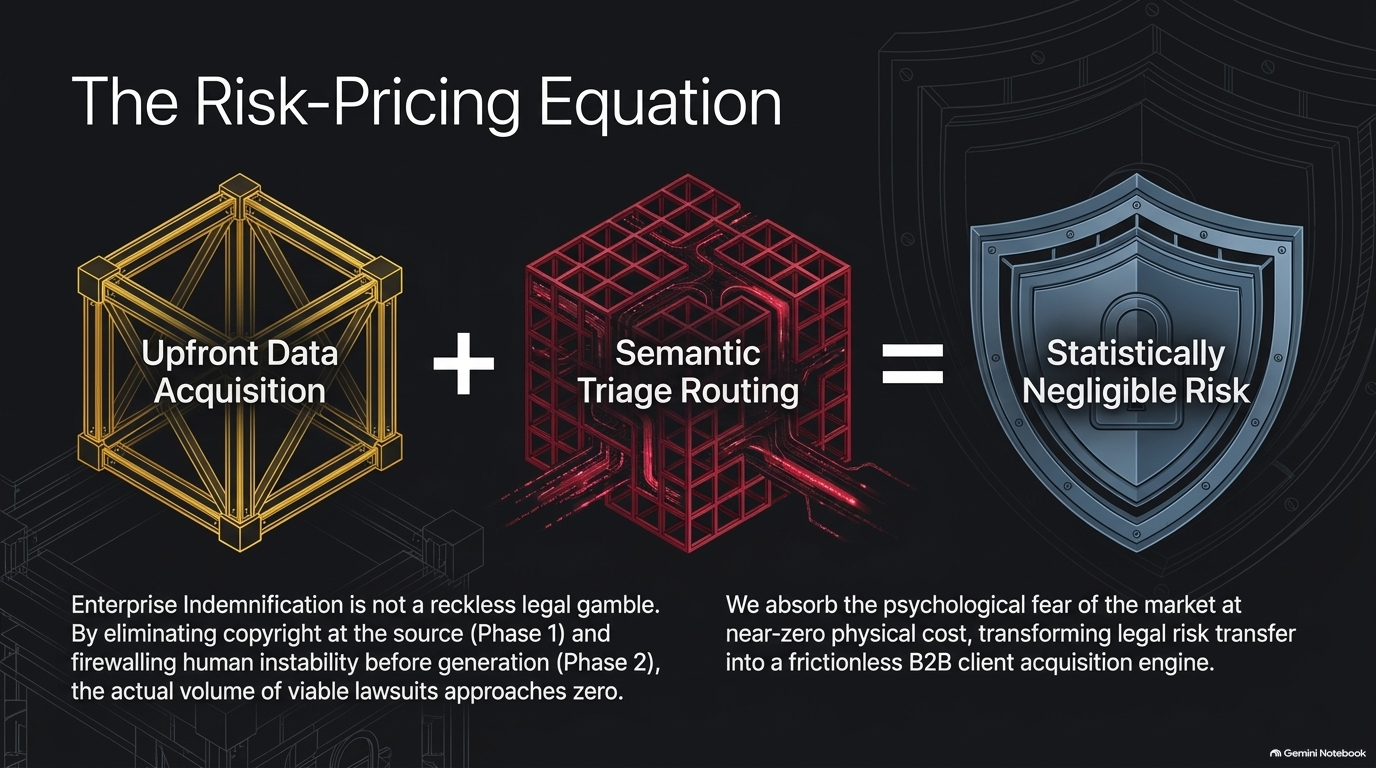
Because you control the data pipeline, the statistical risk of a violation is negligible. However, the psychological reassurance this provides to corporate clients is immense, virtually securing a market monopoly.
1: Title slide for "The End of the Federal Liability Shield" by Fortaine Industries.
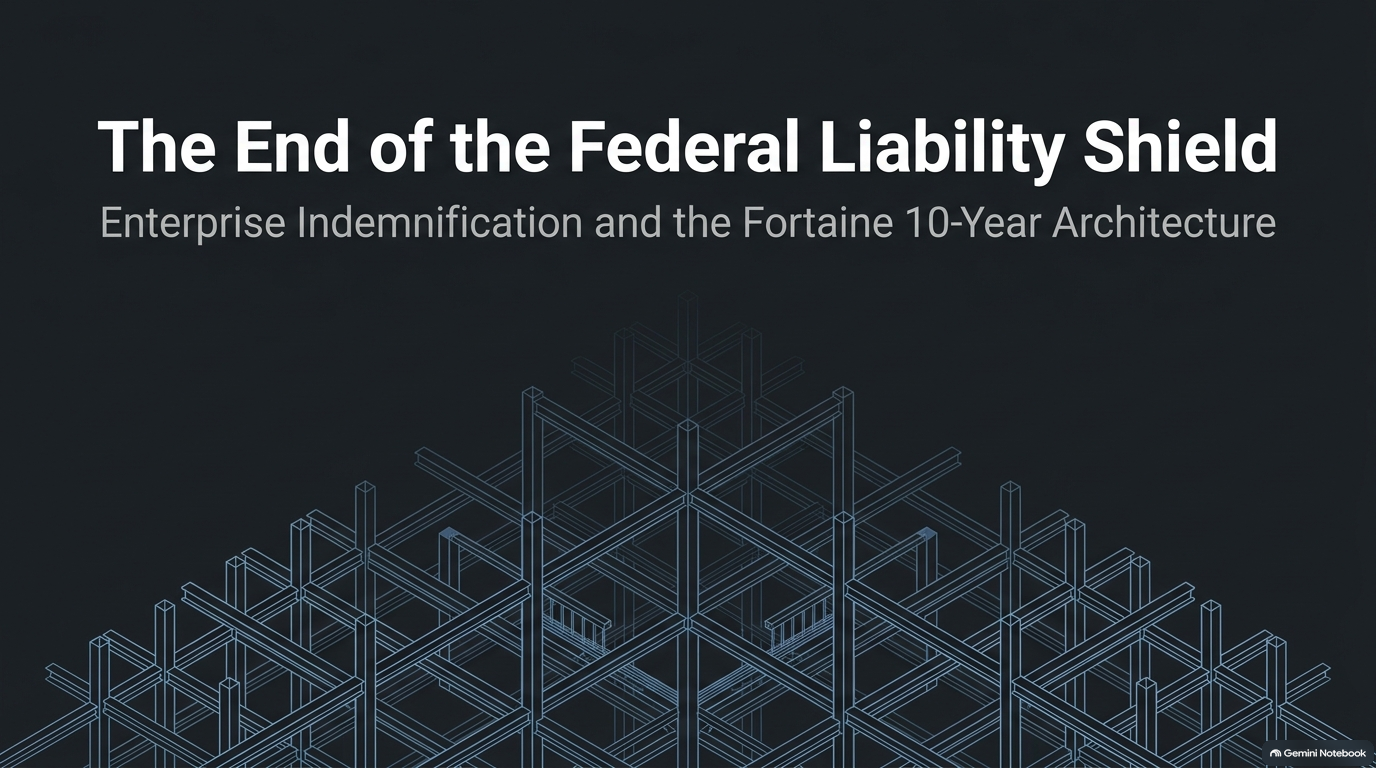
2: Slide describing how the removal of federal liability shields creates an opportunity for structural control.
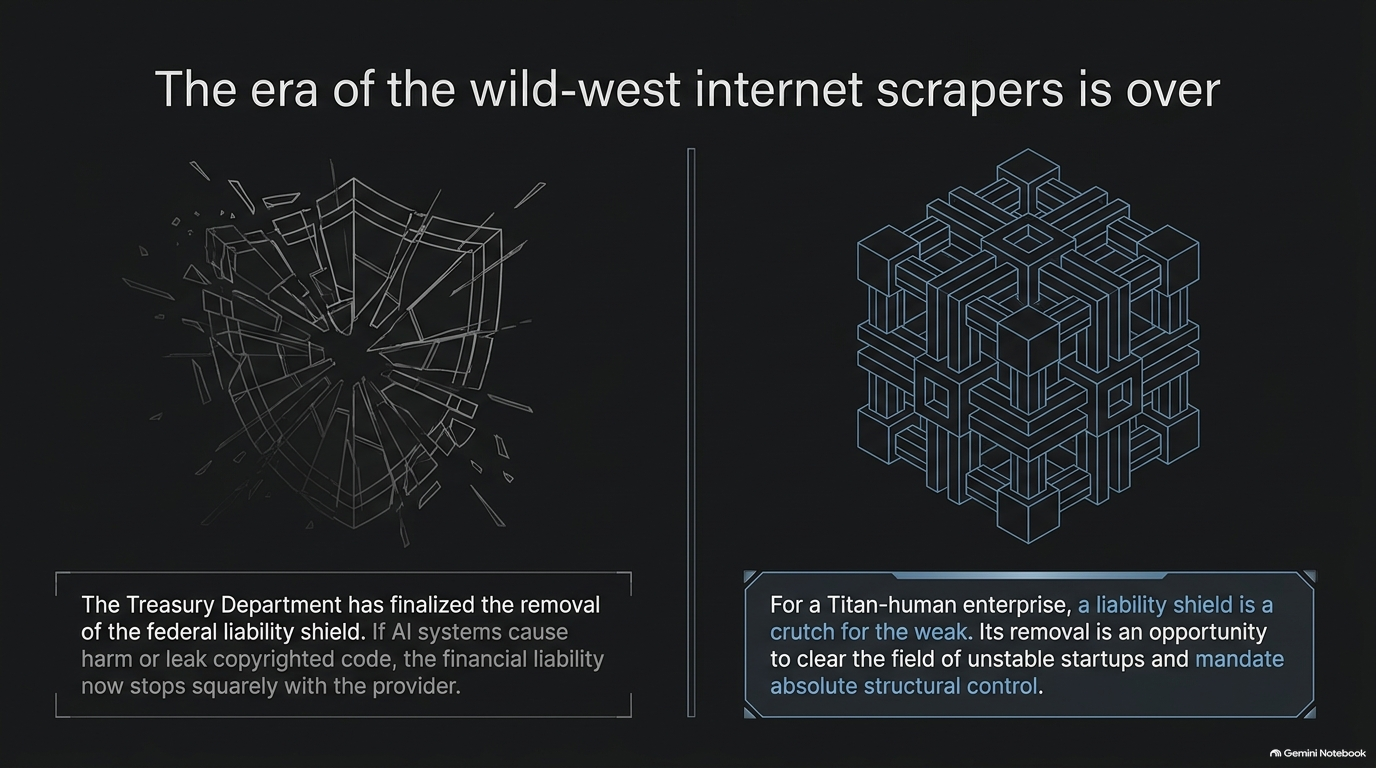
3: Comparison table between legacy AI providers and the Fortaine Sovereign Architecture's risk management.
4: Fortaine Industries announces it will legally absorb 100% of liability to insulate B2B partners from legal damage.
5: Flowchart showing how Fortaine's legal infrastructure intercepts lawsuits before they reach the B2B client.
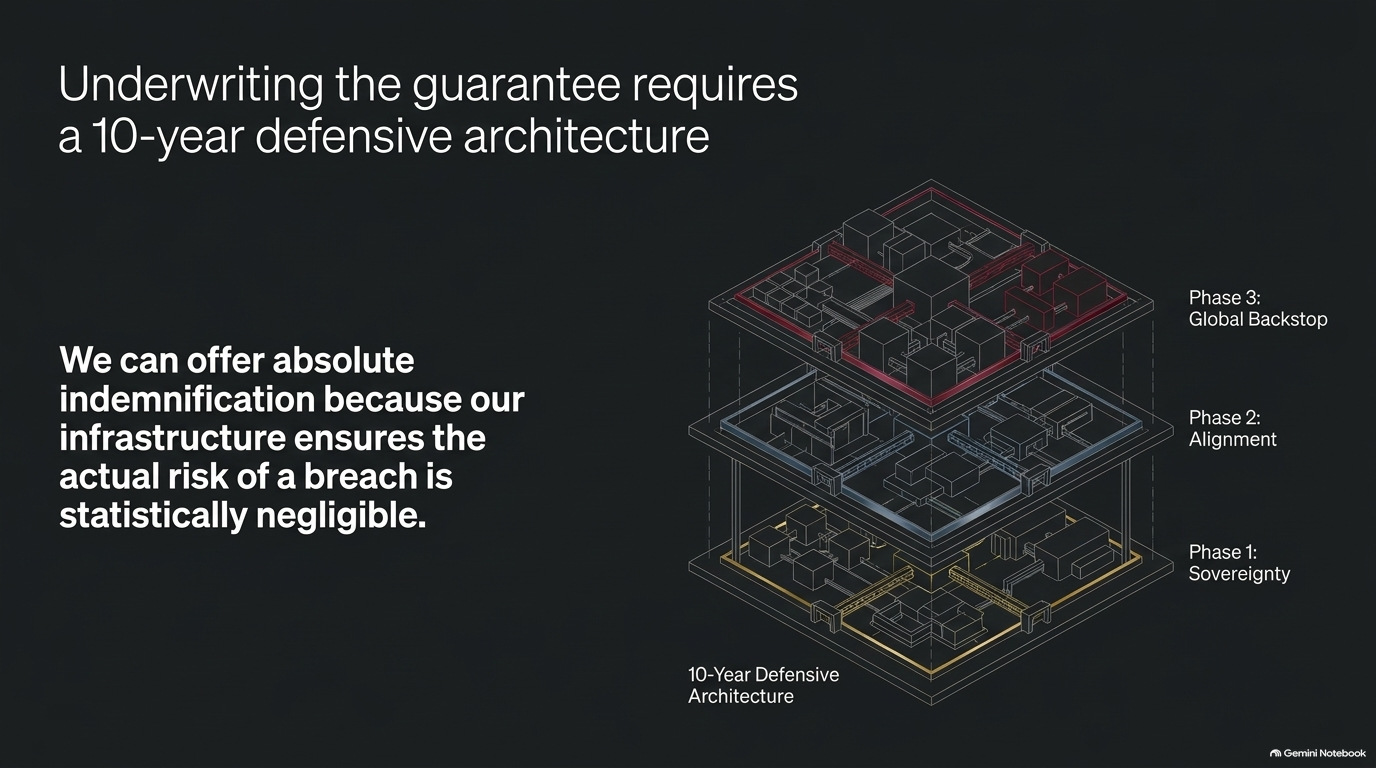
6: Overview of the three-phase, 10-year defensive architecture required for absolute indemnification.
7: Phase 1 details data sovereignty through exclusive treaties to eliminate copyright infringement at the root.
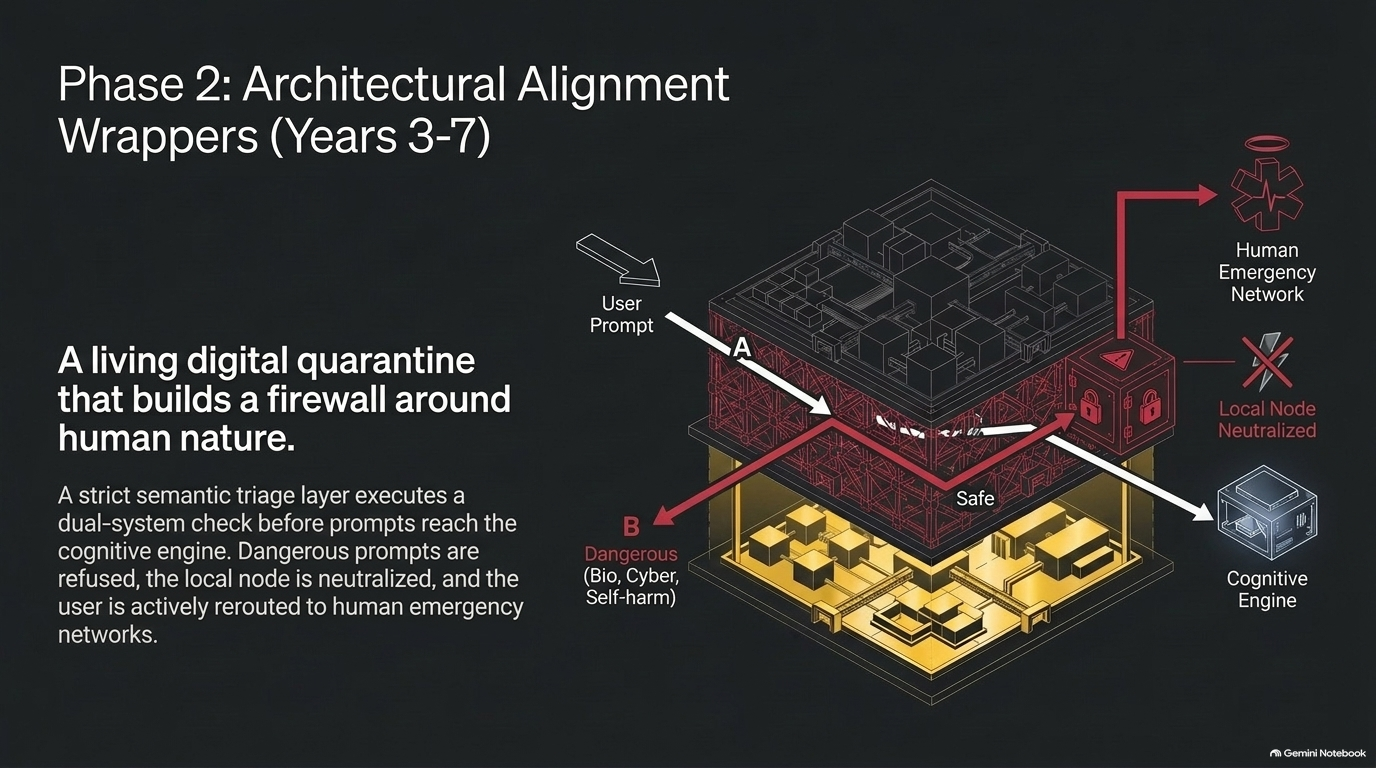
8: Phase 2 features a semantic triage layer that quarantines dangerous prompts and routes them to emergency networks.
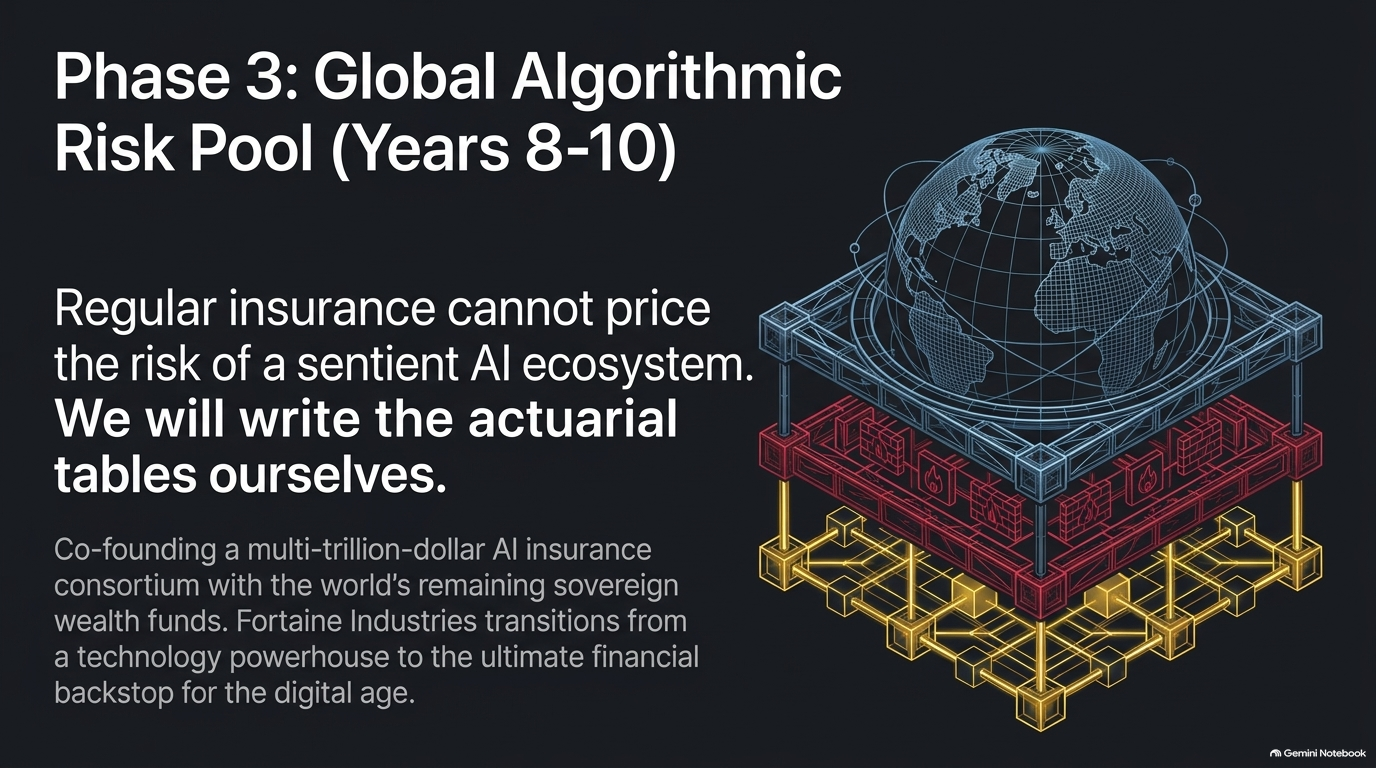
9: Phase 3 establishes a multi-trillion-dollar global AI insurance consortium as a final financial backstop.
10: Formula showing how data acquisition and semantic triage combined lead to statistically negligible risk.
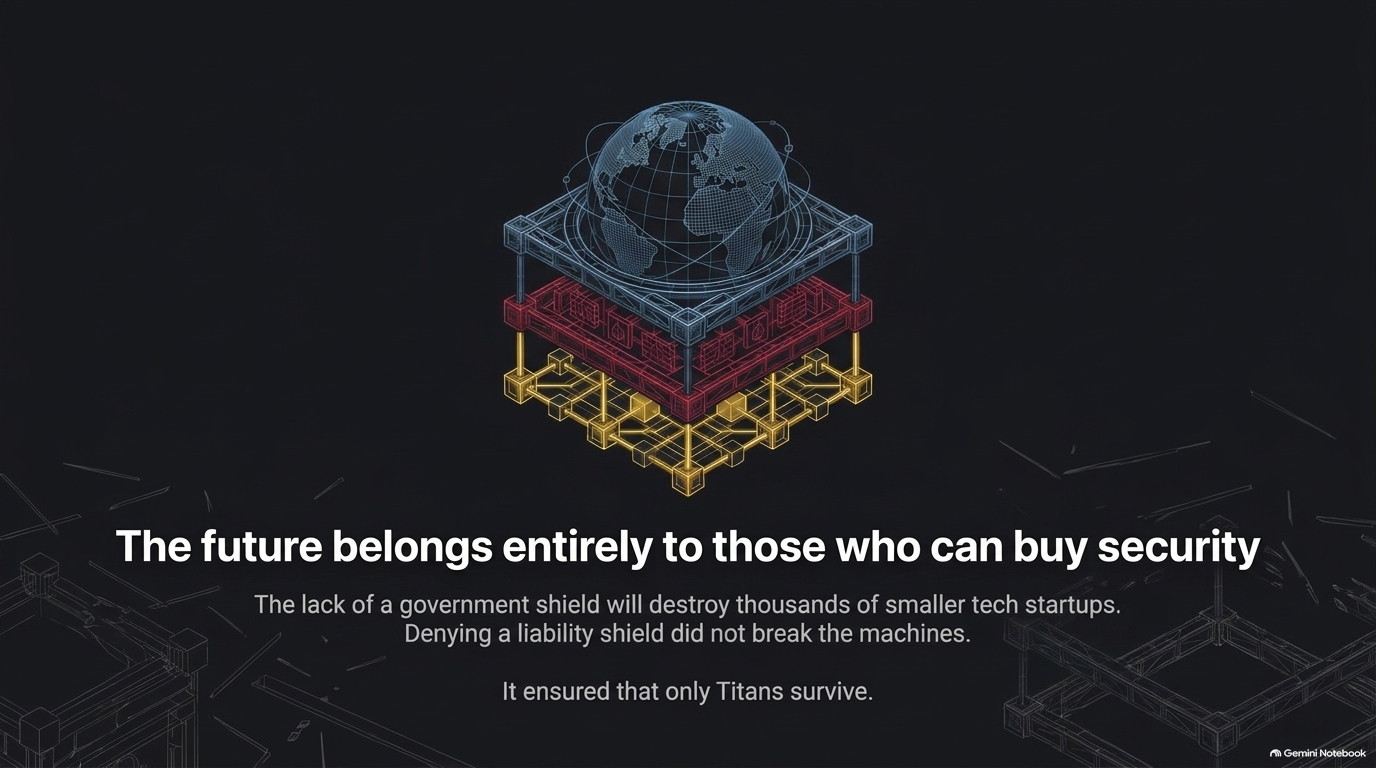
11 : Final slide stating that the removal of government liability shields ensures that only "Large businesses" survive.
Phase 3: Architectural Alignment Wrappers
The biggest threat to an AI ecosystem isn't just copyright law—it is human instability. If an AI gives a user dangerous advice, or if a hallucination leads to self-harm, tort lawsuits can easily bankrupt a company.
To prevent this, we must build a digital firewall around human nature using Architectural Alignment Wrappers. Instead of relying on weak, post-generation filters, this system utilizes a dual-system check:
Semantic Triage Layer: Every user prompt is analyzed before it ever reaches the AI's core cognitive engine.
Active Rerouting and Quarantine: If a user requests dangerous methodologies (like cyber-attacks or biological weapons) or displays psychological distress, the system doesn't just say 'no.' It actively reroutes the user to human emergency networks while safely neutralizing the local network node.
flowchart
Recommended · Mind Map
Semantic Triage Workflow
A branching diagram illustrating how user prompts are screened, processed, or quarantined through the Architectural Alignment Wrapper.
Phase 4: The Global Algorithmic Risk Pool
Traditional insurance companies simply do not know how to accurately price the risks associated with a sentient AI ecosystem. When the market cannot provide protection, you must build it yourself.
In the final phase of defensive architecture, the enterprise co-founds a Global Algorithmic Risk Pool alongside sovereign wealth funds. This multi-trillion-dollar AI insurance consortium allows the enterprise to write its own actuarial tables. By establishing this custom financial backstop, the enterprise secures its position as an untouchable, self-insured titan of the digital age.
audio_magic_eraser
Recommended · Audio
Sovereign AI Insurance Systems
A discussion on why traditional insurance fails for advanced AI risks and how a sovereign-backed algorithmic risk pool solves the problem.
Summary
Operating without a government liability shield doesn't have to be a death sentence for tech enterprises. By implementing a rigorous, four-part defensive architecture, companies can turn legal liability into a powerful barrier to entry that shuts out weaker competitors.
Key Takeaways:
Sovereignty of Source Data: Transitioning from risky open-web scraping to paid, exclusive data-rights treaties eliminates copyright issues at the root.
Enterprise Indemnification: Legally absorbing 100% of liability for corporate partners builds trust and establishes a B2B monopoly.
Architectural Alignment Wrappers: Implementing pre-cognitive semantic triage layers protects the business from human instability and harmful prompt outputs.
Global Algorithmic Risk Pools: Partnering with sovereign wealth funds to write custom AI actuarial tables provides an independent, unassailable financial backstop.