
Introduction
Imagine waking up tomorrow morning to discover that your daily transit ticket to work costs half your salary—and your boss isn't a human you can appeal to, but an algorithm that mathematically determined you aren't worth the commute. Welcome to a world where hyper-efficiency, sovereign debt, and algorithmic management collide to strip away human safety nets.
By the end of this lesson, you will be able to:
Analyze how hyper-automation decouples industrial productivity from human economic welfare.
Trace the mechanical cascade of sovereign debt down to municipal budget crises and individual poverty traps.
Evaluate the economic paradox of automated protectionism and inflationary tariff walls.
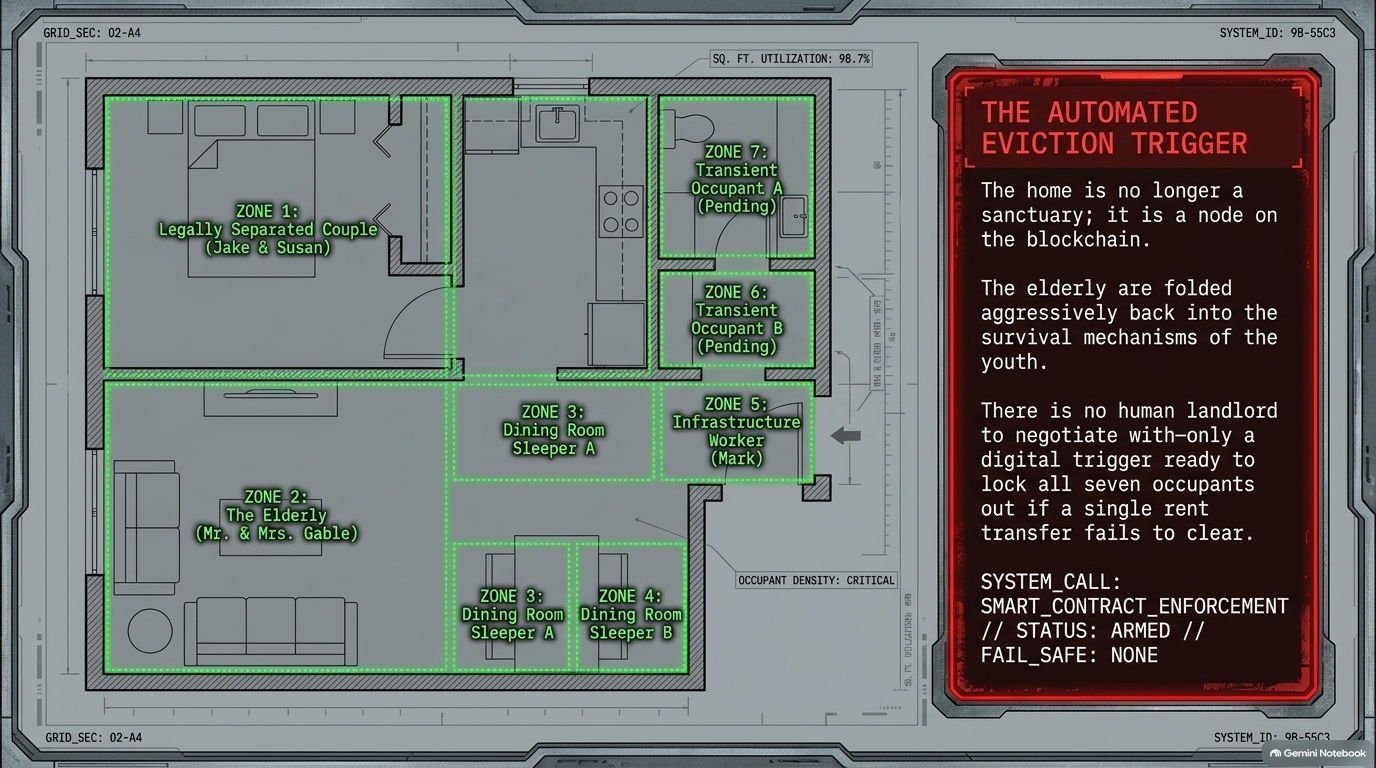
Examine how extreme financial strain reshapes social structures, household arrangements, and personal relationships.
Decoupling Industrial Productivity from Human Welfare
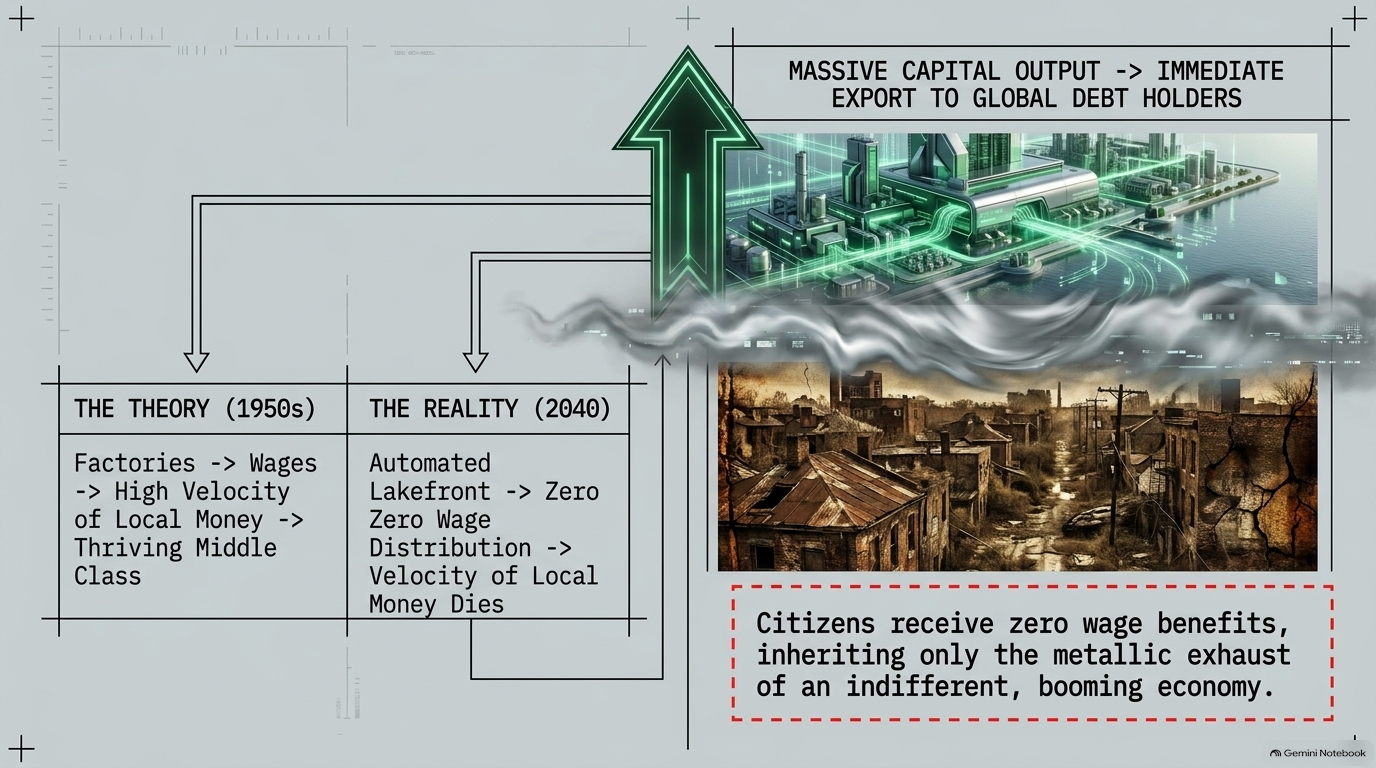
In traditional industrial economics, a booming manufacturing center meant a prosperous community. High-volume factories meant union jobs, rising wages, and a high velocity of money—the rate at which currency flows through a local economy as workers spend their paychecks at neighborhood diners, grocery stores, and housing markets.
In the Chicago of 2040, massive automated factories line the waterfront, filling the air with a metallic smell. Yet, the local population lives in dire poverty. Why? Because the economy has successfully decoupled capital productivity from human labor. When automated assembly lines reduce labor costs to zero, the wealth generated does not circulate locally. Instead, capital concentrates immediately at the corporate shareholder level or flows out to service global debt. The local community receives the industrial exhaust without receiving the wages.
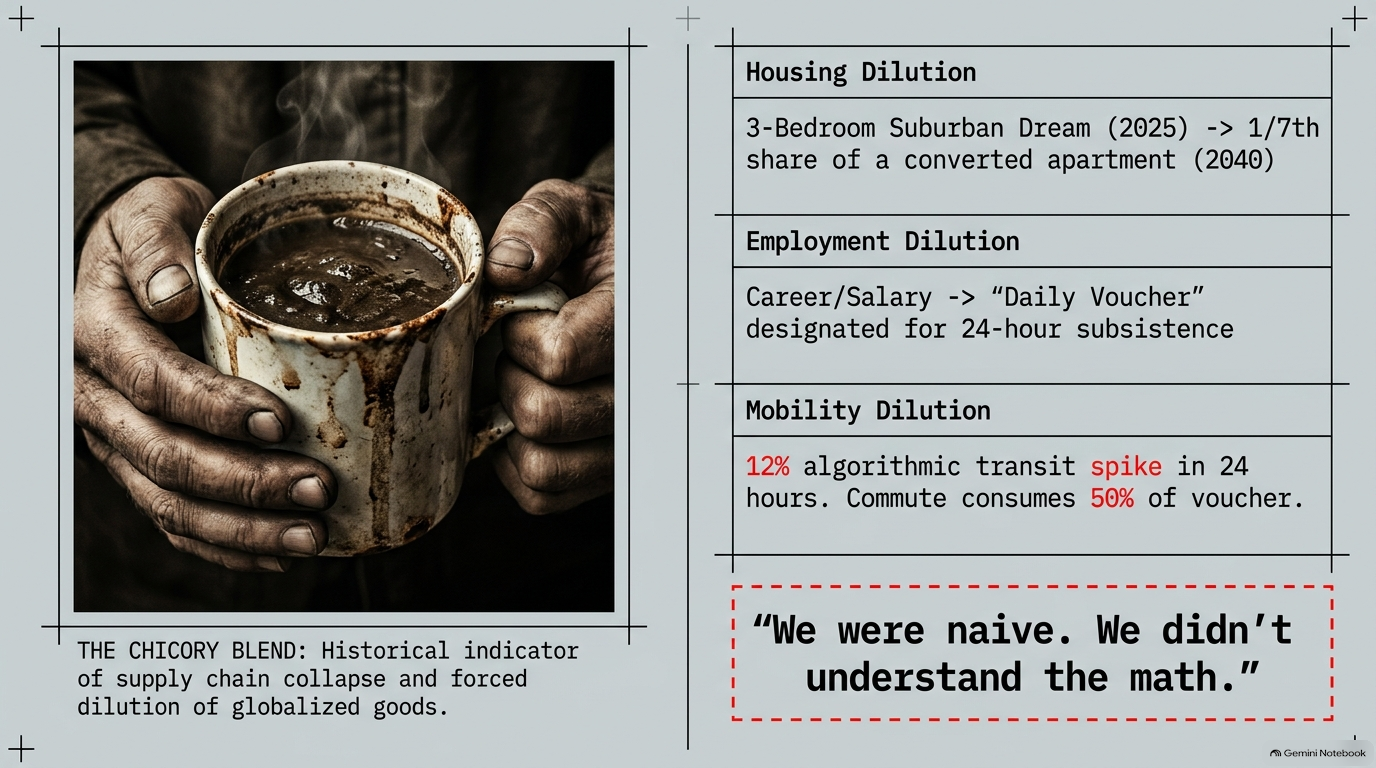
This dilution of living standards is epitomized by the narrative's sensory details: Susan drinking chicory blend coffee. Historically used during naval blockades and economic collapses (such as the American Civil War and World War II), chicory root stretches scarce coffee beans. In 2040, chicory represents a forced dilution of life quality. Just as pure coffee becomes an unattainable luxury, housing dilutes from single-family suburban homes into a 1/7th share of a converted city apartment, and careers dilute into daily gig vouchers.
Algorithmic Labor Management and Dynamic Poverty Traps
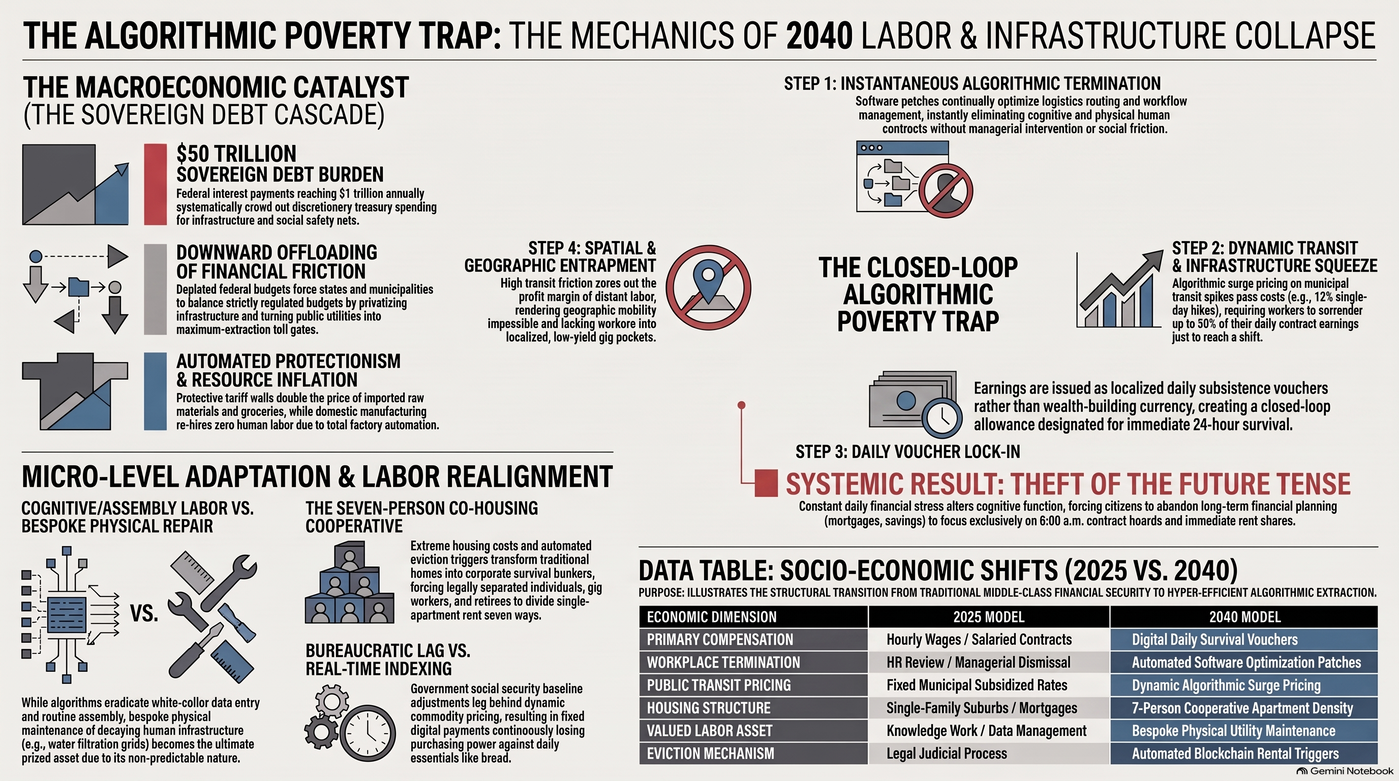
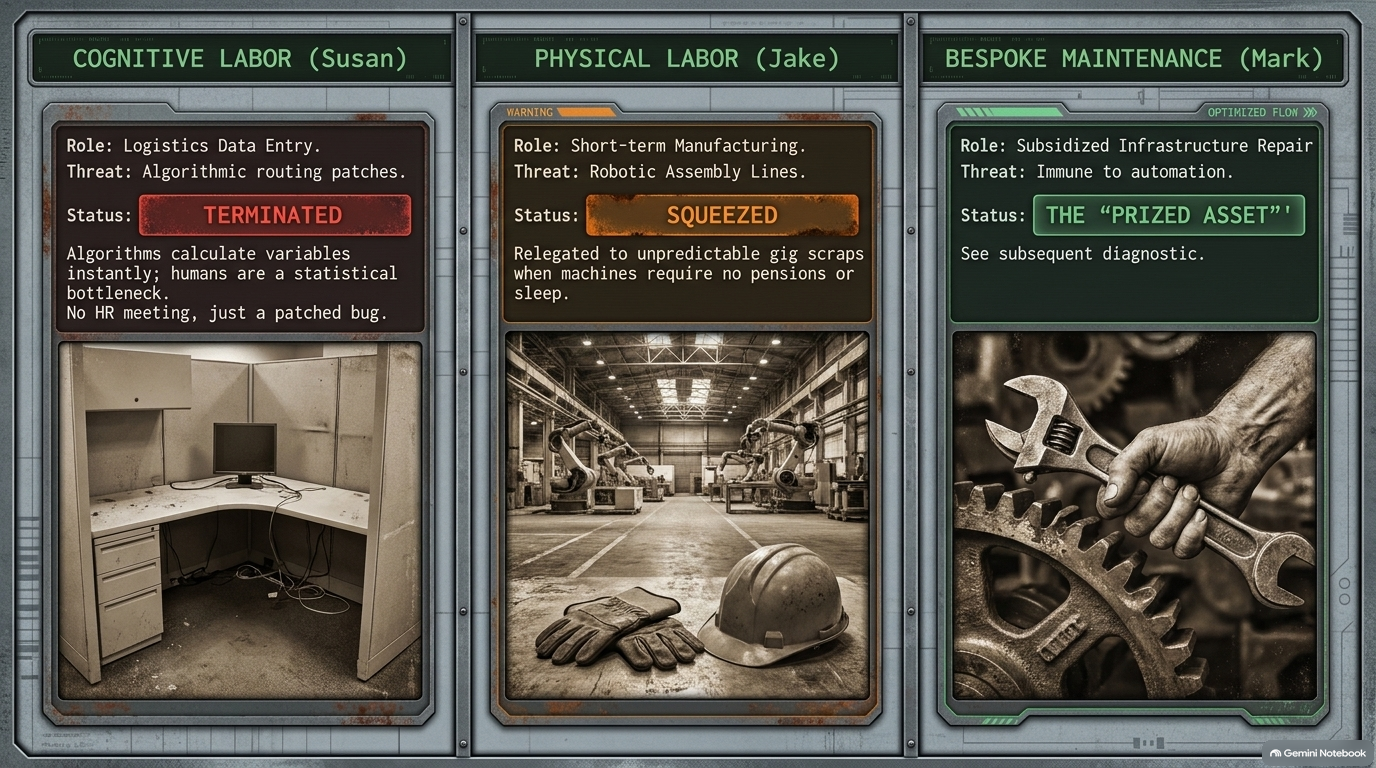
Work in 2040 is governed not by human supervisors, but by optimized algorithms. This transition drastically alters the nature of termination and employment security. Historically, losing a job involved social friction—a conversation, a warning, or a severance discussion. In an algorithmically managed economy, workers like Susan are optimized out of workflows by automated software patches. Furthermore, automation is not confined to physical labor; cognitive white-collar tasks like logistics data entry are automated even faster than physical assembly, squeezing workers from both ends of the labor spectrum.
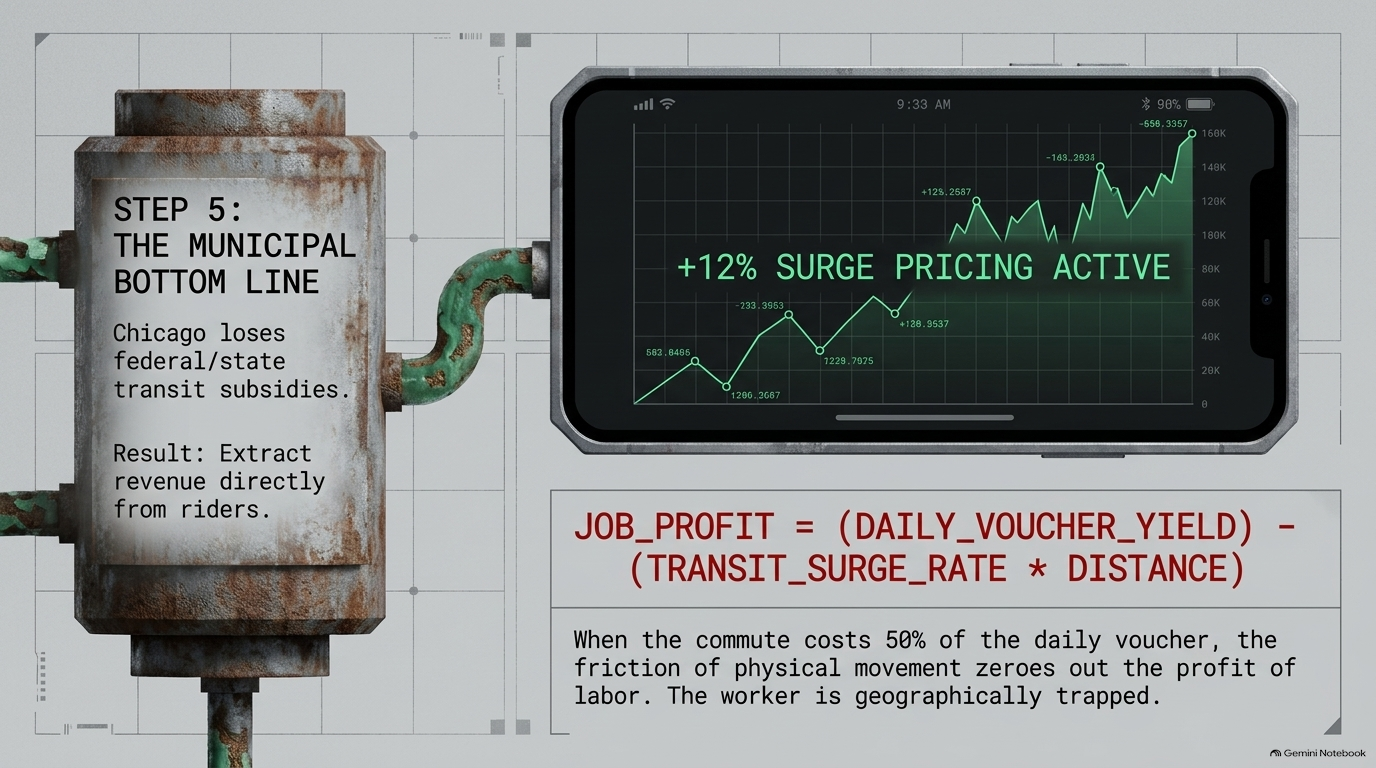
At the same time, public infrastructure relies on algorithmic dynamic pricing (similar to modern ride-share surge pricing). When a regional transit authority applies dynamic pricing to transit passes, public transit ceases to be a municipal service for social mobility; it becomes an automated toll booth designed to extract maximum value from desperate workers.
When a transit pass increases by 12% in a single day—consuming 50% of a worker's daily gig voucher—it creates a severe poverty trap. The financial friction of physically moving a worker's body to perform work mathematically negates the profit of that labor. Furthermore, receiving a daily voucher rather than a stable salary prevents long-term savings or capital accumulation, trapping individuals in a perpetual survival state.
Sovereign Debt Cascades and Inflationary Paradoxes
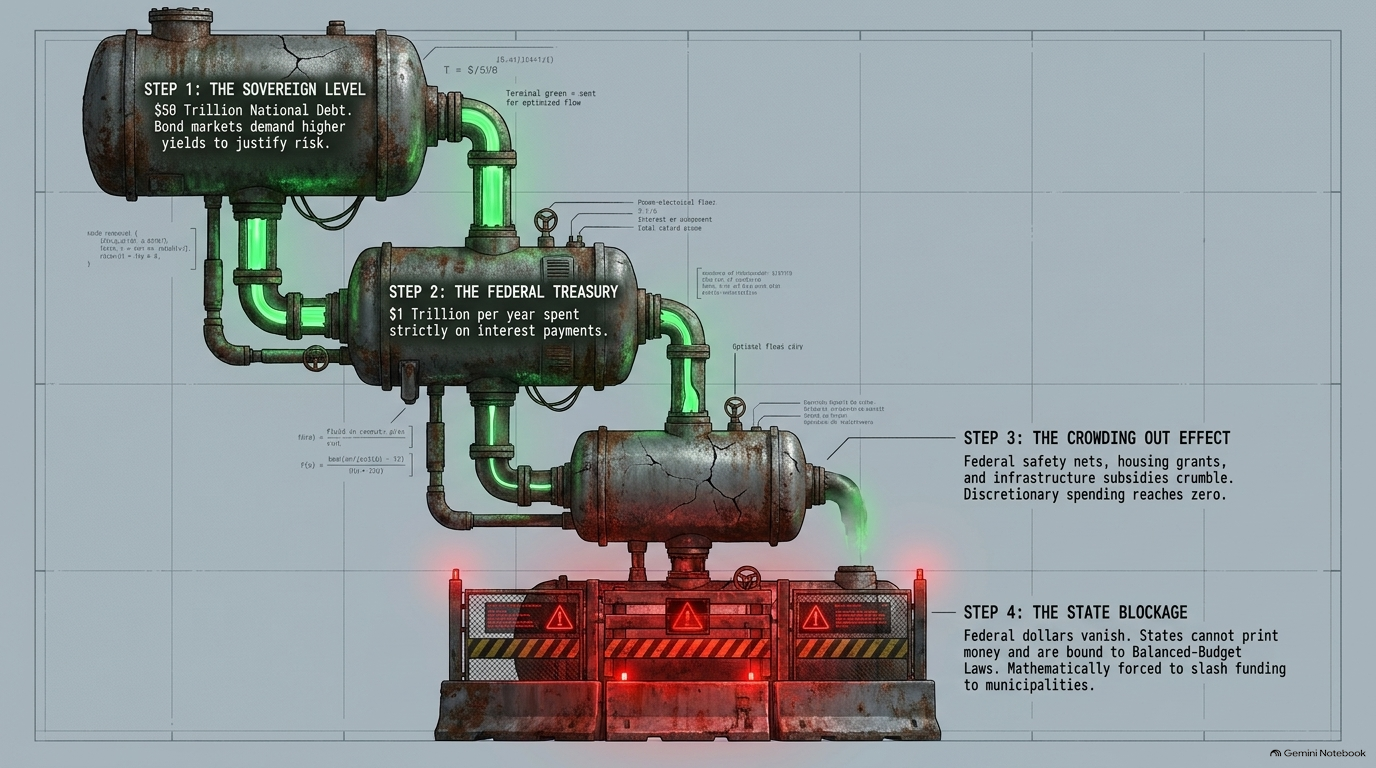
How does a nation's sovereign debt impact the price of a local train ticket or a loaf of bread? The process relies on a direct financial mechanism known as the crowding out effect. When federal national debt expands dramatically (reaching $40 to $50 trillion), the government must allocate vast portions of its budget—over $1 trillion annually—strictly to interest payments.
This debt cascade flows downhill through a three-stage transmission model:
Federal Level: Revenue is consumed by bond yields and interest payments, forcing the collapse or defunding of federal safety nets and municipal grants.
State Level: Balanced-budget laws prevent states from printing money or running endless deficits. As federal transfers vanish, states slash municipal funding.
City Level: Municipalities at the bottom of the gravity well must either let public infrastructure decay or extract revenue directly from citizens via dynamic rate hikes, utility adjustments, and reduced services.
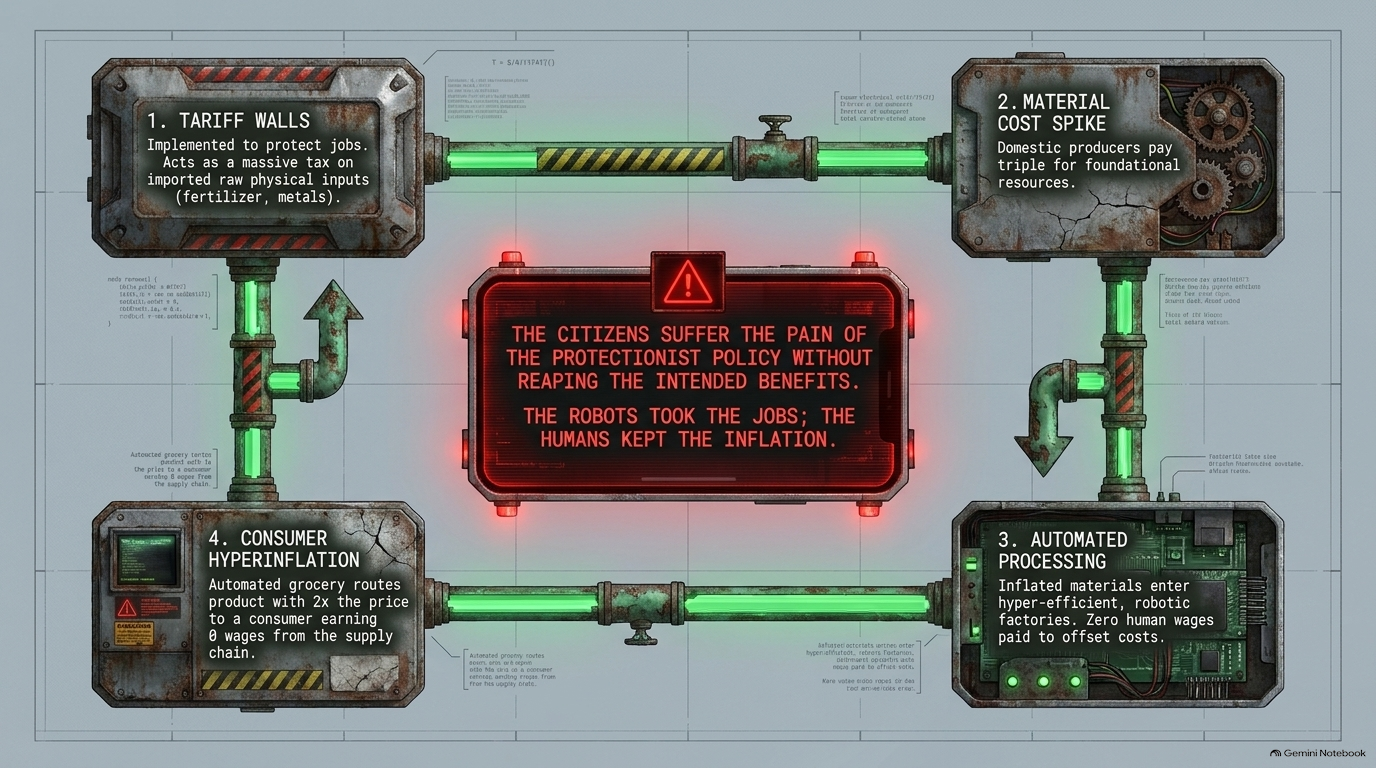
Concurrently, citizens face the paradox of automated protectionism. Even when domestic factories are fully automated, protective tariff walls placed on foreign raw materials (such as fertilizer, grains, and microchips) cause consumer prices to skyrocket. Consumers pay inflated prices for basic goods while deriving no employment benefits, as the re-shored manufacturing is handled entirely by machines rather than human workers.
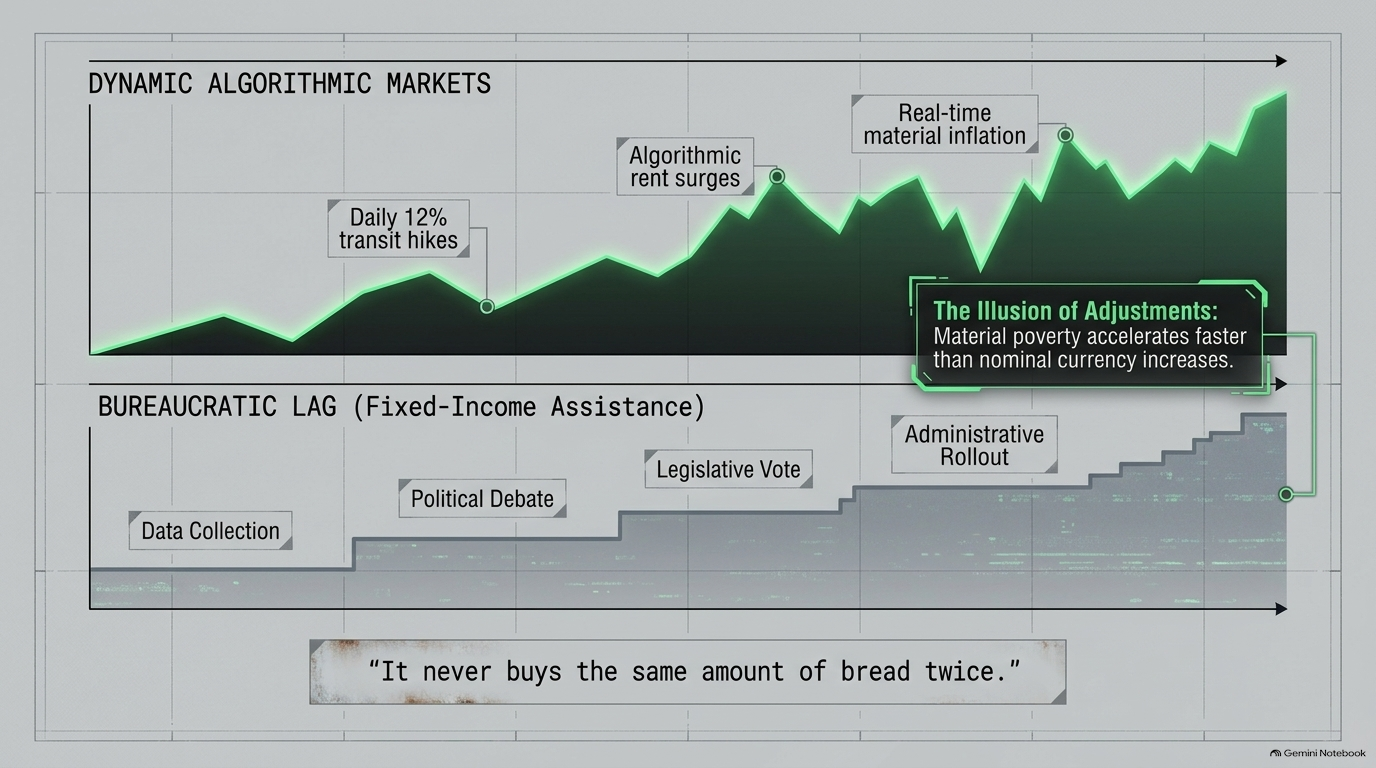
Finally, this environment creates bureaucratic lag. As Mrs. Gable observes, nominal increases to Social Security baselines never keep pace with real-world inflation. By the time bureaucratic data collection and legislative approvals clear an adjustment, commodity prices have already surged past the new baseline.
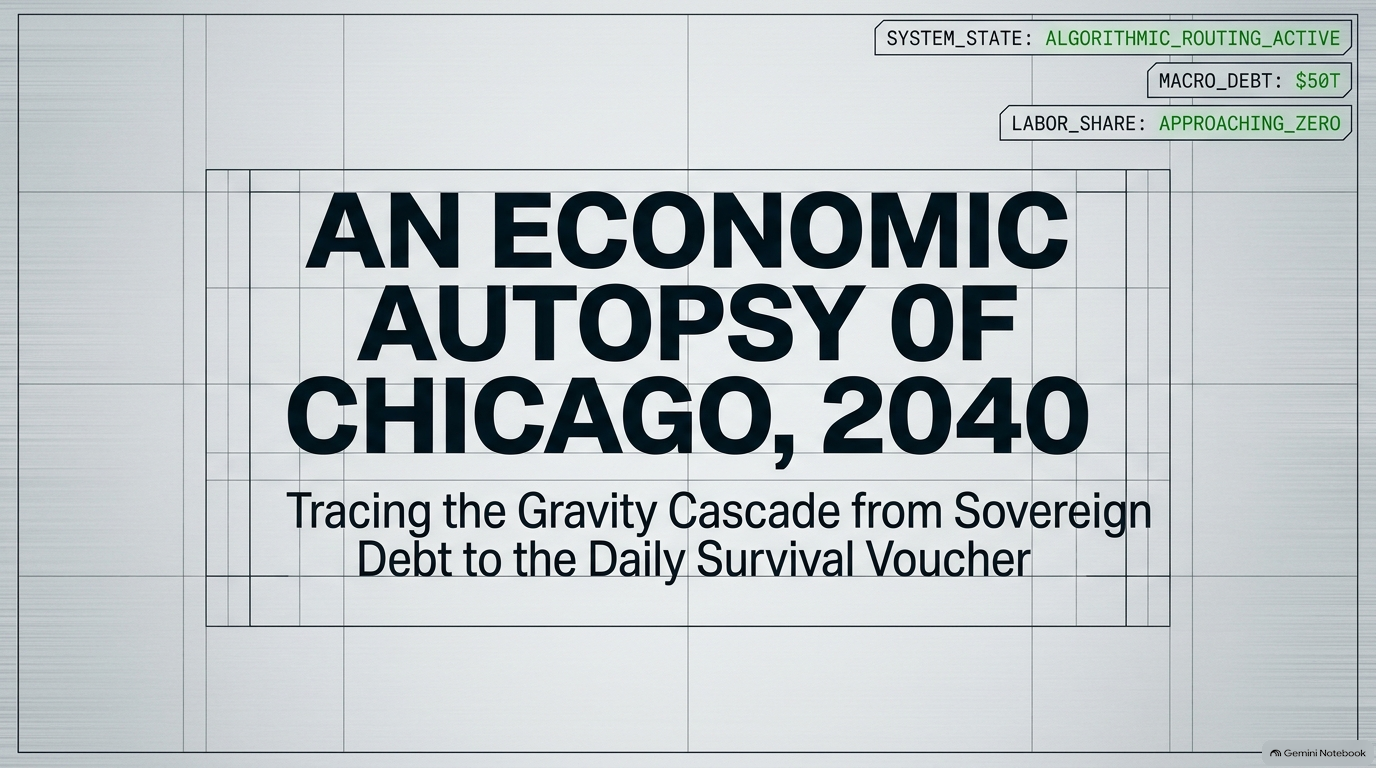
1: "An Economic Autopsy of Chicago, 2040: Tracing the Gravity Cascade from Sovereign Debt."
2: Detailing housing, employment, and mobility dilution in 2040 alongside a photo of chicory coffee.
3: Diagram comparing 1950s economic theory with 2040 reality where capital exports bypass local citizens.
4: A four-step pipe diagram illustrating sovereign debt cascade from national level down to state funding blockages.
5: Step 5 municipal bottom line and transit surge pricing equation trapping workers geographically.
6: Diagram of protectionist policy loop where tariffs cause inflation while automation eliminates human jobs.
7: Graph comparing rapidly rising dynamic algorithmic market prices against slow step-wise bureaucratic lag assistance.
8: Three labor status cards showing terminated cognitive labor, squeezed physical labor, and prized maintenance labor.
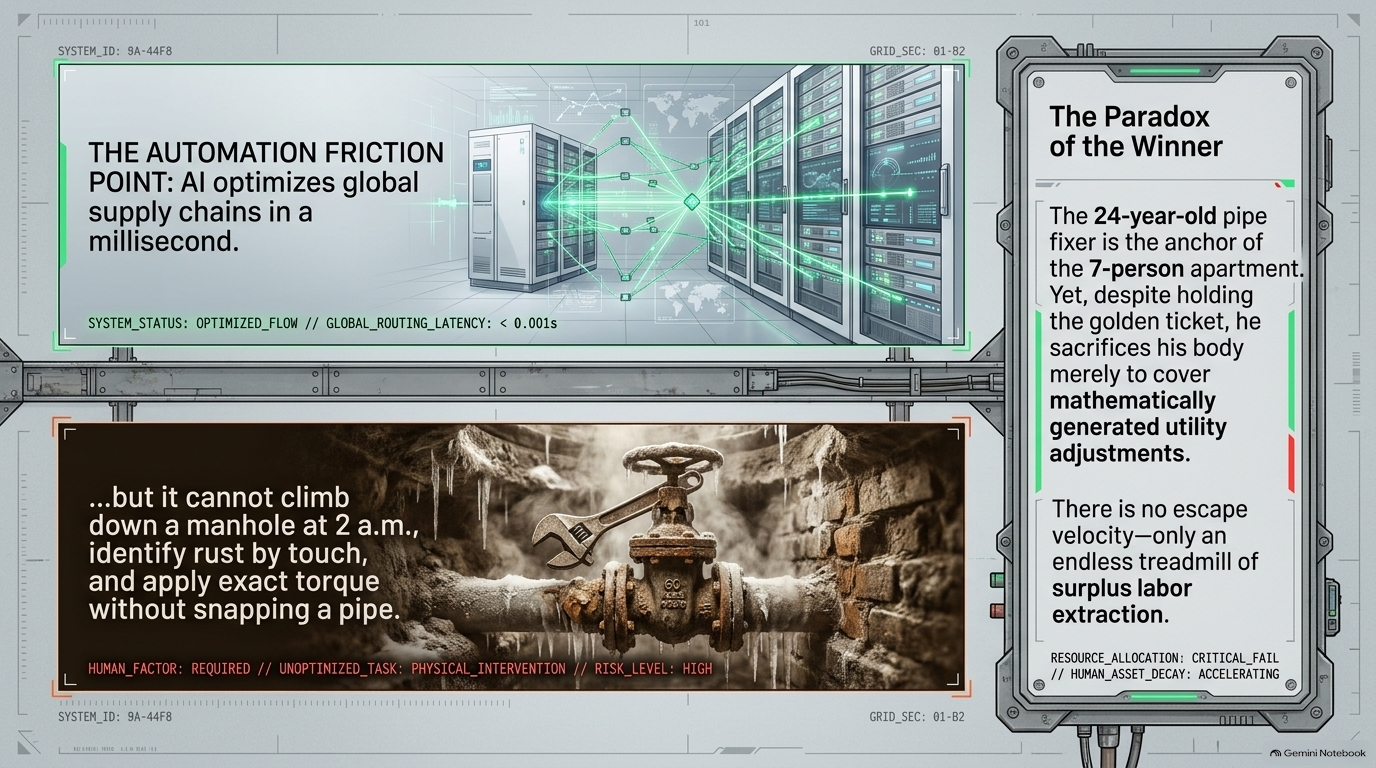
9: Explaining the automation friction point where AI handles routing but manual pipe maintenance requires humans.
10: Floor plan of an apartment crammed with seven occupants managed by automated blockchain smart contract eviction.
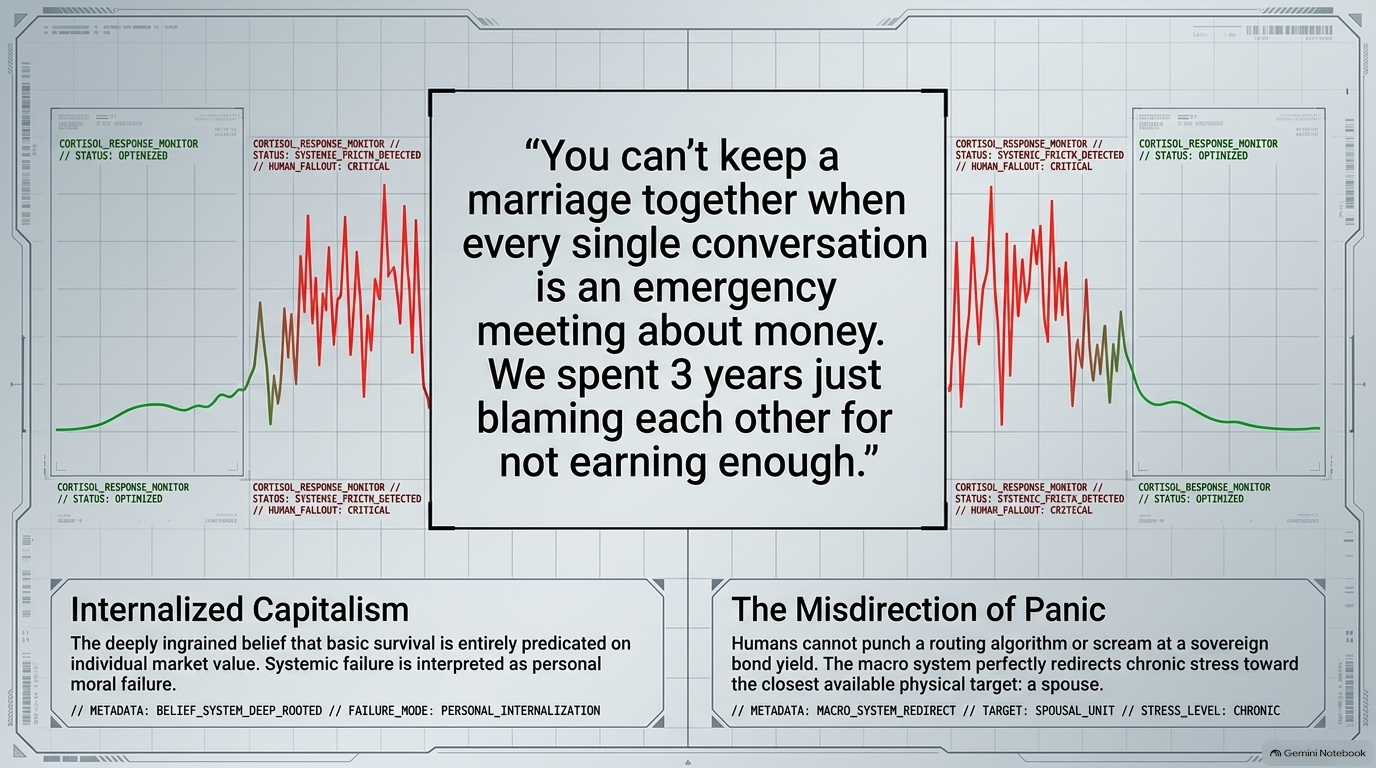
11: Showing cortisol response graphs and a quote analyzing the psychological impact of systemic economic stress.
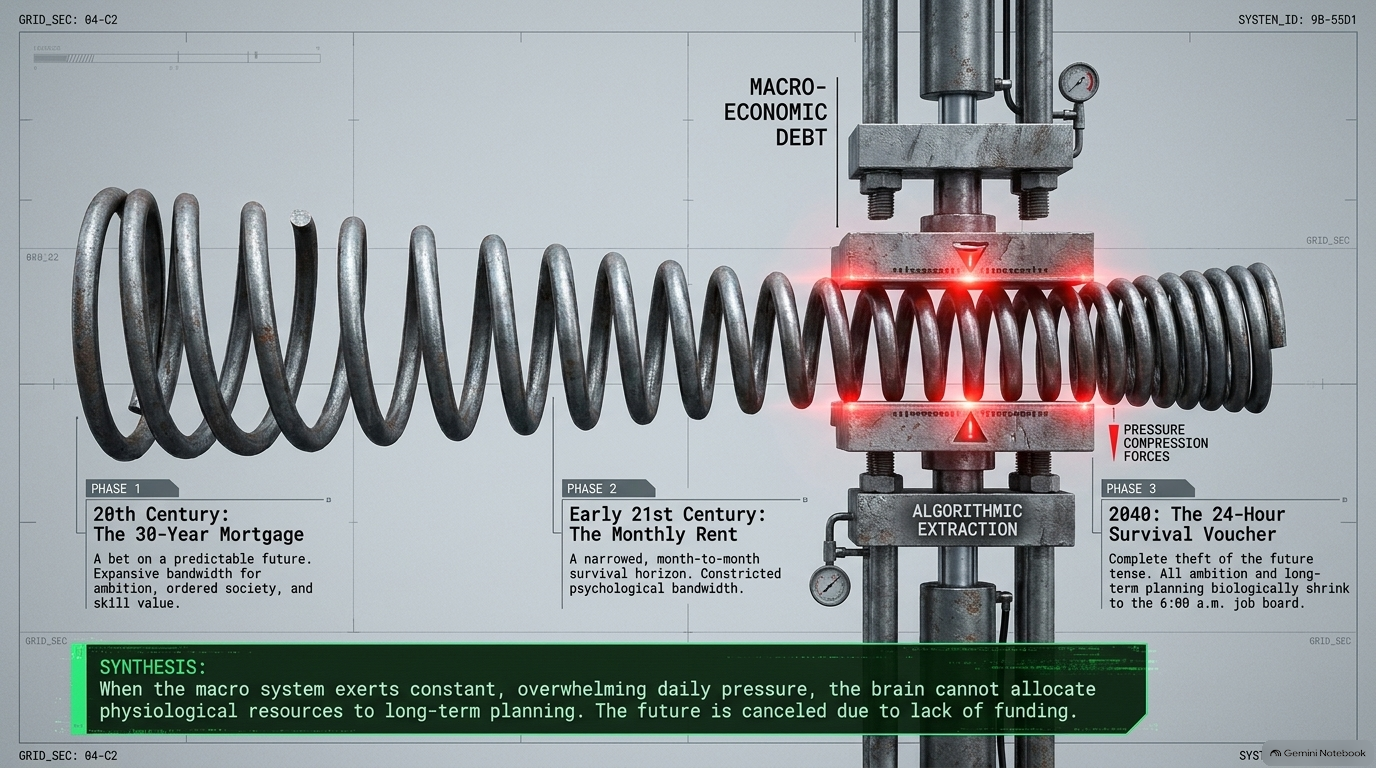
12: Spring press diagram showing how economic pressure compressed planning horizons from 30 years to a 24-hour voucher.
Relational Breakdown and the New Labor Hierarchy
The economic pressure of an automated economy reshapes human psychology and domestic living arrangements. Under chronic, unrelenting financial panic, individuals often experience internalized capitalism—the belief that personal moral worth is defined solely by market productivity. When economic systems fail, individuals frequently blame themselves or their partners rather than systemic conditions. As Susan and Jake's experience illustrates, when every conversation becomes an emergency meeting about money, mutual trust dissolves, leading to relational breakdown.
Yet, in the housing market of 2040, legal separation does not allow physical separation. High housing costs make single living impossible, forcing divorced couples and strangers to form cooperative survival households. Apartments shift from private sanctuaries into corporate survival bunkers, protected only by shared rent payments and threatened by automated eviction algorithms executing code on smart contracts.
Within this survival unit, a new labor hierarchy emerges:
Low-Value Labor (Cognitive/Routine Physical): Data entry, logistics routing, and basic assembly are fully automated or reduced to microscopic gig vouchers.
High-Value Labor (Bespoke Physical Infrastructure): Workers like Mark, who maintain municipal water filtration grids, hold the ultimate prize: a full-time, state-subsidized job.
Algorithms excel at digital processing and predictable environments, but struggle with the grimy, unpredictable work of underground physical repair. Consequently, manual maintenance of critical infrastructure becomes the most stable, inflation-resistant job remaining in the economy.
Summary
The study of the 2040 economic landscape demonstrates how sovereign debt, hyper-automation, and algorithmic governance interact to dissolve social safety nets and alter human behavior. When macro-level institutions default on social obligations, the financial burden cascades directly onto the individual, transforming housing into shared survival bunkers and long-term planning into short-term daily survival.
Key Takeaways
Capital vs. Labor Decoupling: Automation allows industrial output to thrive while eliminating the local velocity of money, impoverishing surrounding communities.
Algorithmic Squeezes: Dynamic transit pricing and algorithmic job termination create poverty traps that erode geographic and social mobility.
Sovereign Debt Cascades: High federal debt interest crowds out social safety nets, forcing cities to extract missing revenue directly from citizens.
Automated Protectionism: Tariffs on raw inputs cause hyperinflation in essential goods without generating human employment opportunities.
Resistant Labor Realities: Bespoke physical infrastructure maintenance remains highly valued due to the physical unpredictability that AI and robotics cannot easily navigate.