
Introduction
Have you ever wondered why the U.S. government seems intentionally designed to make sweeping economic reforms extraordinarily difficult? What if the foundational architecture of the American republic was meticulously crafted not to build a direct democracy, but to protect private wealth from the "tyranny of the majority"?
In this lesson, we will explore the class-conscious view of American history—tracing how property rights, legal mechanisms, and cultural narratives have shaped governance from 1787 to the modern era.
By the end of this lesson, you will be able to:
Identify the structural safeguards built into the U.S. Constitution to shield property and wealth.
Analyze how economic elites leveraged legal exemptions and public rhetoric during key conflicts like the Revolutionary and Civil Wars.
Examine the psychological mechanisms and "divide-and-conquer" strategies used to neutralize working-class solidarity.
Evaluate modern legal developments, such as the rollback of administrative power, through the lens of constitutional design.
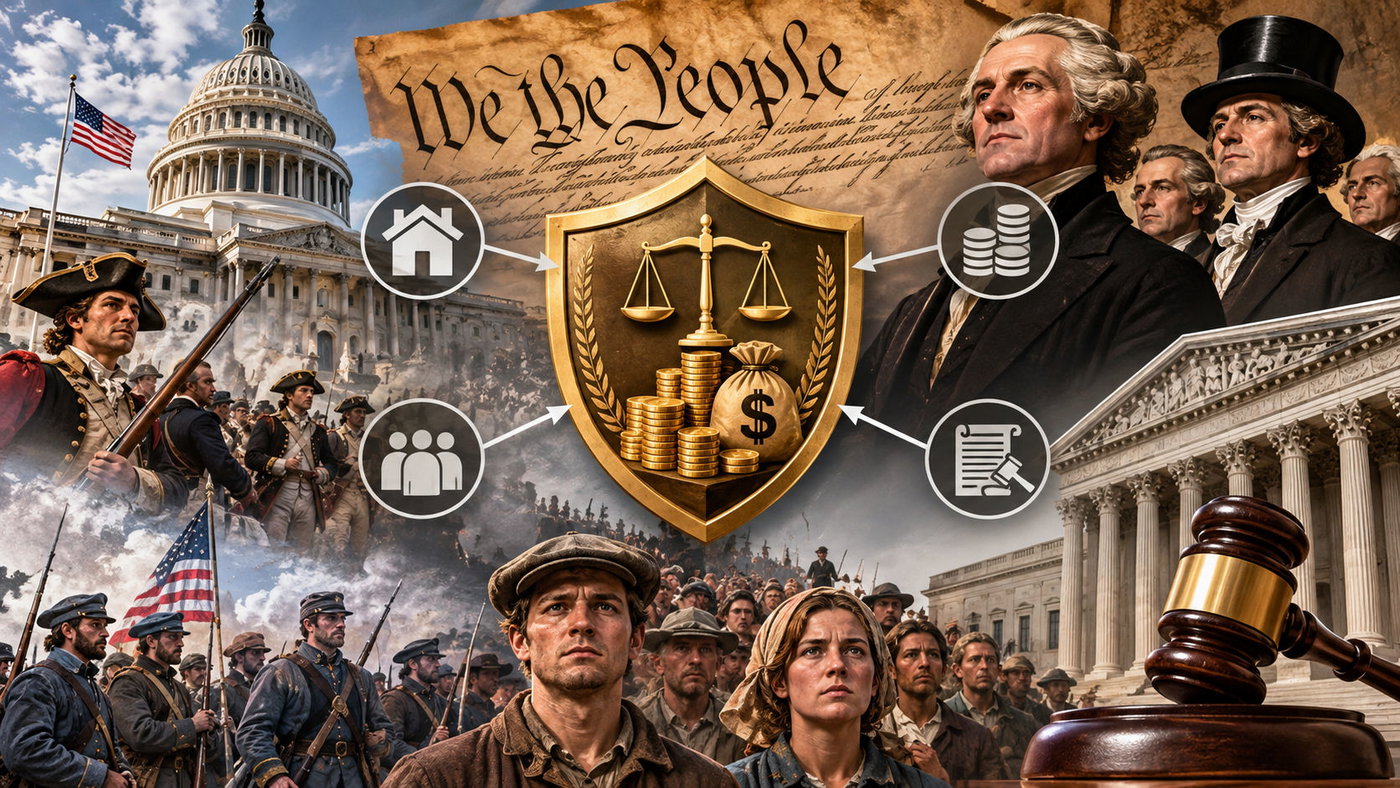

The Constitutional Blueprint: Safeguarding Wealth at the Founding
Imagine building a house with a sophisticated circuit breaker system designed to shut down the power the moment the current flows too fast in one direction. In many ways, that is precisely how the Framers of the U.S. Constitution designed the American government.
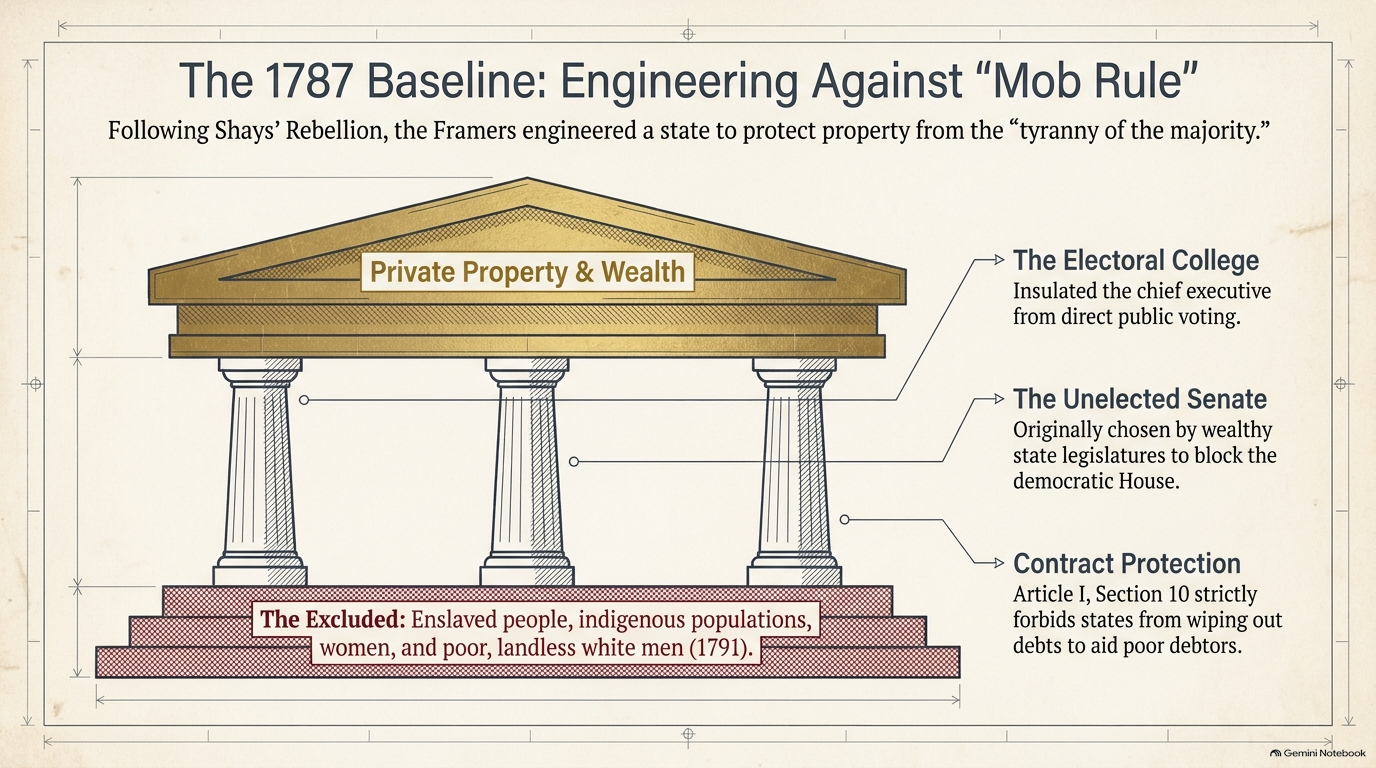
In his classic 1913 work, An Economic Interpretation of the Constitution of the United States, historian Charles Beard argued that the Constitution was fundamentally an economic document. Having just witnessed Shays' Rebellion in 1786—where debt-ridden Revolutionary War veterans led an armed uprising against aggressive foreclosures in Massachusetts—the Framers deeply feared what they termed "mob rule." They worried that a poor majority would use unfiltered democracy to print cheap paper money, cancel debts, or redistribute property.
To insulate private wealth from majoritarian control, the Framers engineered several structural "veto points":
Property Qualifications for Voting: The Constitution left voting qualifications to the states, almost all of which initially restricted voting rights to white, male property owners. The underlying philosophy was that only those with land possessed a true "stake in society."
The Electoral College Buffer: Rather than trusting a direct popular vote to select the chief executive, the Framers inserted the Electoral College as an elite filter between the public and executive power.
An Unelected Senate: Originally, U.S. Senators were chosen by state legislatures (heavily dominated by wealthy landowners and merchants) rather than direct popular vote, serving as a check on the House of Representatives.
Protection of Contracts (Article I, Section 10): The Constitution explicitly prohibits states from passing laws "impairing the Obligation of Contracts"—a clause directly included to prevent states from wiping out debts owed to wealthy lenders.
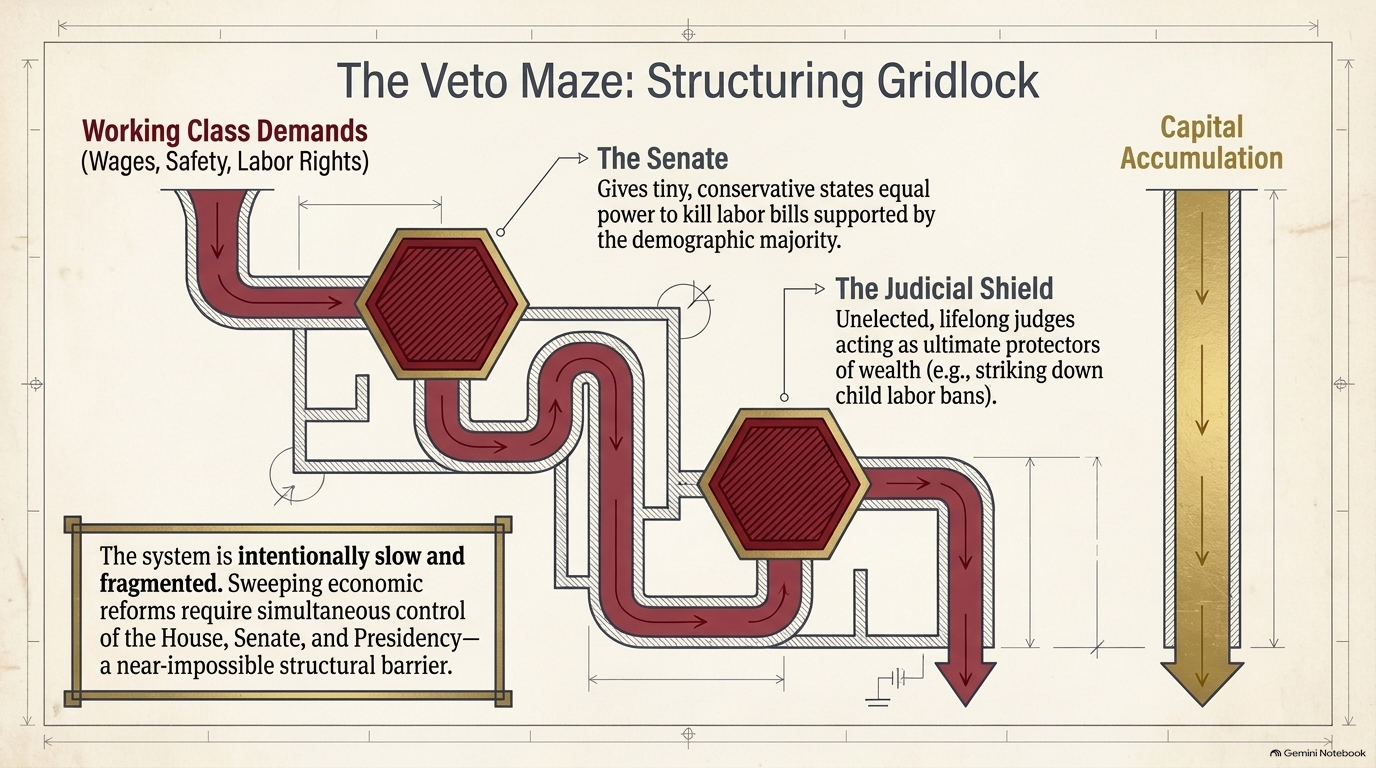
This architecture created a fragmented, veto-heavy system where passing laws to regulate business or redistribute resources requires navigating an intentional maze, while existing property rights remain structurally protected.
War, Sacrifice, and Profit: The Human Cost of Conflict
When a nation goes to war, who pays the human toll, and who reaps the economic rewards? Throughout American history, a striking tension has existed between those who fight on the front lines and those who profit behind the scenes.
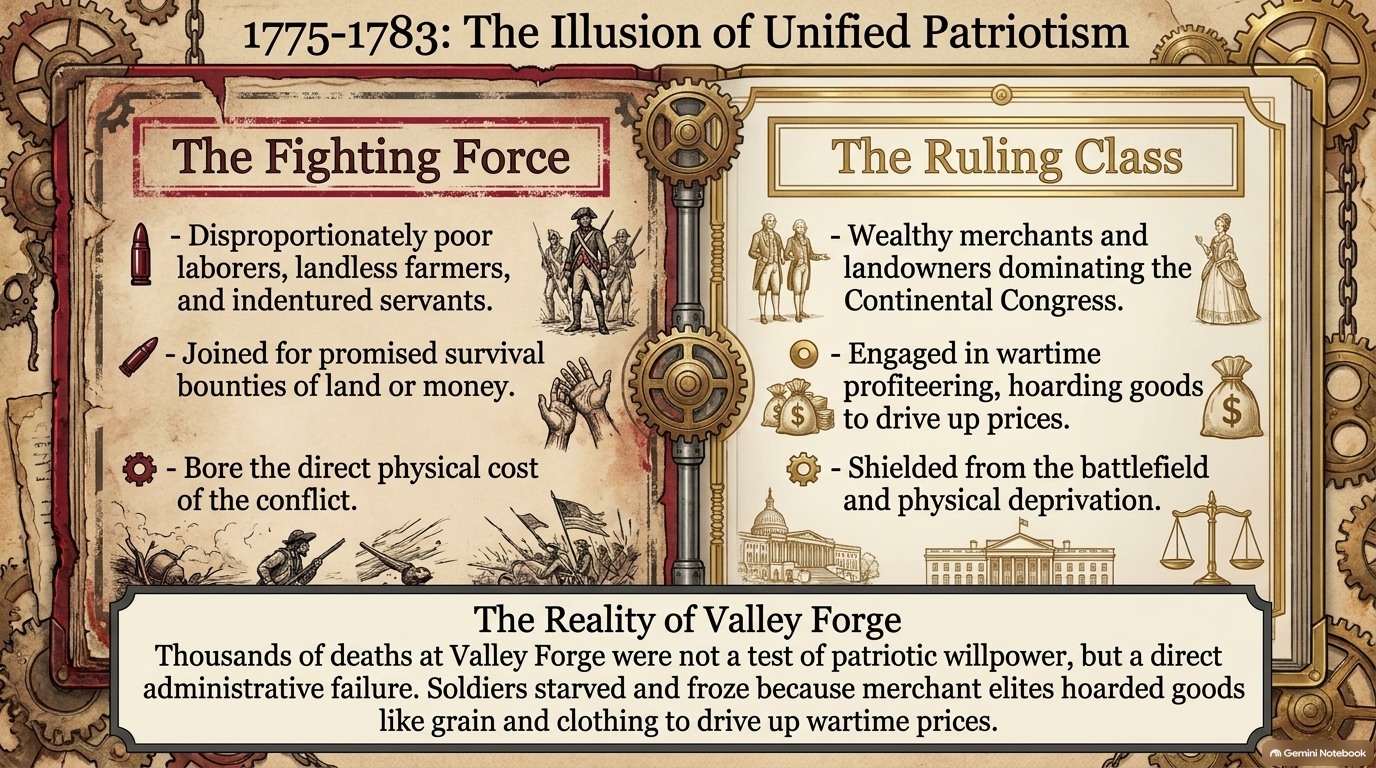
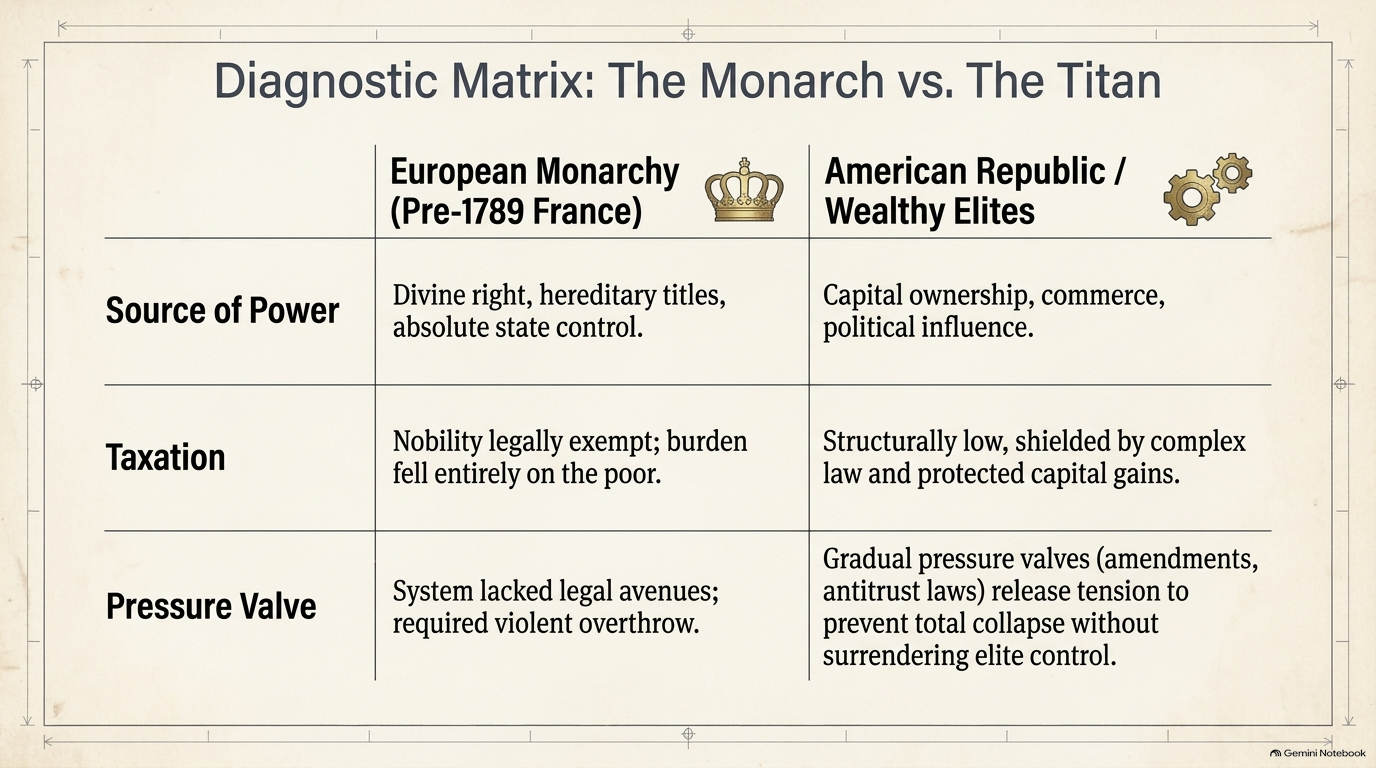
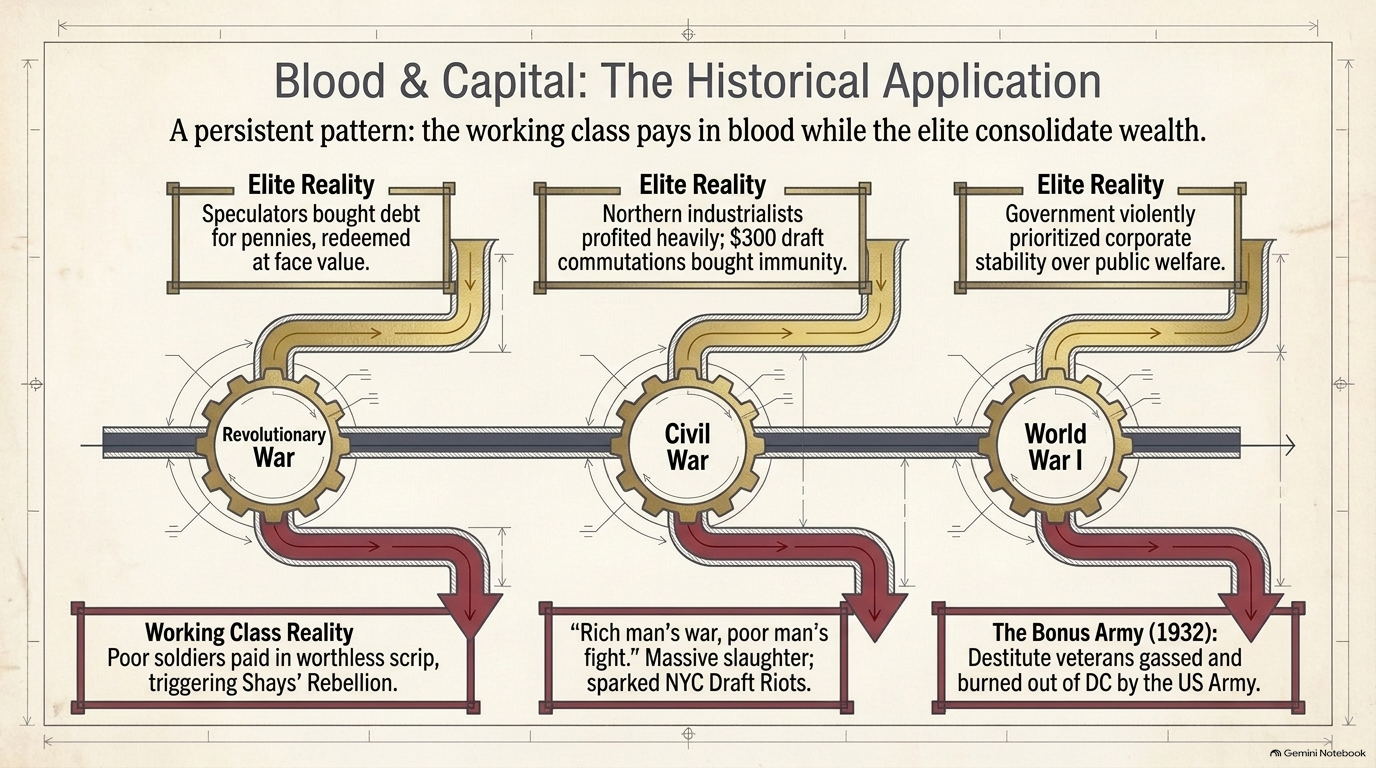
Consider the Revolutionary War. The Continental Army was largely composed of poor laborers, landless farmers, and indentured servants promised land bounties. While soldiers suffered extreme cold and starvation at Valley Forge due to congressional supply failures, merchant elites frequently engaged in wartime profiteering, hoarding grain and clothing to drive up prices. After the war, poor veterans were paid in near-worthless paper currency and sold their government land certificates for pennies on the dollar to wealthy speculators, who later redeemed them at full face value from the new government.
This pattern echoed even more intensely during the Civil War:
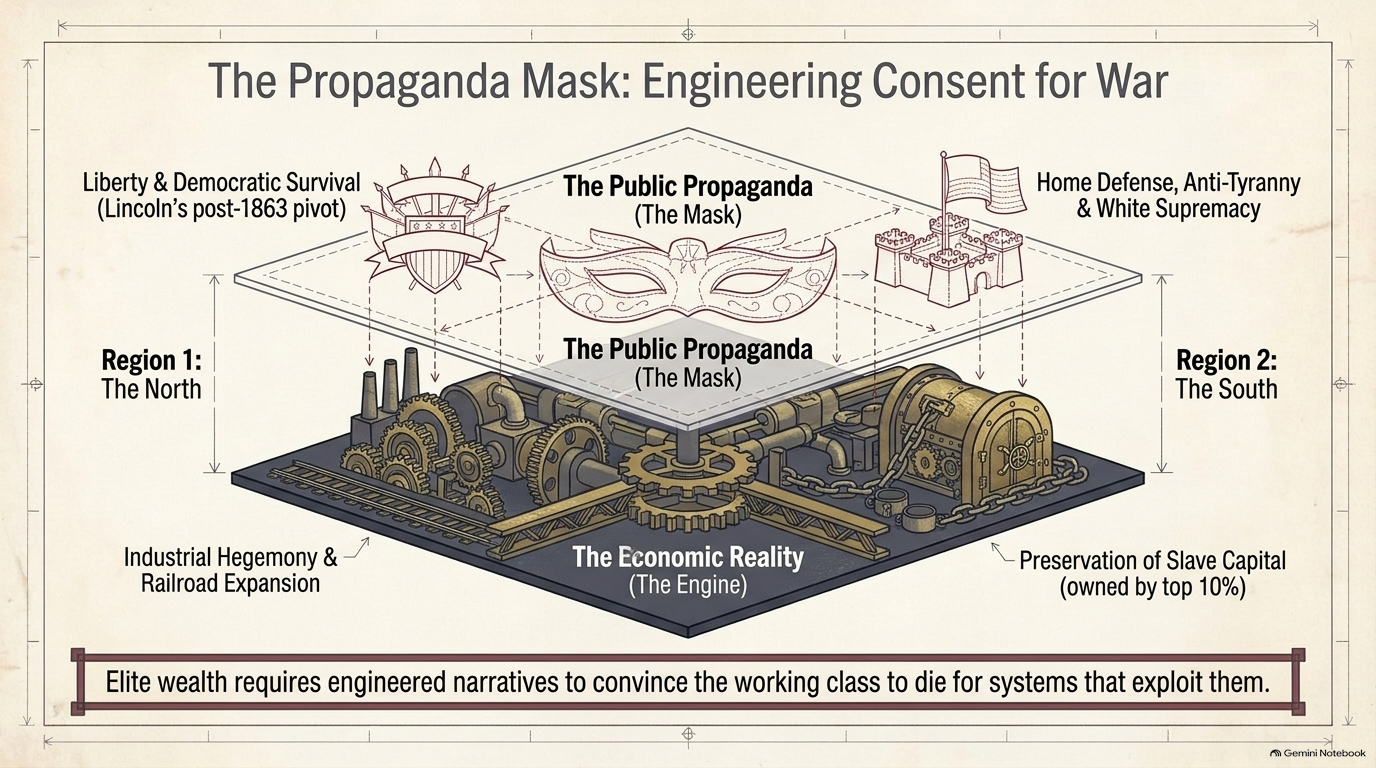
"A Rich Man's War and a Poor Man's Fight": Draft laws on both sides contained blatant loopholes for the wealthy. In the North, a man could pay a $300 commutation fee or hire a substitute to fight in his place. In the South, the "Twenty Negro Law" exempted anyone owning 20 or more enslaved people from military service.
Rhetorical Manipulation: To convince working-class citizens to fight, leaders reframed economic realities into ideological causes. Southern leaders like Jefferson Davis weaponized white supremacy and anti-Northern tyranny rhetoric to persuade poor non-slaveholding yeoman farmers (75% of the white population) to die protecting the property of the top 10% planter elite. In the North, Abraham Lincoln initially framed the war strictly around preserving the constitutional Union, later elevating it through the Gettysburg Address and Emancipation Proclamation into a moral crusade for universal liberty.
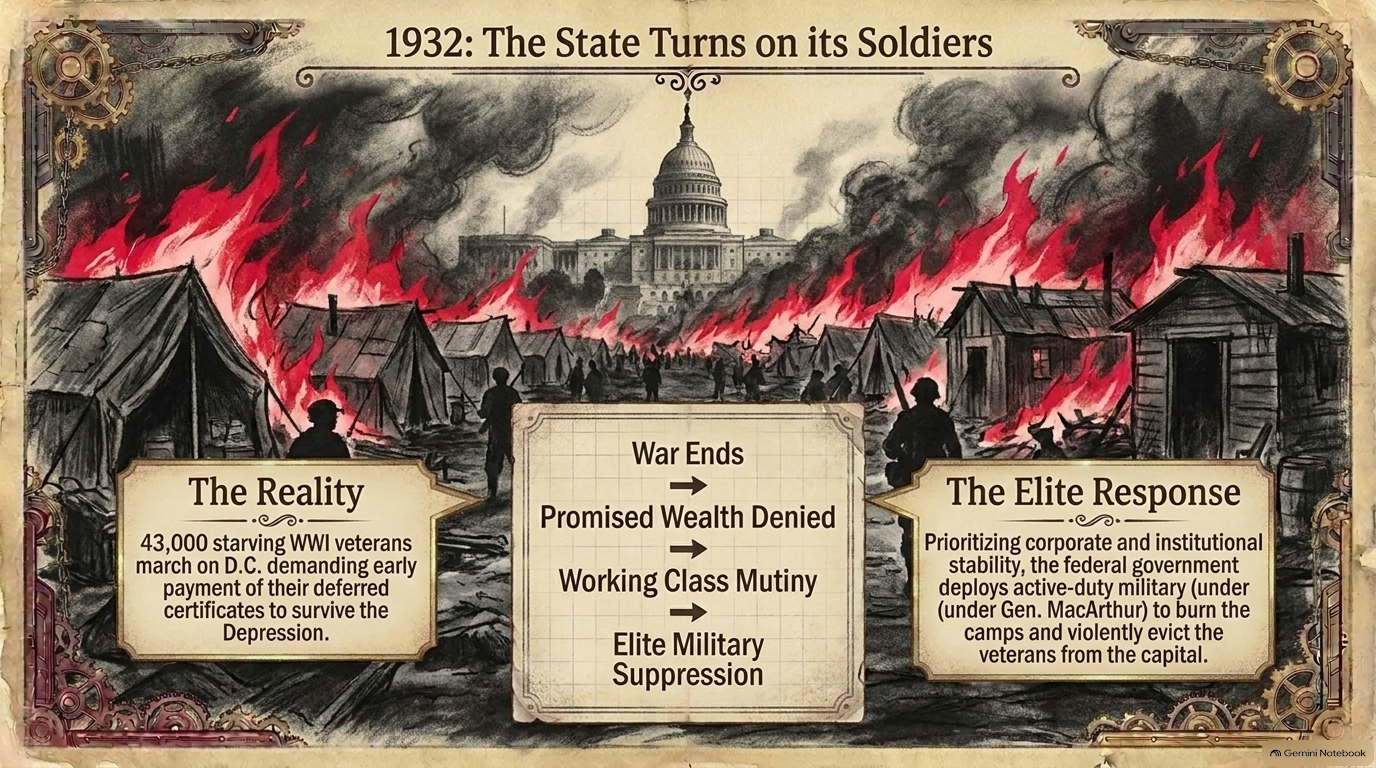
The Aftermath: Following major wars, returning veterans frequently faced economic abandonment—from Daniel Shays' rebellion in 1786 to the Bonus Army of 1932, where World War I veterans requesting early bonus payments were met with active-duty troops and tear gas in Washington, D.C. It was only after WWII, with the passage of the G.I. Bill, that systematic veteran aid was integrated—though its administration locally excluded many Black veterans through redlining and segregated educational policies.






Industrialization, Exploitation, and Divide-and-Conquer
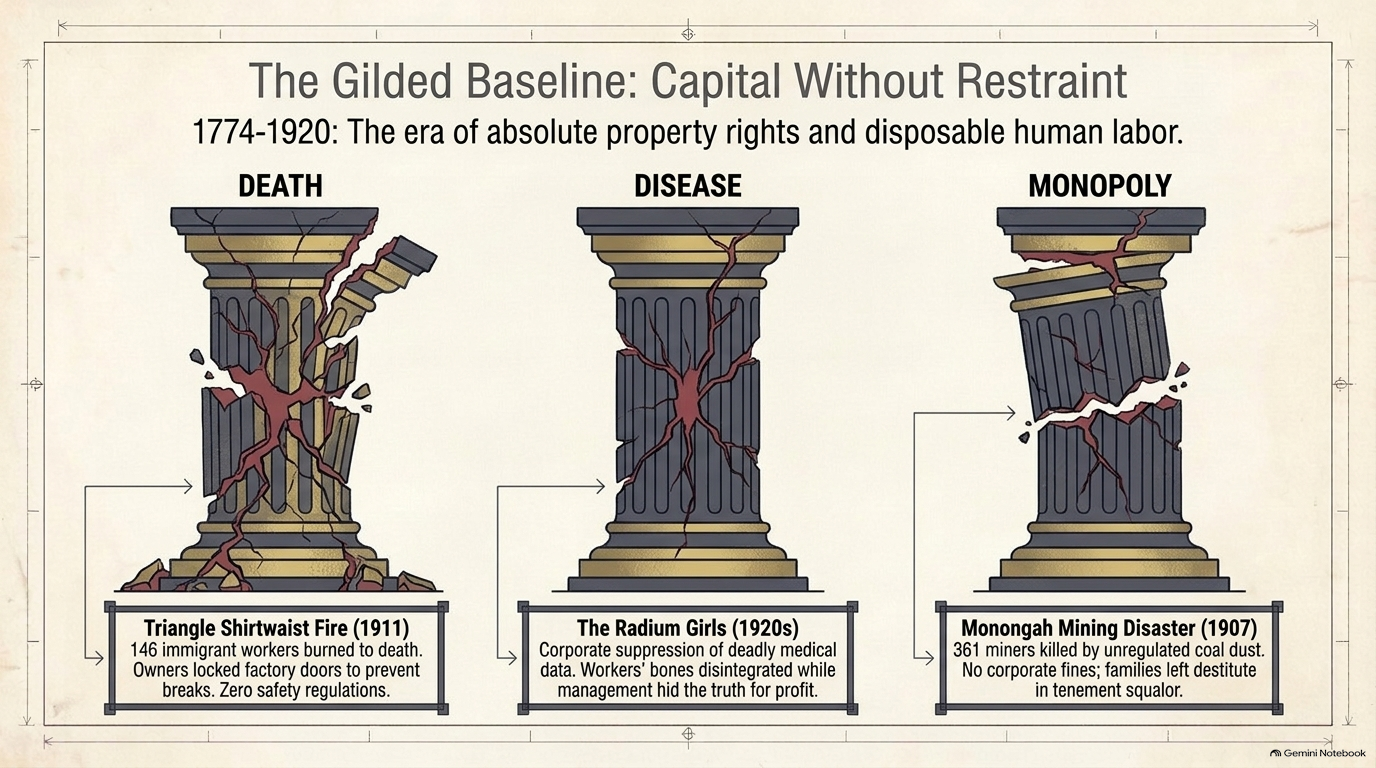
Following the Civil War, the United States entered an era of rapid industrial expansion—and stark economic inequality. As corporate monopolies grew, the legal system heavily prioritized capital over human life.
During the late 19th and early 20th centuries—known in legal history as the Lochner Era—the Supreme Court routinely used the 14th Amendment (originally intended to protect freed slaves) to strike down state labor regulations under a newly manufactured "liberty of contract" doctrine:
Lochner v. New York (1905): The Court struck down a law limiting bakery workers to 60 hours a week, claiming it violated the worker's "freedom" to negotiate hours with their employer.
Hammer v. Dagenhart (1918): The Court invalidated a federal law banning child labor in factories, ruling that Congress lacked authority to regulate local manufacturing conditions.
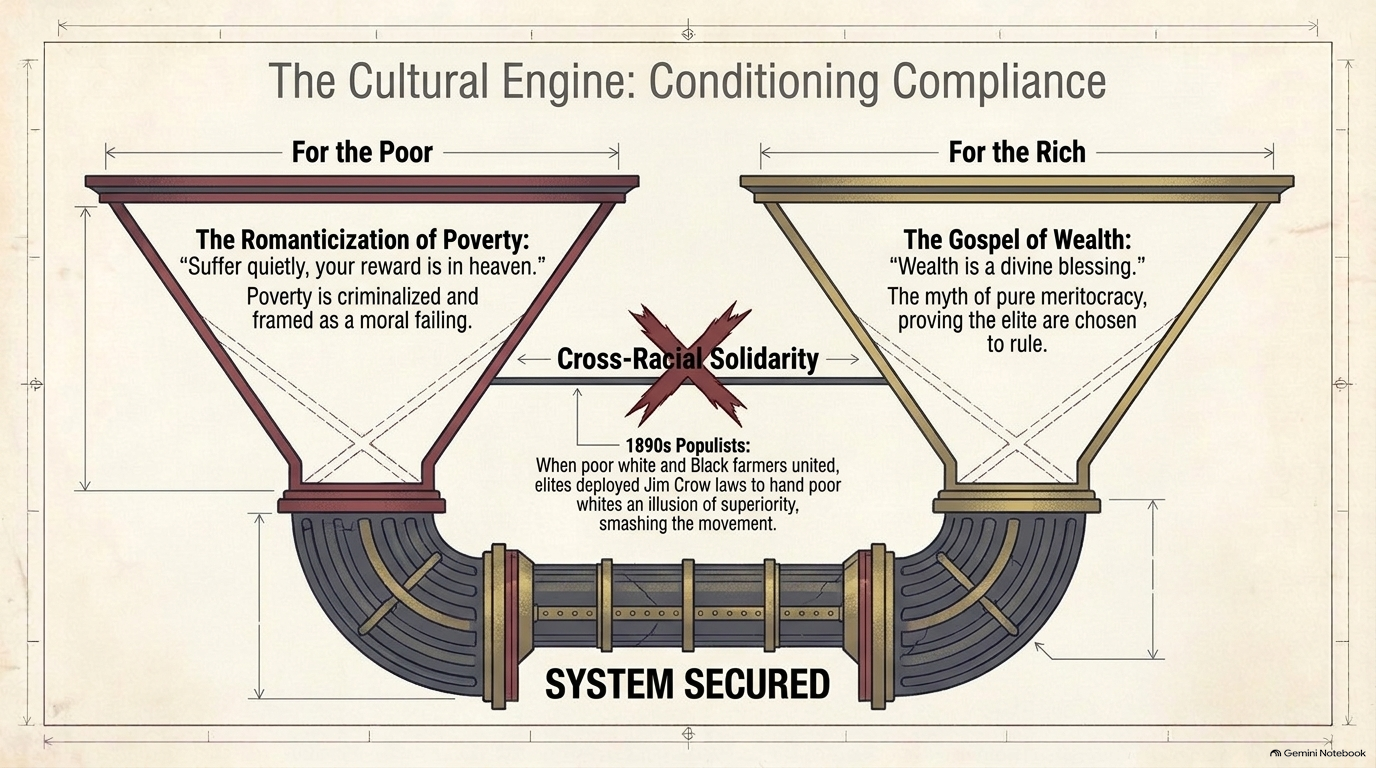
Meanwhile, in the post-Reconstruction South, the planter elite faced a potential nightmare: poor Black freedmen and poor white yeoman farmers joining forces to demand land and debt relief. During the 1880s and 1890s, this cross-racial alliance began to materialize under the Populist Party.
To smash this economic solidarity, the Southern ruling class engineered a multi-pronged strategy:
Sharecropping & Debt Peonage: Trapping landless laborers in perpetual cycles of debt through manipulated ledger books.
Convict Leasing: Exploiting the 13th Amendment's loophole to arrest Black citizens on minor or fabricated charges ("Black Codes") and lease them to private corporations as disposable forced labor.
Jim Crow Laws & Racial Division: Enacting legal segregation and racial disenfranchisement. By handing poor whites the psychological prize of legal racial superiority, the elite successfully shattered the Populist coalition, keeping the working class divided while corporate wealth remained unbothered.
Complementing these legal structures were cultural narratives—such as the Puritan Work Ethic and the Prosperity Gospel—which framed wealth as explicit evidence of divine favor and poverty as individual moral failure, encouraging workers to endure earthbound suffering while trusting in heavenly rewards.
The Regulatory Tug-of-War and the Modern Rollback
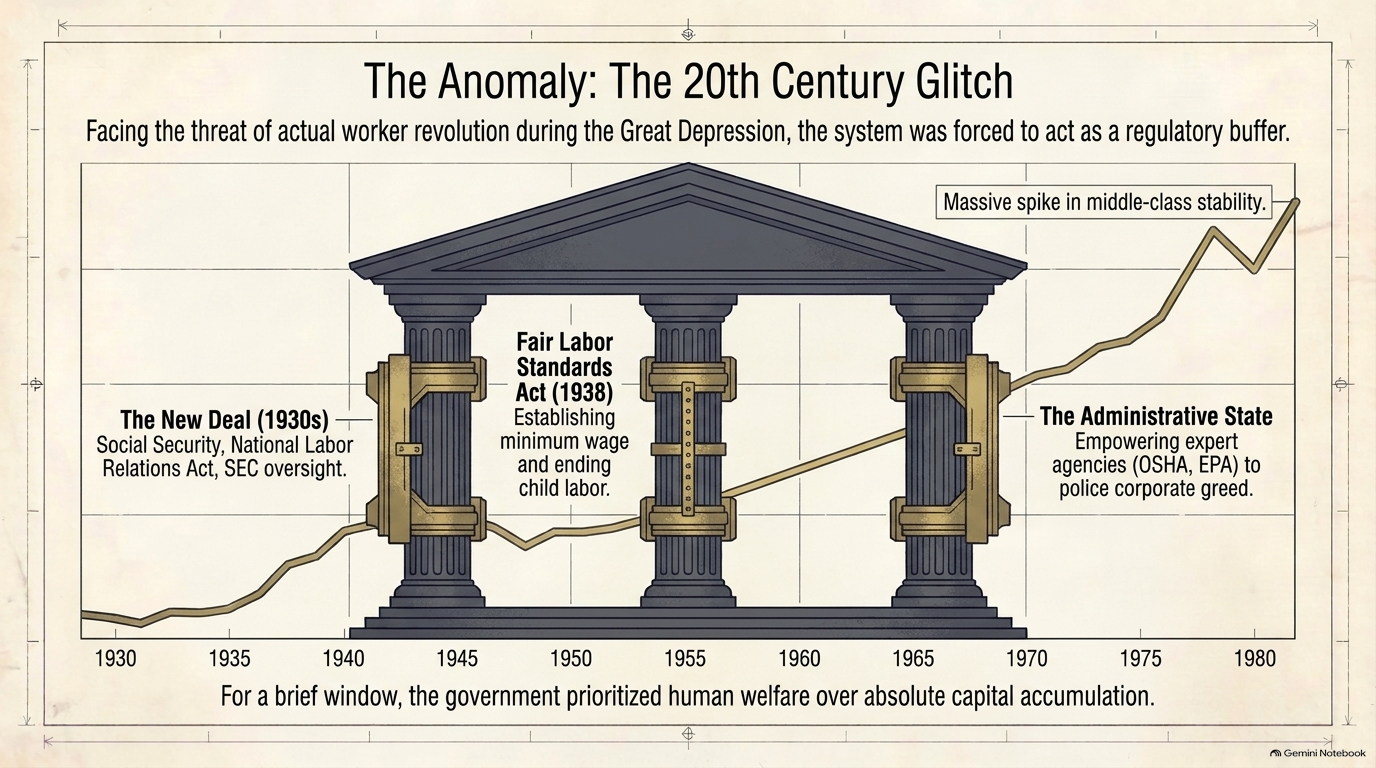
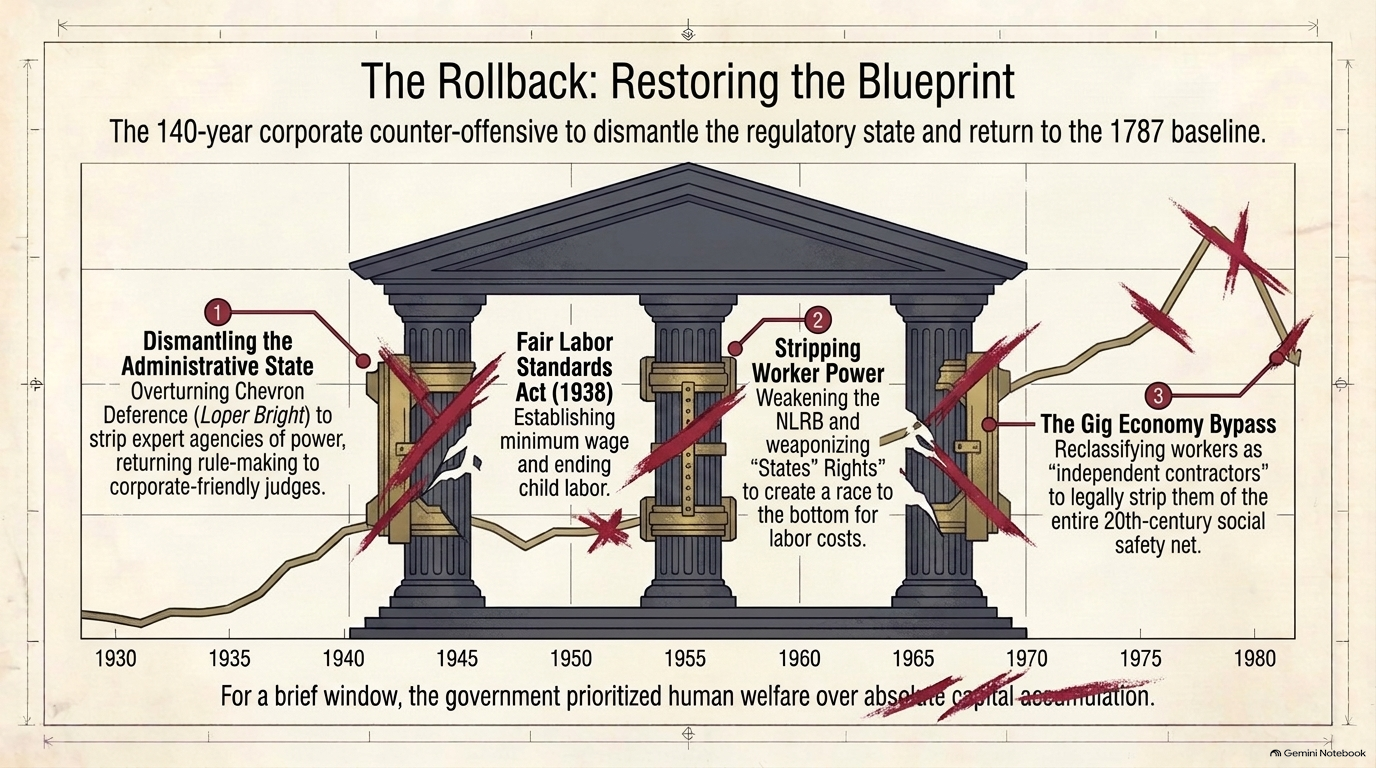
The 20th century saw massive public mobilizations—the Labor Movement, the New Deal, and the Civil Rights Movement—force the federal government to establish a regulatory safety net. Laws like the National Labor Relations Act (1935), Fair Labor Standards Act (1938), and the creation of regulatory watchdogs (like OSHA and the EPA) briefly transformed government into a counterweight against unchecked corporate power.
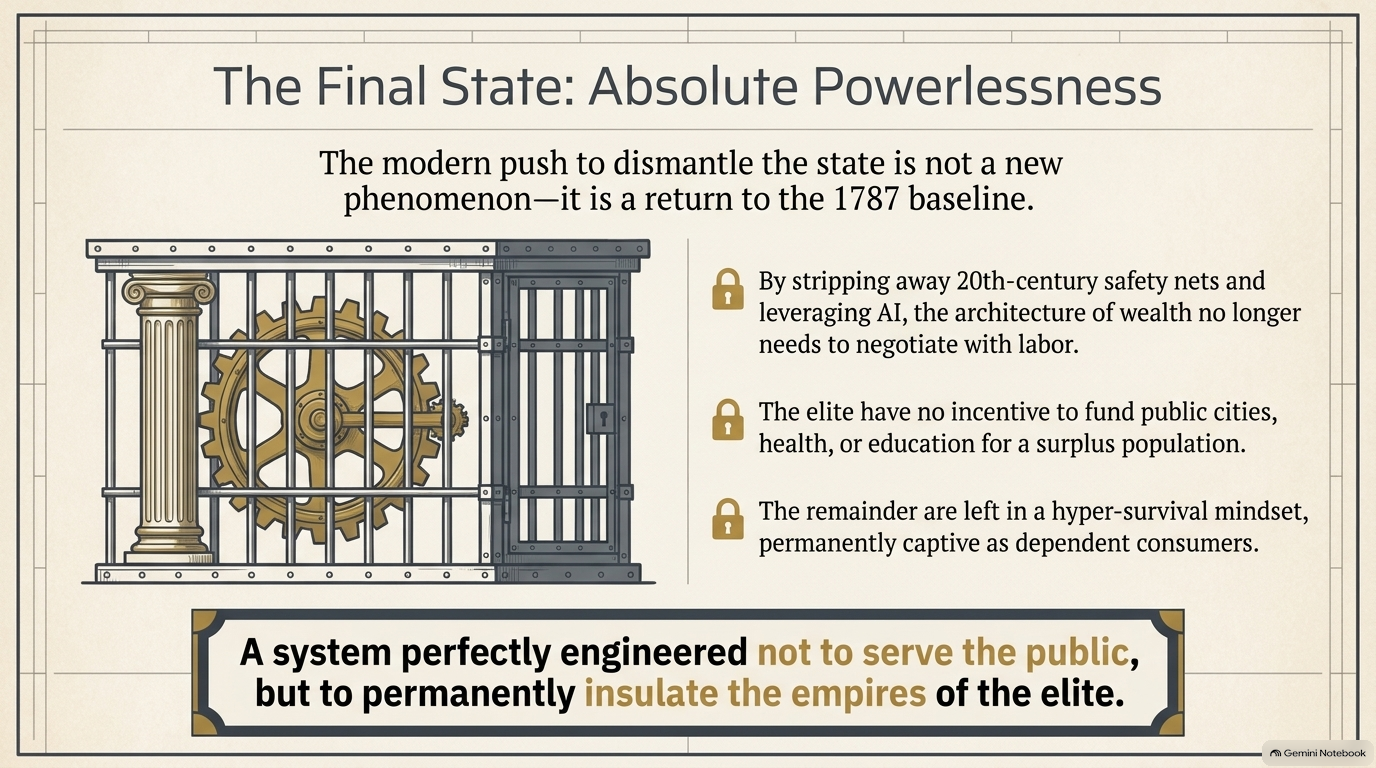
However, over the last forty years, a heavily funded corporate counter-offensive has worked to dismantle this administrative state, aiming to return legal structures to their pre-regulatory baseline:
Dismantling Administrative Power: In the landmark 2024 decision Loper Bright Enterprises v. Raimondo, the Supreme Court overturned forty years of "Chevron deference." By stripping federal expert agencies of their authority to interpret ambiguous laws and transferring that power back to judges, the courts severely restricted the government's ability to police corporate behavior without explicit, granular acts of a gridlocked Congress.
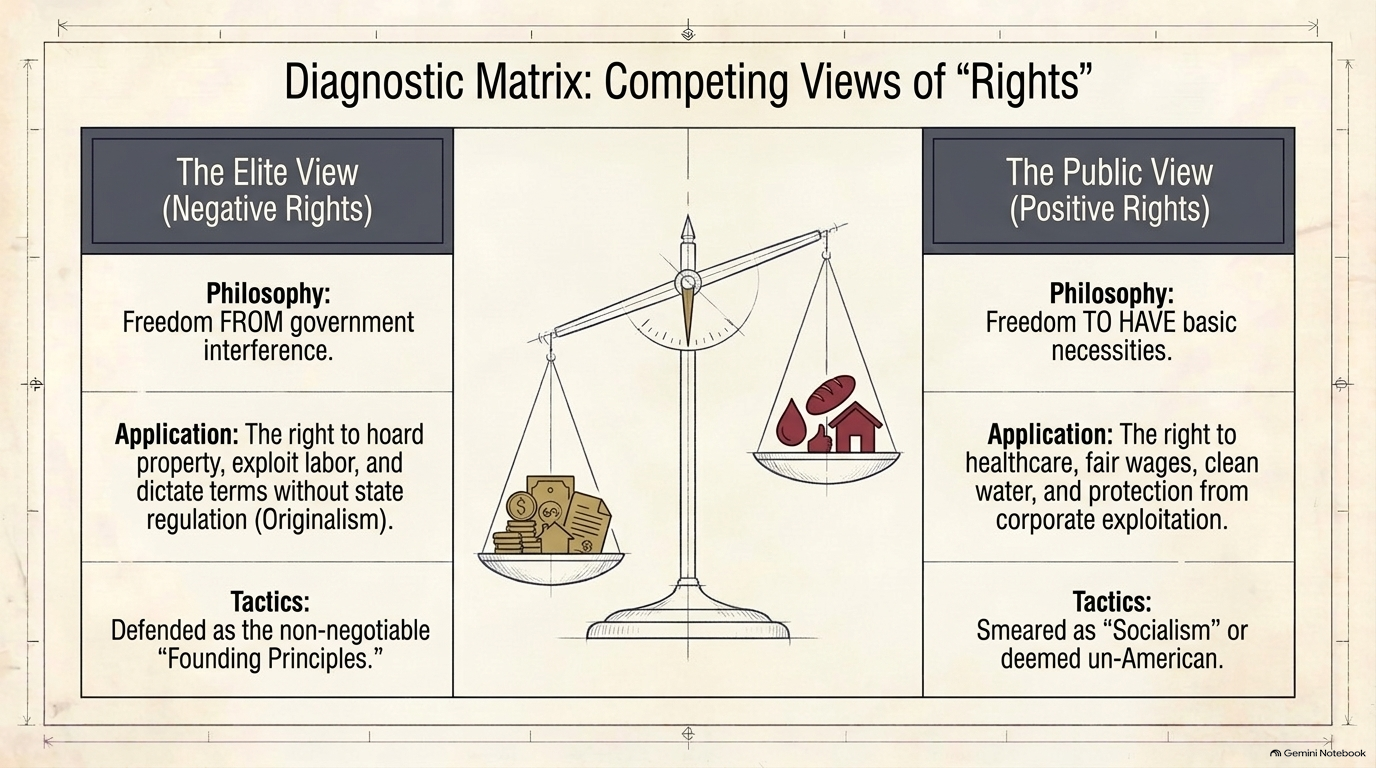
Corporate Personhood & Political Money: In cases like Citizens United v. FEC (2010), the Court ruled that corporate political spending is a protected form of "free speech" under the First Amendment, allowing billions in dark money to shape elections.
A Dual-Tier Justice System: While corporations benefit from limited liability and tax strategies like the "Buy, Borrow, Die" loophole, ordinary citizens navigate a system where basic constitutional rights are tied directly to wealth. Over 90% of criminal defendants accept plea bargains because they cannot afford private counsel, while the cash bail system detains poor individuals pre-trial simply because they lack liquid funds.
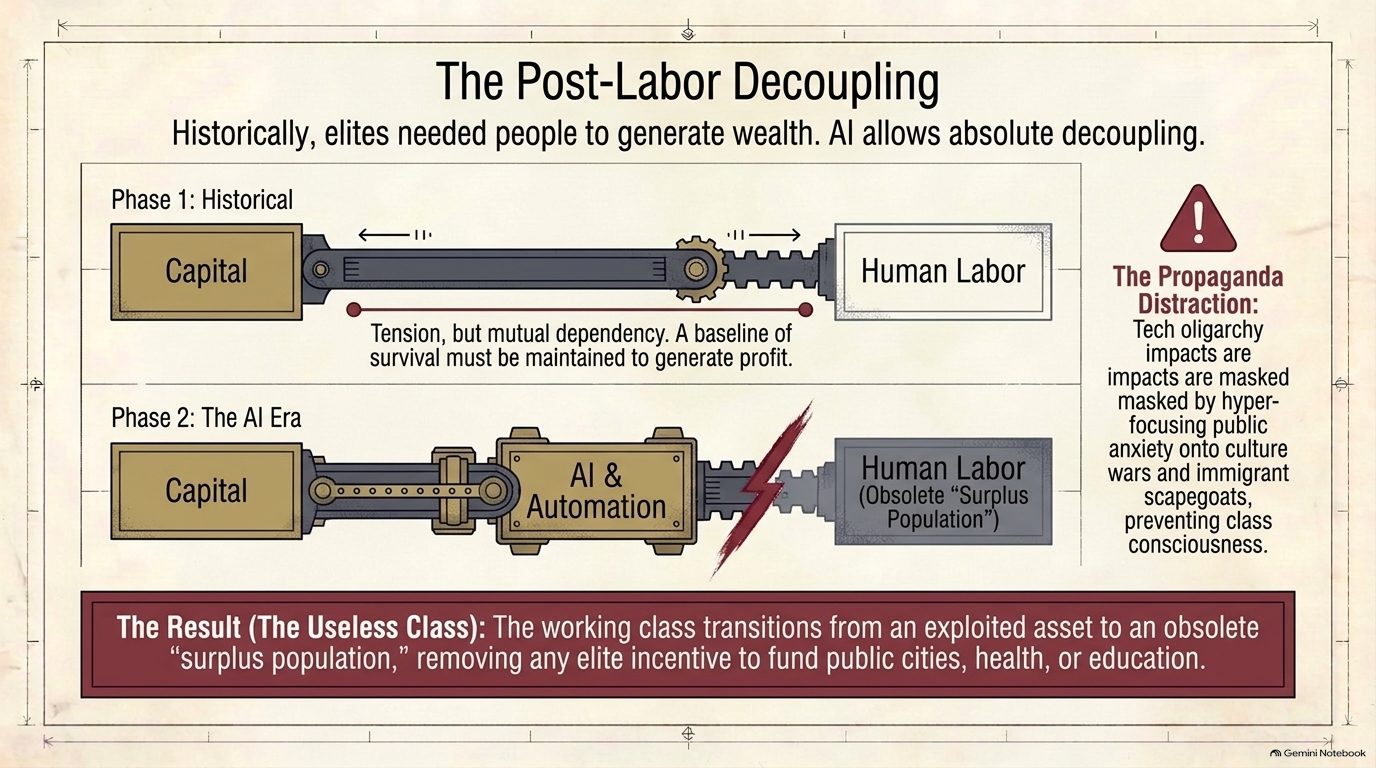
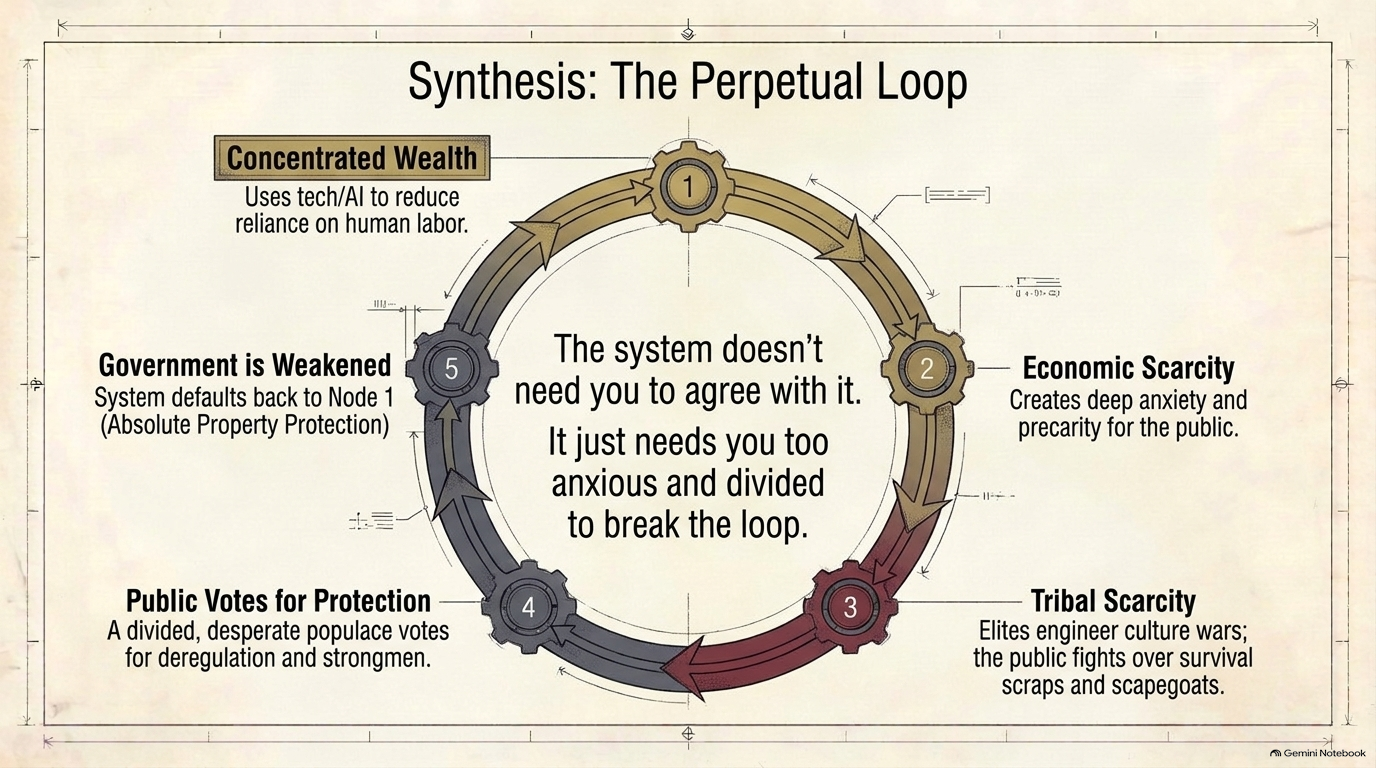
As automation and artificial intelligence advance, legal scholars and economists warn of a growing "economic decoupling"—a scenario where capital ownership no longer relies on a massive human workforce, further amplifying the importance of who holds the legal and constitutional levers of power.

Summary
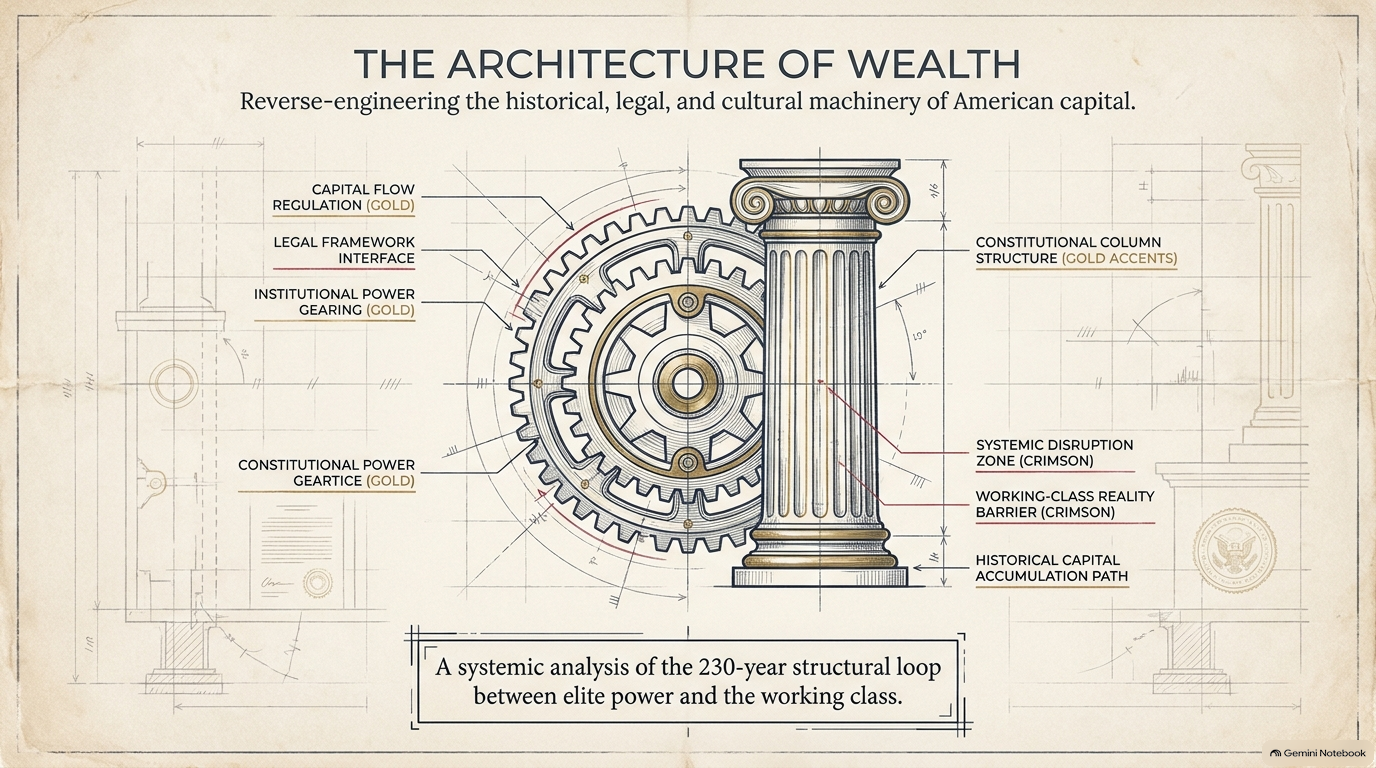
From the constitutional design of 1787 to modern battles over corporate regulation, American history reflects a continuous struggle between accumulated wealth and democratic representation. By understanding how legal frameworks, wartime policies, and cultural narratives have functioned over time, we gain a clearer picture of how economic power shapes governance today.
Key Takeaways:
Constitutional Design: The U.S. Constitution created multiple veto points (Electoral College, Senate structure, Contract Clause) specifically engineered to insulate private property from majoritarian control.
Wartime Realities: Major American conflicts historically featured draft exemptions for the wealthy and economic hardships for poor soldiers, requiring leaders to craft compelling cultural and moral narratives to sustain public support.
Shattering Solidarity: Southern elites neutralized working-class Populist alliances through sharecropping, convict leasing, and Jim Crow legal segregation.
The Modern Legal Shift: Decisions like Loper Bright and Citizens United mark a systematic return toward a pre-regulatory baseline, weakening administrative agencies while expanding corporate constitutional rights.

Disclaimer:
With the access to AI reading the news, watching movies and reading books opens up a new world. I have had various family members live to the age of 100 and I ask them what have they learned from their lives and they do not have awareness of what they journey means. These two areas fit with this idea I had. Having chats with AI on topics of thought and documenting them. I call this "Thoughts in the dark".
I am aware I do not have the answers only questions.