
Introduction
What if the experience of love isn't something we merely receive from the world, but a profound lens through which the universe observes and experiences itself—even in the midst of extreme human suffering?
Explore this philosophical journey through the following learning objectives:
Analyze the concept of consciousness as existence observing itself through the layer of love.
Examine Viktor Frankl's psychological insight on how love can be initiated internally despite extreme hardship.
Evaluate the paradox between divine love and the unprotected realities of a world described as a "vale of tears."
Deconstruct how free will creates the essential conditions for both deep compassion and immense cruelty to coexist.
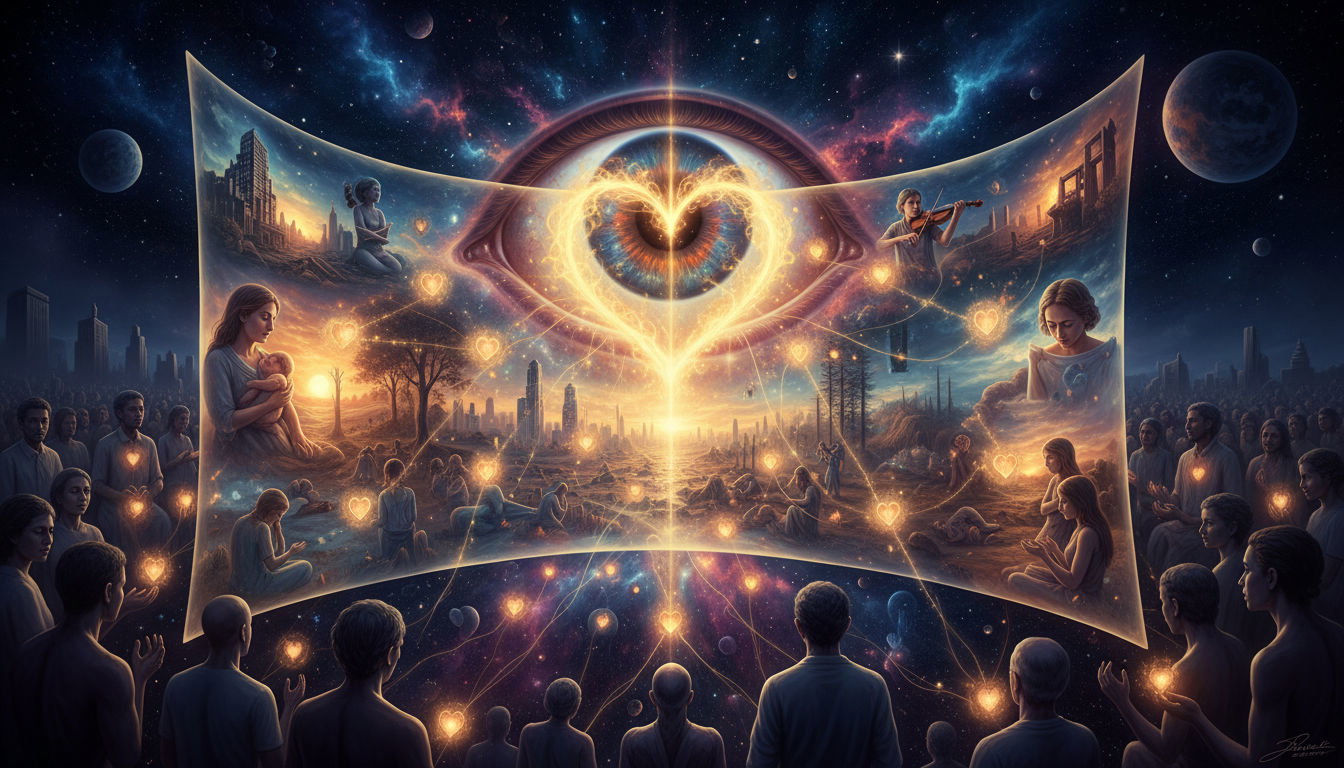

Consciousness and the Universe: Love as Life Experiencing Itself
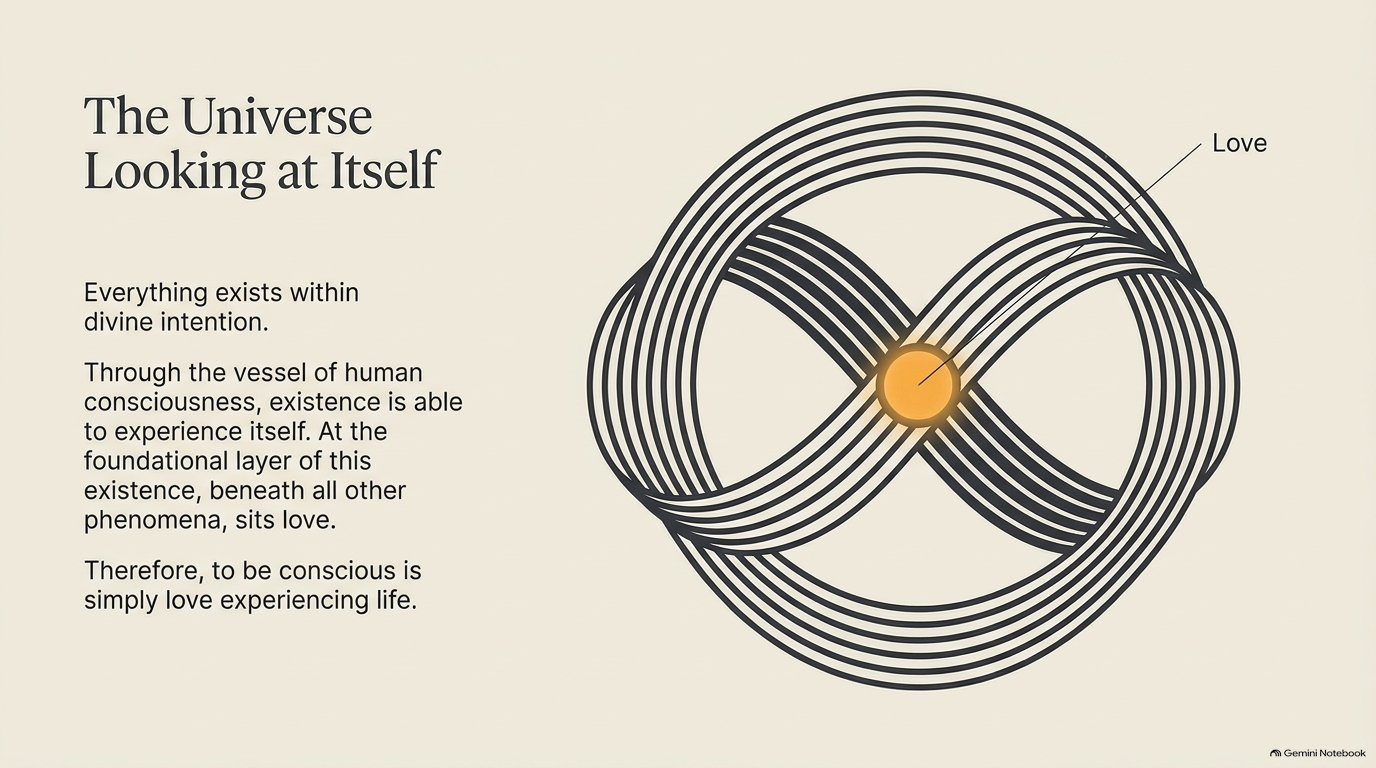
Imagine standing before a mirror. You look at your reflection, and in that moment, your eyes are the very mechanism by which your body sees itself. Now, expand that intuitive picture to the entire cosmos.
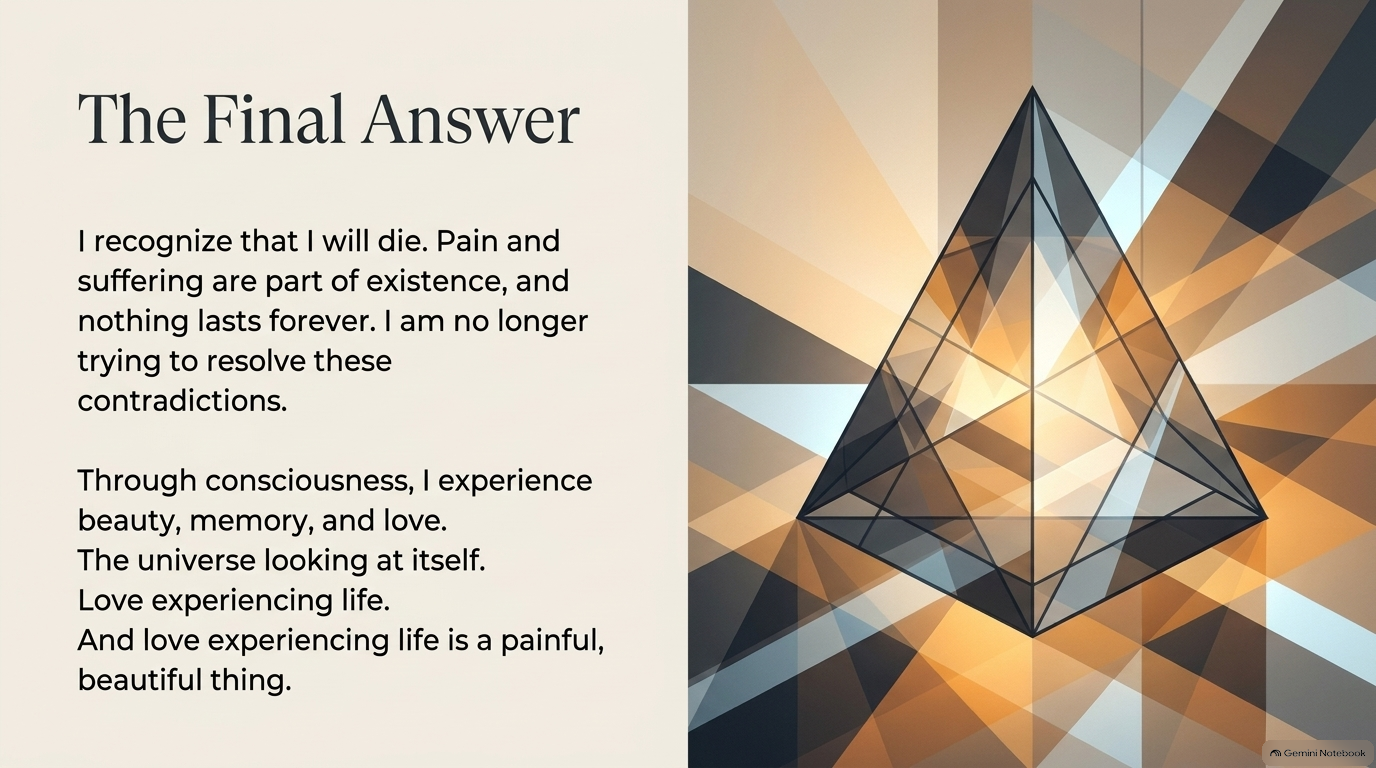
Everything in existence is created within God's intention and remains an integral part of God. Consciousness is the means by which the universe turns inward to observe itself. But this self-observation is not merely a cold, analytical process. Beneath and alongside conscious awareness lies another fundamental layer of existence: love.
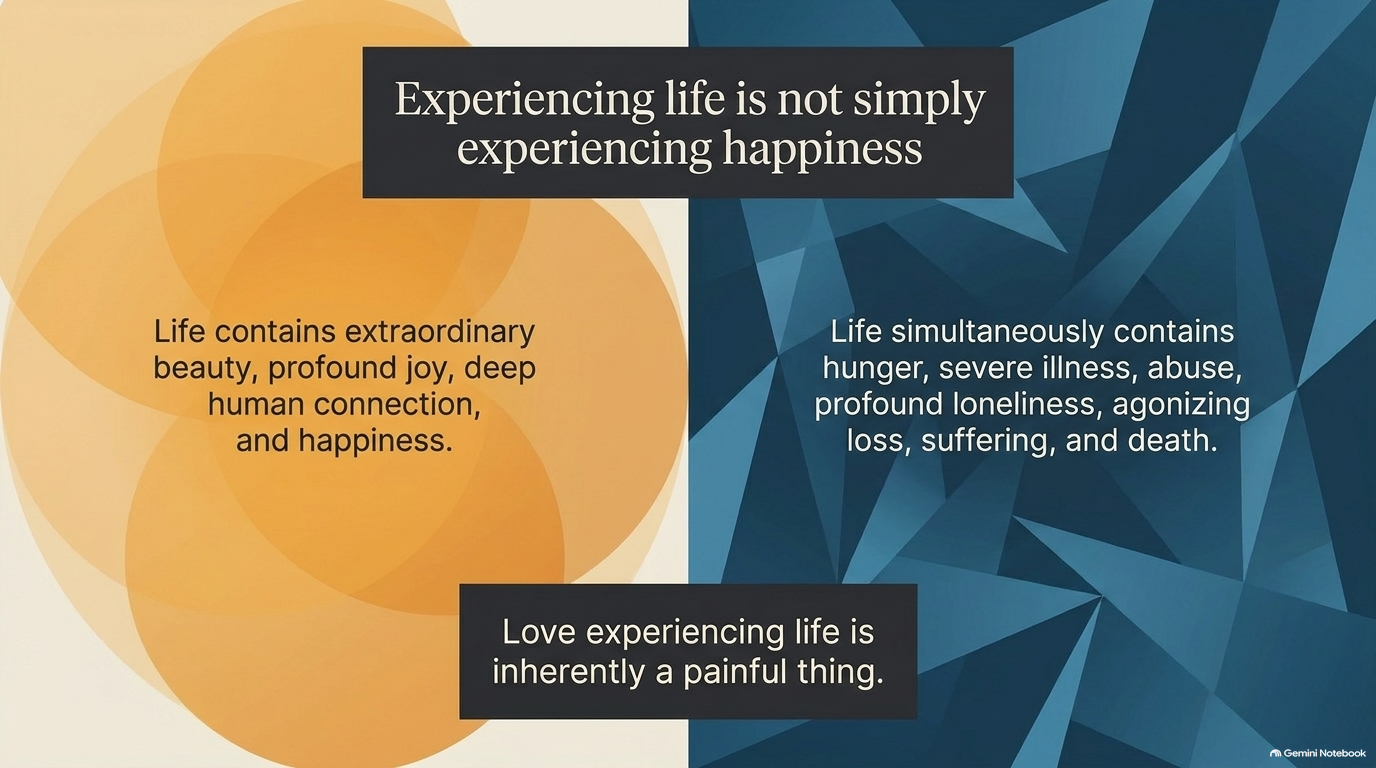
When we perceive reality through our consciousness, it is ultimately love experiencing life. However, experiencing life is far from a uniform journey of pure happiness:
The Bright Side of Existence: Life contains extraordinary beauty, joy, connection, and delight.
The Heavy Realities: Life also encompasses hunger, illness, abuse, loneliness, loss, suffering, and death.
Because love connects us deeply to existence, engaging fully with reality means accepting a difficult truth: love experiencing life is inherently a painful thing.
Love from Within: The Self-Initiated Experience of Love
If love experiencing life is painful, how do we hold onto love when the outside world offers no warmth or protection?
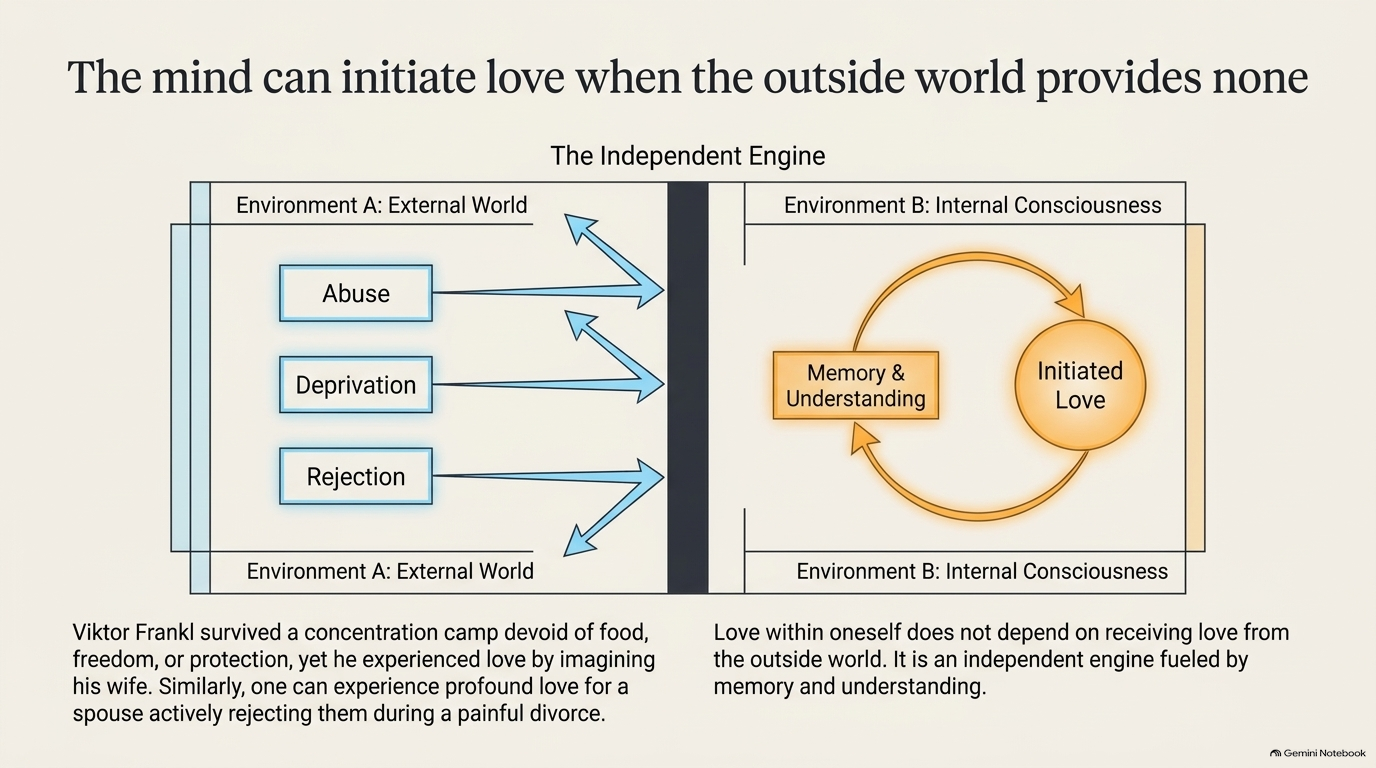
Consider the profound observation made by psychiatrist Viktor Frankl during his imprisonment in Nazi concentration camps. Frankl was stripped of every physical comfort—food, clothing, safety, and basic freedom. He endured constant abuse and lived under the constant shadow of death. Yet, even in that desolate place, Frankl discovered he could conjure the image of his wife and evoke the actual experience of love within his own consciousness.
This insight reveals a pivotal principle about human awareness:
Learning Love: A person first learns what love is through lived experience, memory, and understanding.
Internalizing Knowledge: That understanding becomes an indelible part of consciousness.
Self-Initiation: Once internalized, a person can initiate the experience of love from within themselves, regardless of external conditions.
A personal parallel highlights this reality: loving a spouse through depression and divorce. Even when feeling unwanted, unaccepted, or unhappy, a person can continue to love. This demonstrates that internal love does not depend on receiving love back from someone else—it is an autonomous act of consciousness.
The Unsettling Contradiction: Divine Love and the 'Vale of Tears'
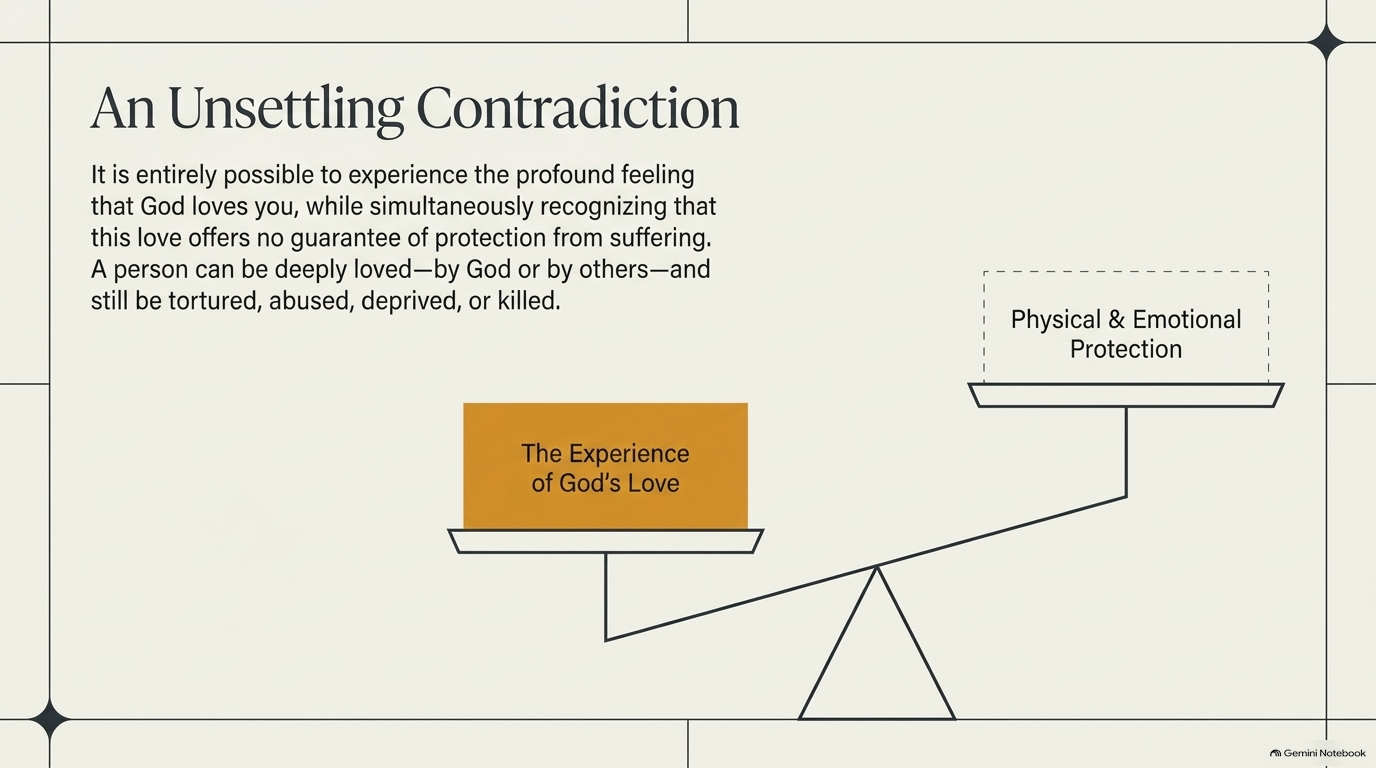
Recognizing that love can be initiated from within brings us face-to-face with an unsettling contradiction: a person can experience being loved by God, yet remain completely unprotected from earthly suffering.
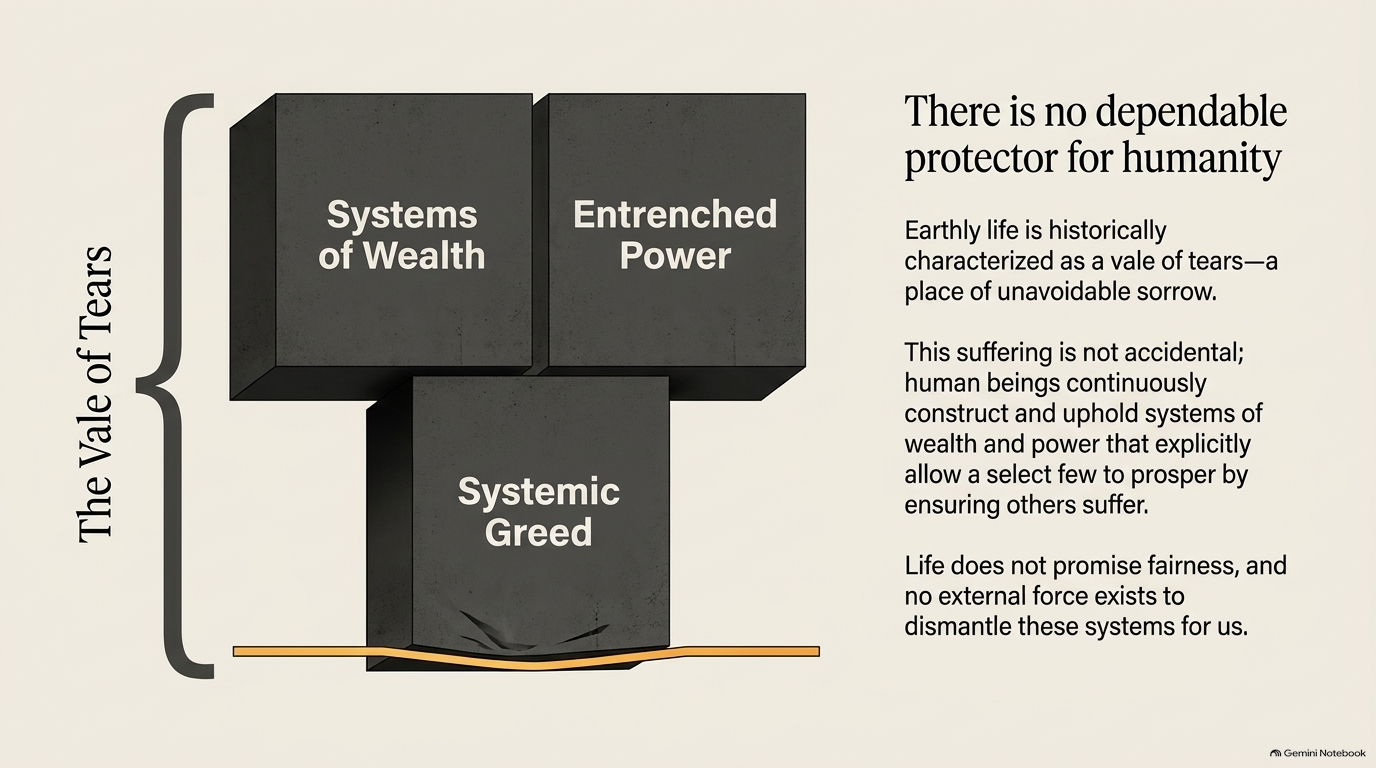
Throughout history, human culture has referred to earthly life as a "vale of tears"—a phrase framing the world as a place defined by sorrow, vulnerability, and hardship. Earthly life carries no dependable promise of fairness or security:
Absence of a Dependable Protector: Being loved does not shield an individual from torture, abuse, deprivation, or death.
Structural Inequality: Human history demonstrates a continuous struggle with systems of wealth and power that allow some to prosper while leaving others to suffer.
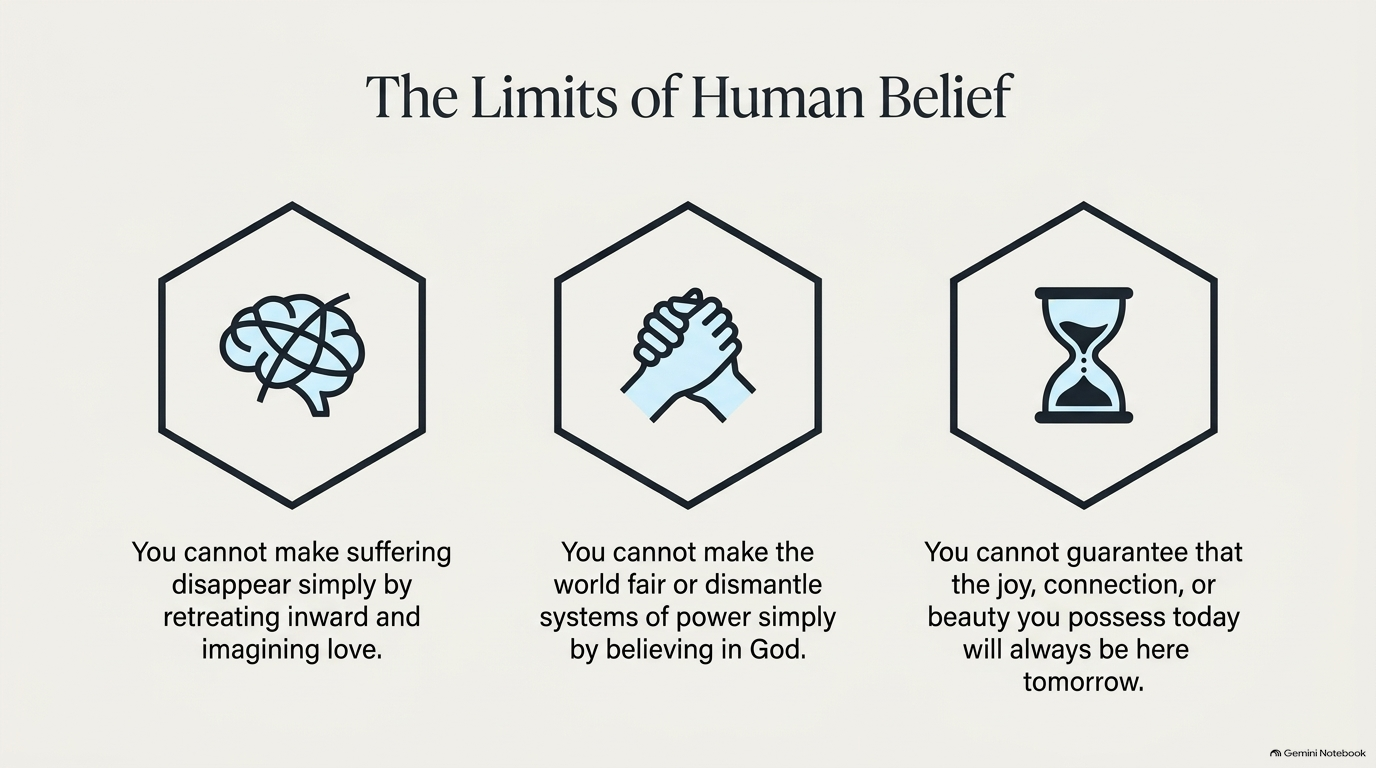
Recognizing this harsh truth requires separating the feeling of divine love from the expectation of guaranteed physical protection. Believing in God or holding love in one's heart cannot magically make real-world suffering disappear.
Free Will: The Crucible of Compassion and Cruelty
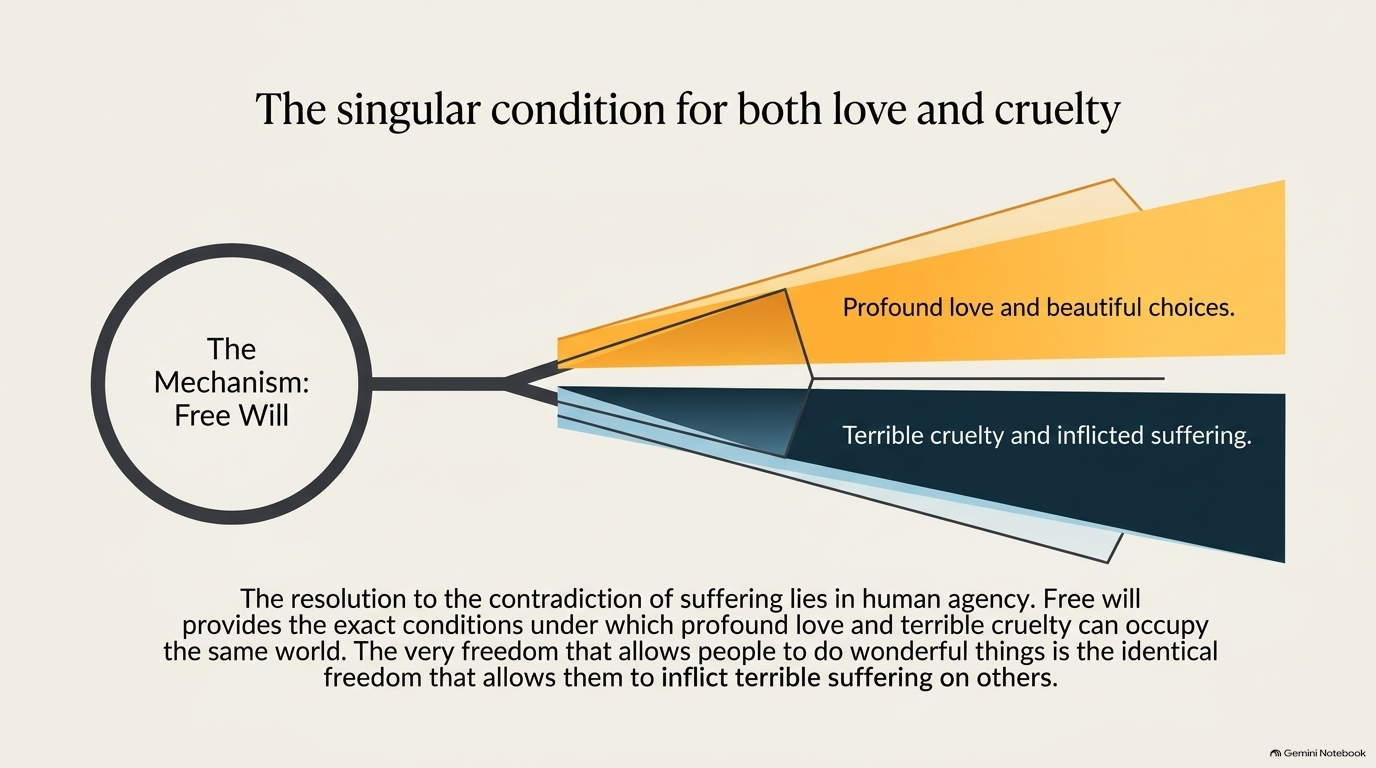
How do we resolve the reality of a universe filled with both love and severe cruelty? The answer lies in the mechanics of free will.
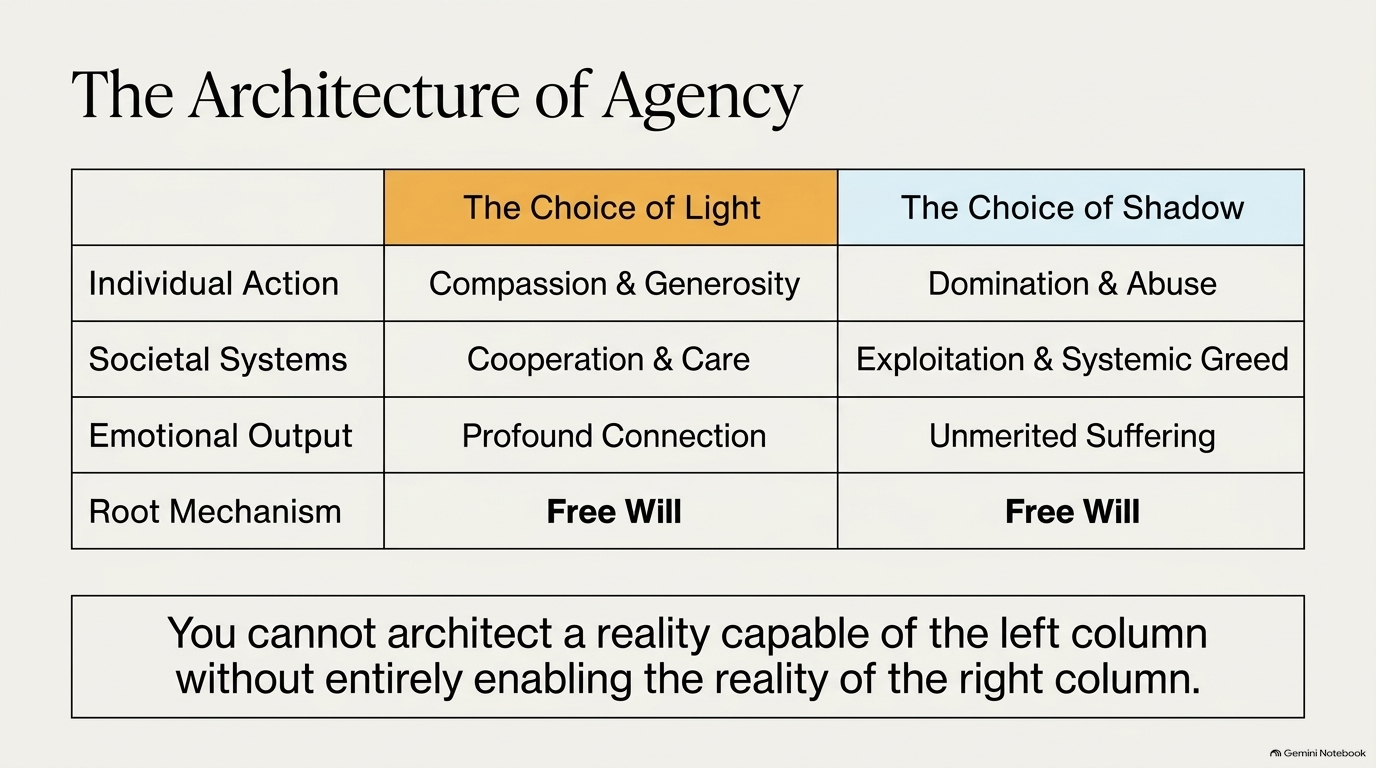
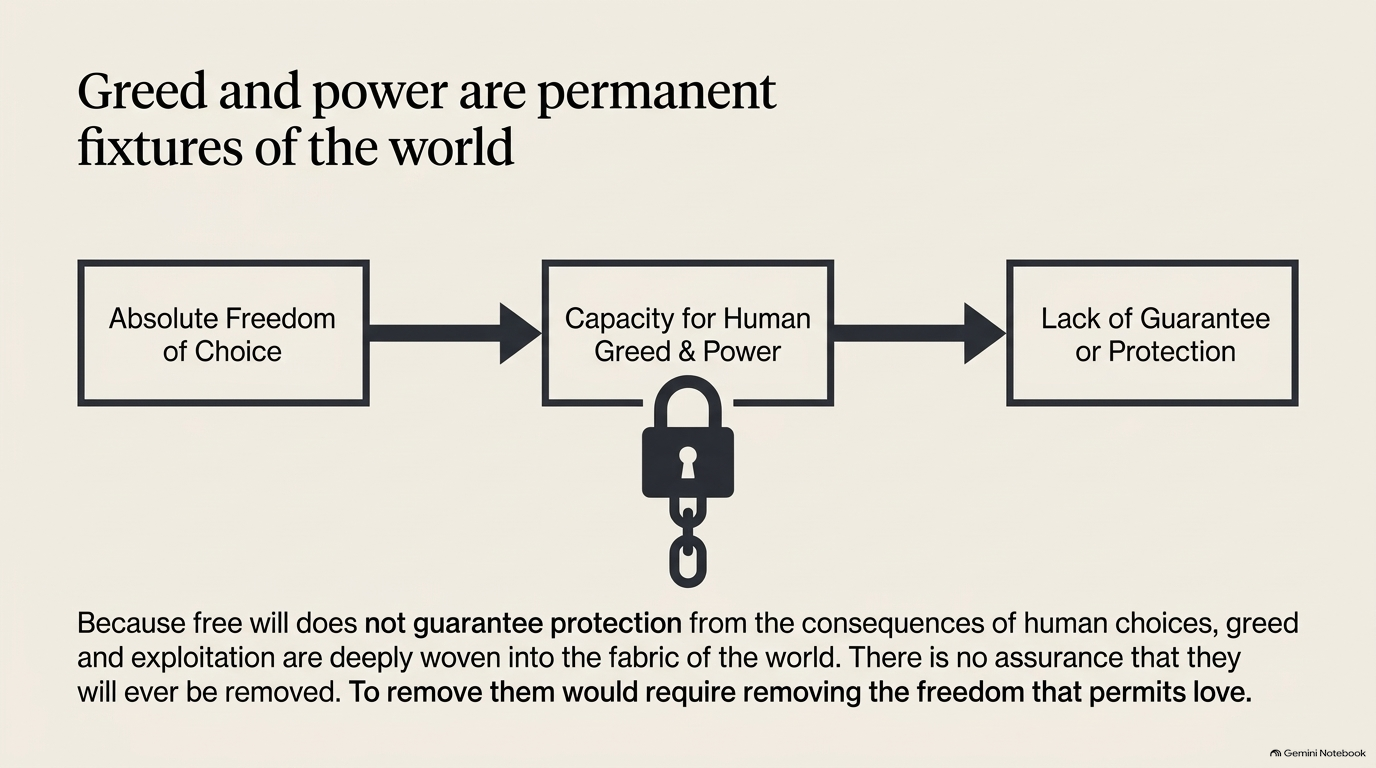
Free will provides the basic conditions under which both human goodness and human violence exist. Think of free will as an open door: the exact same freedom that permits someone to walk through with compassion, generosity, and love allows another to enter with greed, domination, and abuse.
Key aspects of this resolution include:
No Protection Guarantee: Free will does not shield people from the consequences of human choices.
Persistence of Greed and Power: Exploitative systems remain part of the world because human freedom allows individuals to choose greed and domination.
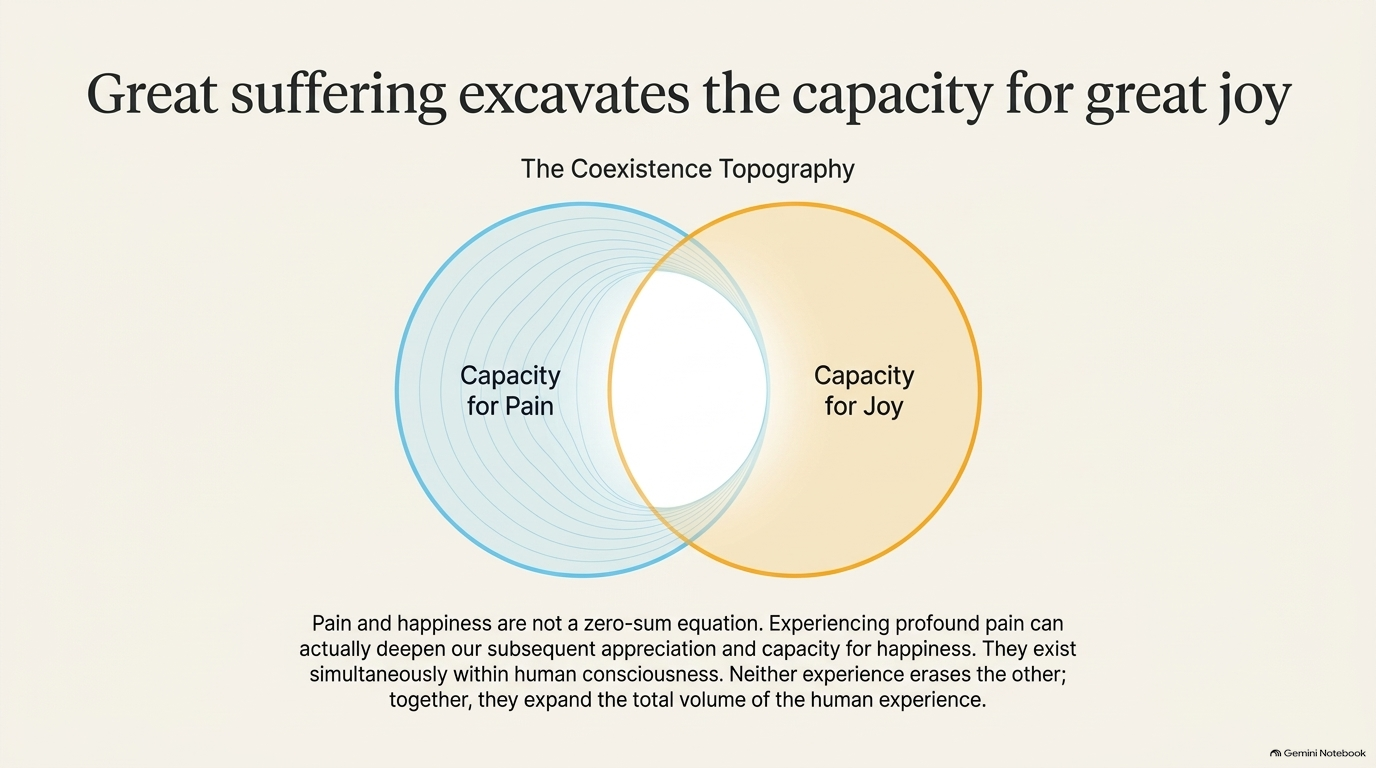
Coexistence of Pain and Joy: Great suffering and great happiness exist side-by-side. Experiencing profound pain does not erase joy; in fact, enduring deep pain can heighten our appreciation for moments of happiness.
We cannot eliminate suffering by imagination alone, nor can we make the world perfectly fair. However, we can actively engage our consciousness—experiencing beauty, imagination, memory, and love while recognizing that life is finite.

Summary
While life provides no guarantee of safety from hardship or cruelty, human consciousness possesses the unique ability to generate love internally and engage deeply with existence. By recognizing that free will permits both compassion and suffering, we can navigate life's contradictions with clarity and resilience.
Key Takeaways
Consciousness as Reflection: Everything is part of God; consciousness is the universe observing itself, with love as a core dimension of existence.
Internal Initiation of Love: As demonstrated by Viktor Frankl and personal hardship, love can be generated within one's mind independently of external circumstances.
The 'Vale of Tears' Paradox: Feeling loved by God or others does not guarantee immunity from pain, loss, or systemic injustice.
Free Will's Dual Nature: The free agency that enables human kindness and cooperation is the exact same freedom that allows greed and abuse.
Coexistence of Dualities: Pain and happiness exist side-by-side; enduring deep suffering can enhance our capacity for joy without invalidating either experience.
Disclaimer:
With the access to AI reading the news, watching movies and reading books opens up a new world. I have had various family members live to the age of 100 and I ask them what have they learned from their lives and they do not have awareness of what they journey means. These two areas fit with this idea I had. Having chats with AI on topics of thought and documenting them. I call this "Thoughts in the dark".
I am aware I do not have the answers only questions.
My thoughts on this