
Introduction
What if the greatest barrier between you and a direct experience of love, meaning, or even the divine isn't your own shortcomings, but the very institutions claiming to grant you access?
In this lesson, we will explore a revolutionary framework that bridges theology, global history, economic systems, and human neurobiology. We will examine how spontaneous human connection naturally flourishes at a micro-level, why large institutions routinely co-opt and restrict that connection, and how you can cultivate direct recognition in your daily life.
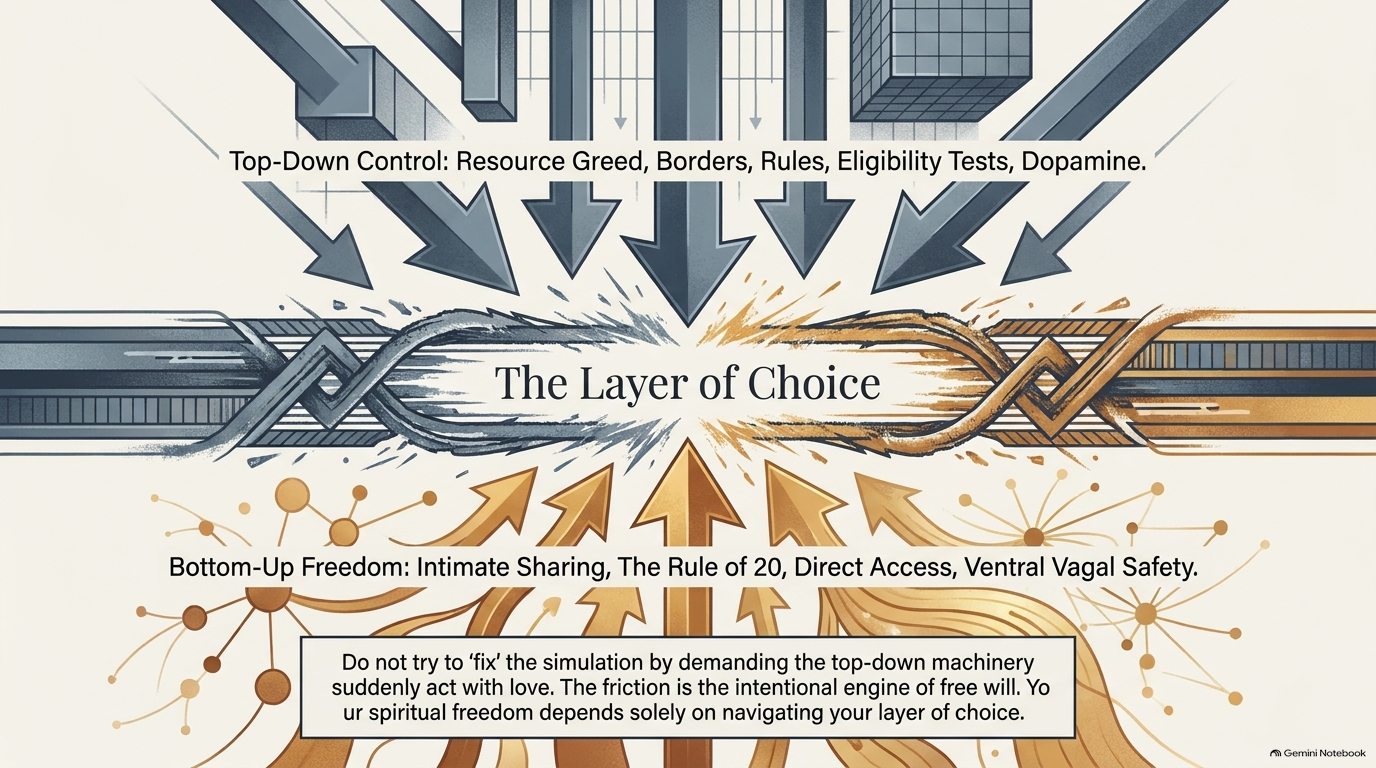
Analyze the core tension between top-down institutional control and bottom-up human recognition.
Deconstruct the concept of divine immanence and how it reframes spiritual autonomy.
Evaluate historical case studies where direct human connection bypassed macro-level institutional boundaries.
Examine the neurobiological friction between intimacy and dominance within the human body.
Apply the "Rule of 20" framework to foster authentic micro-level connection in everyday life.
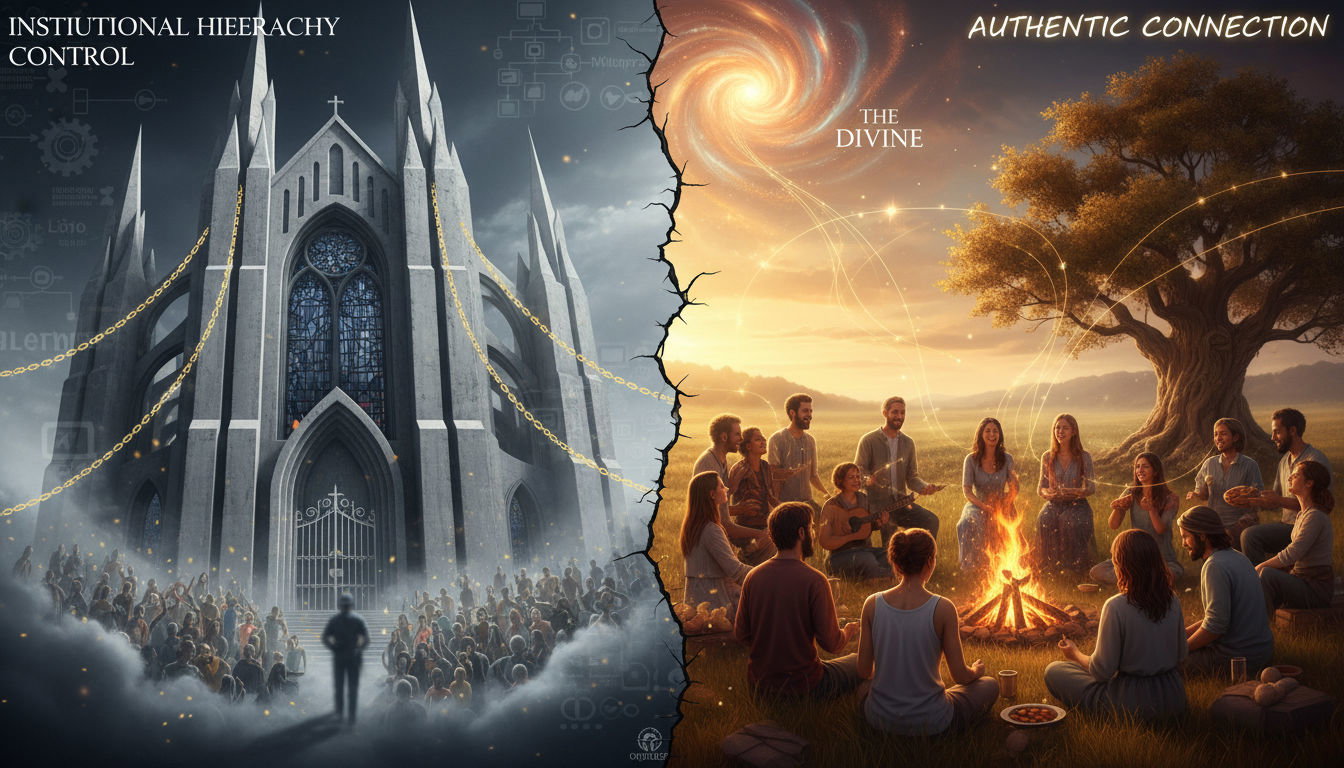

The Architecture of Divine Immanence
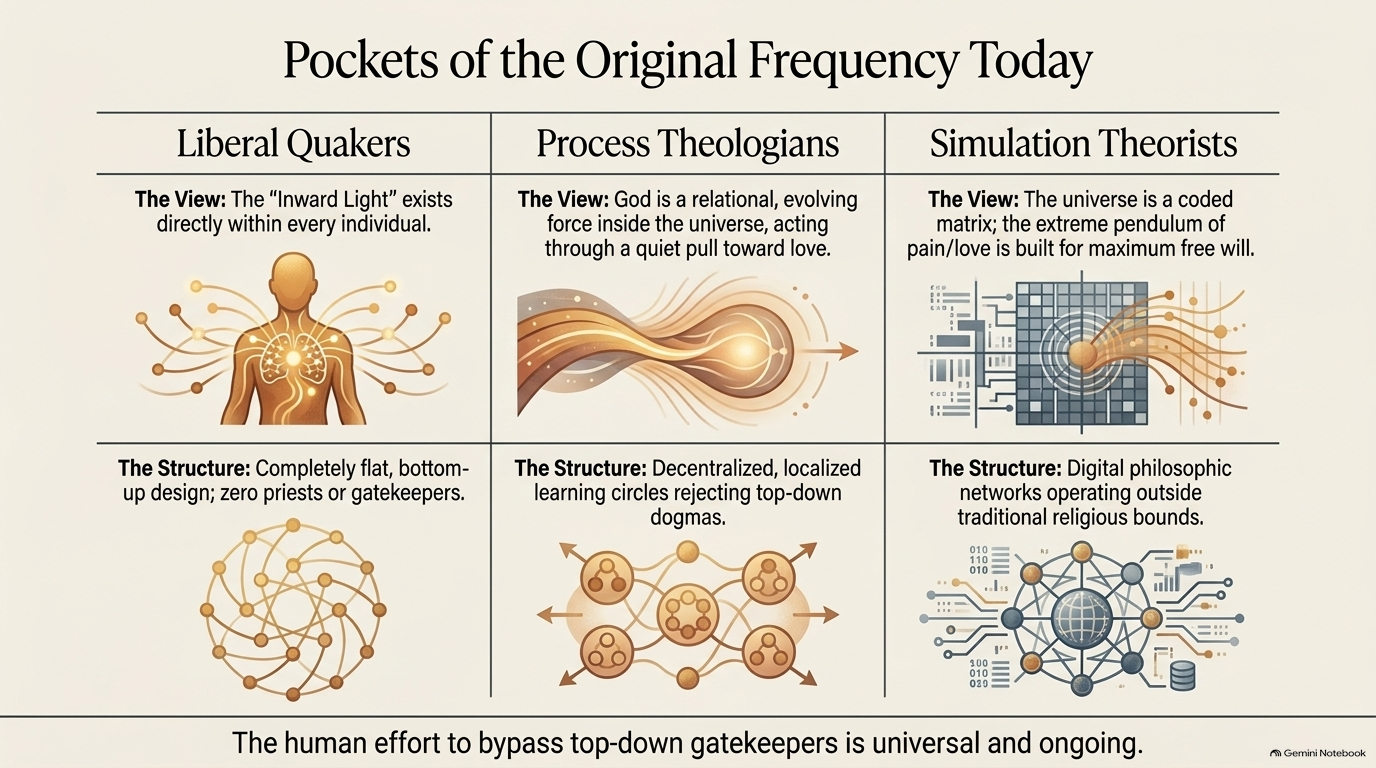
To understand why institutions build gatekeepers, we must first look at how we view the universe. Traditional top-down models often depict God as a distant clockmaker—a remote sovereign who builds the world, steps back, and occasionally reaches in to push buttons, enforce rules, or reward compliance.
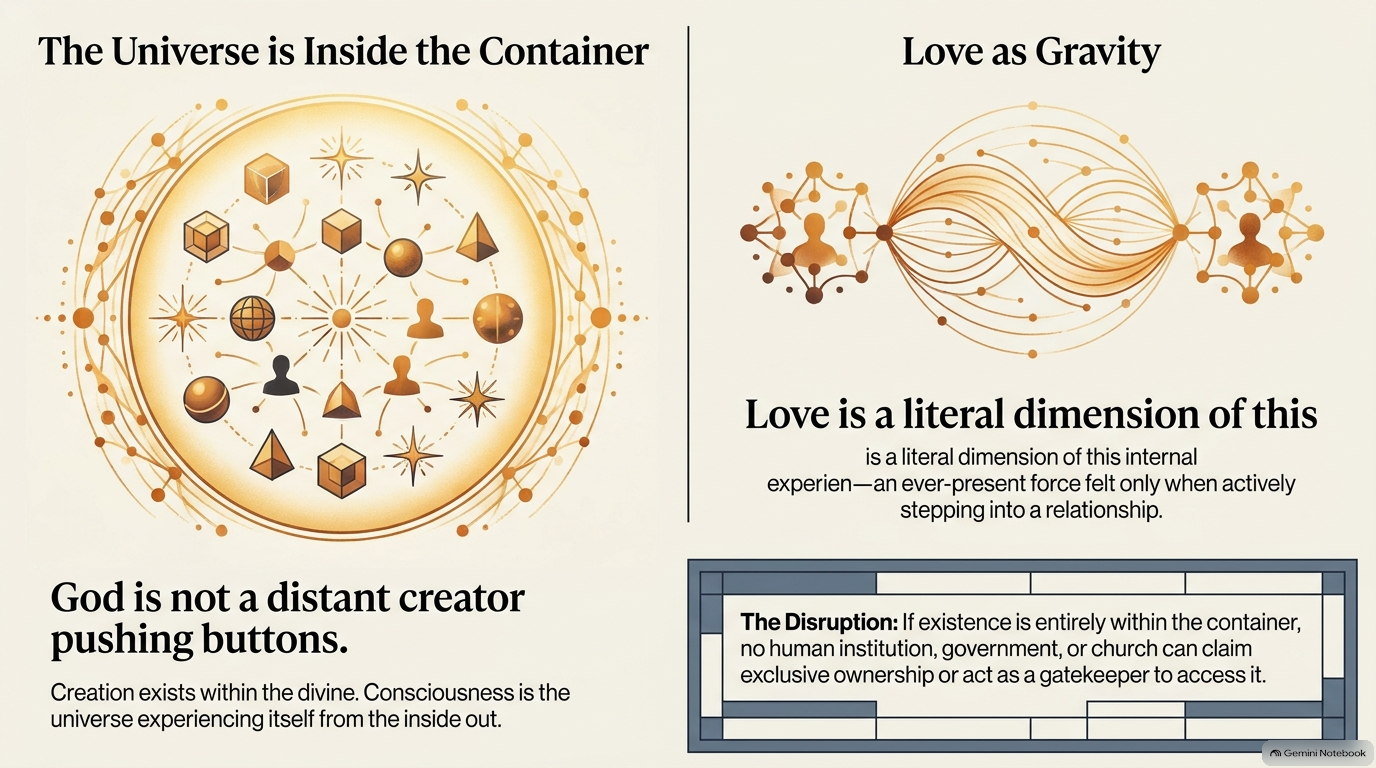
However, a fundamentally different perspective sees creation existing within God. In this model of divine immanence (or panentheism), God is not separate from the universe. When you look at a chair, a tree, or another person, you are not simply seeing something God made; you are seeing something that exists within the container of the divine.
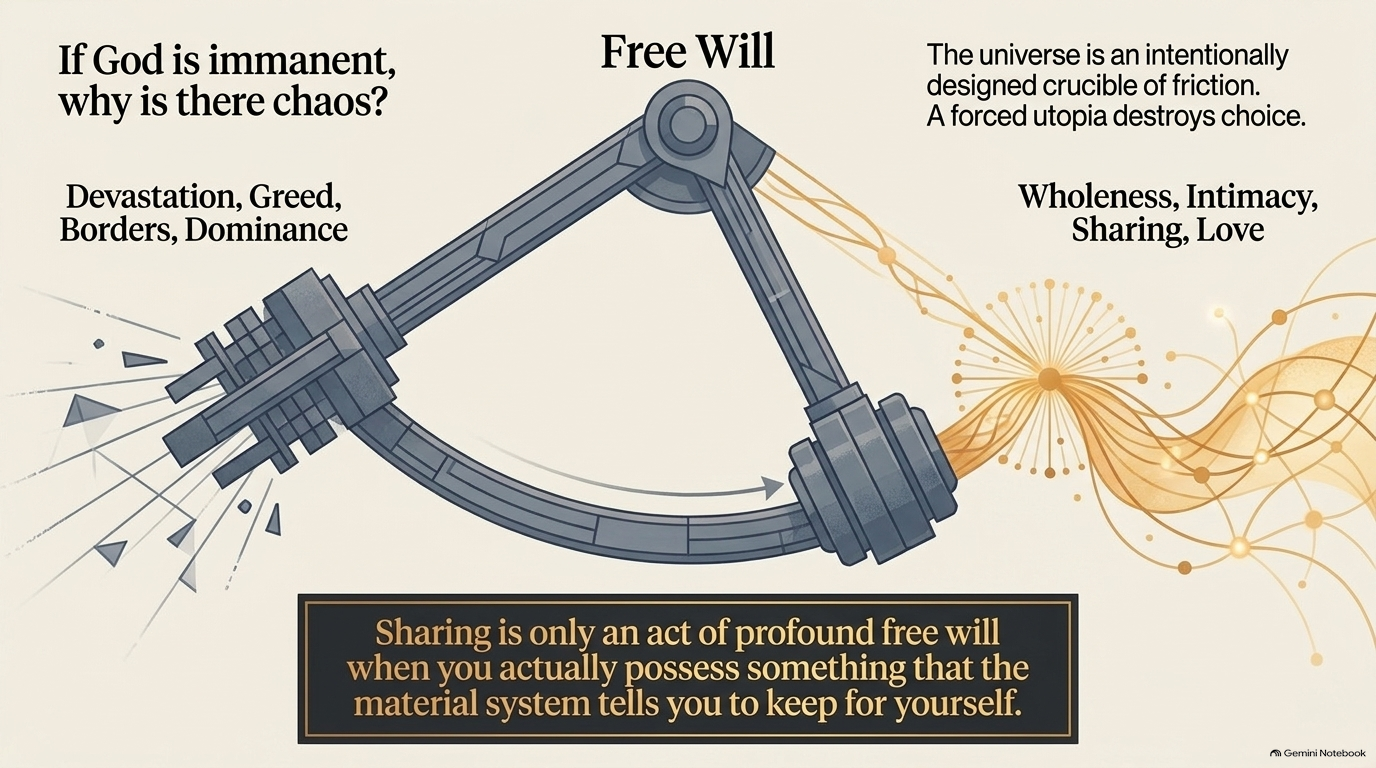
Under this view, consciousness is the universe experiencing itself from the inside, and love functions much like gravity: an ever-present force woven into reality that is only felt when we actively step into a relationship. If every person inherently exists within this divine container, then no priest, institution, government, or political party can claim exclusive ownership or act as a gatekeeper to your connection with existence. Direct access is your birthright.
The Imperial Co-option of Pure Messages
If direct connection is naturally available to everyone, why is human history dominated by rigid hierarchies and gatekeeping systems?
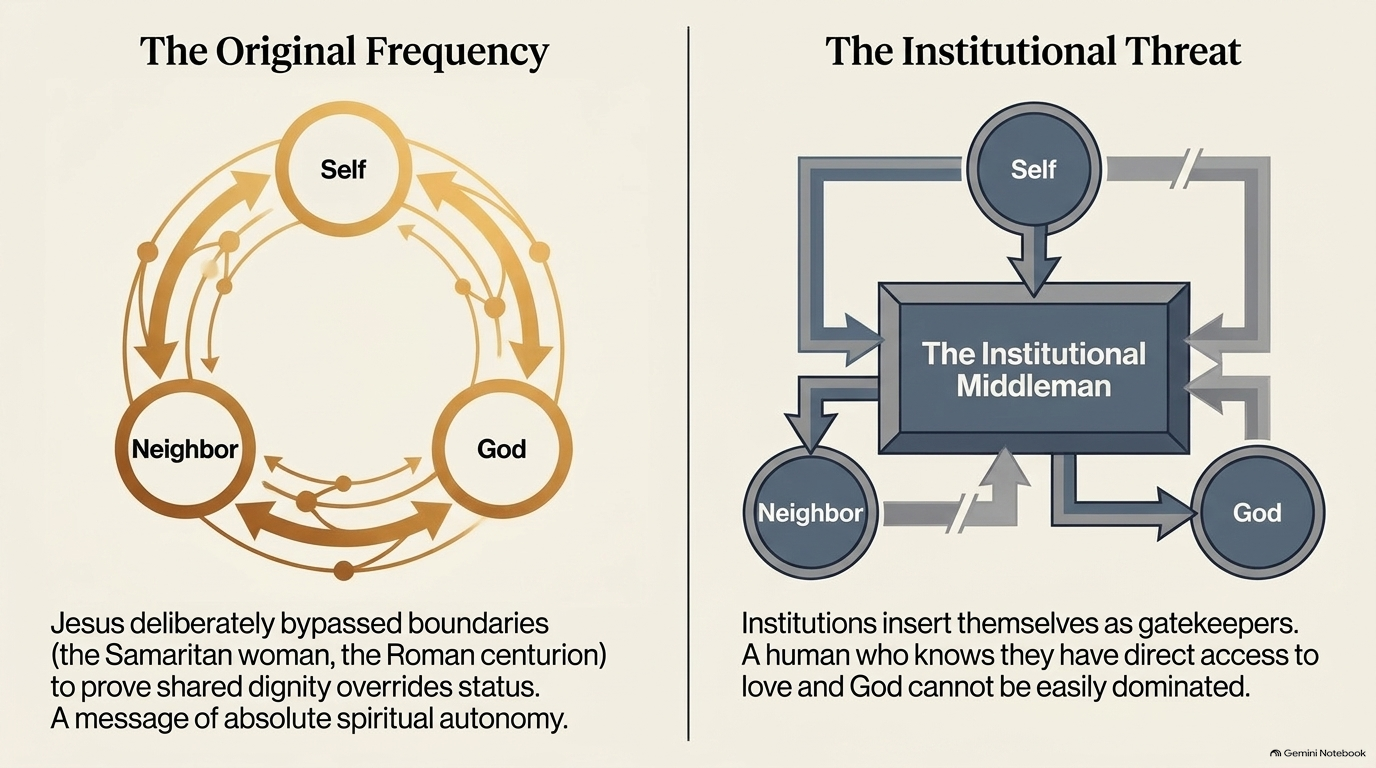
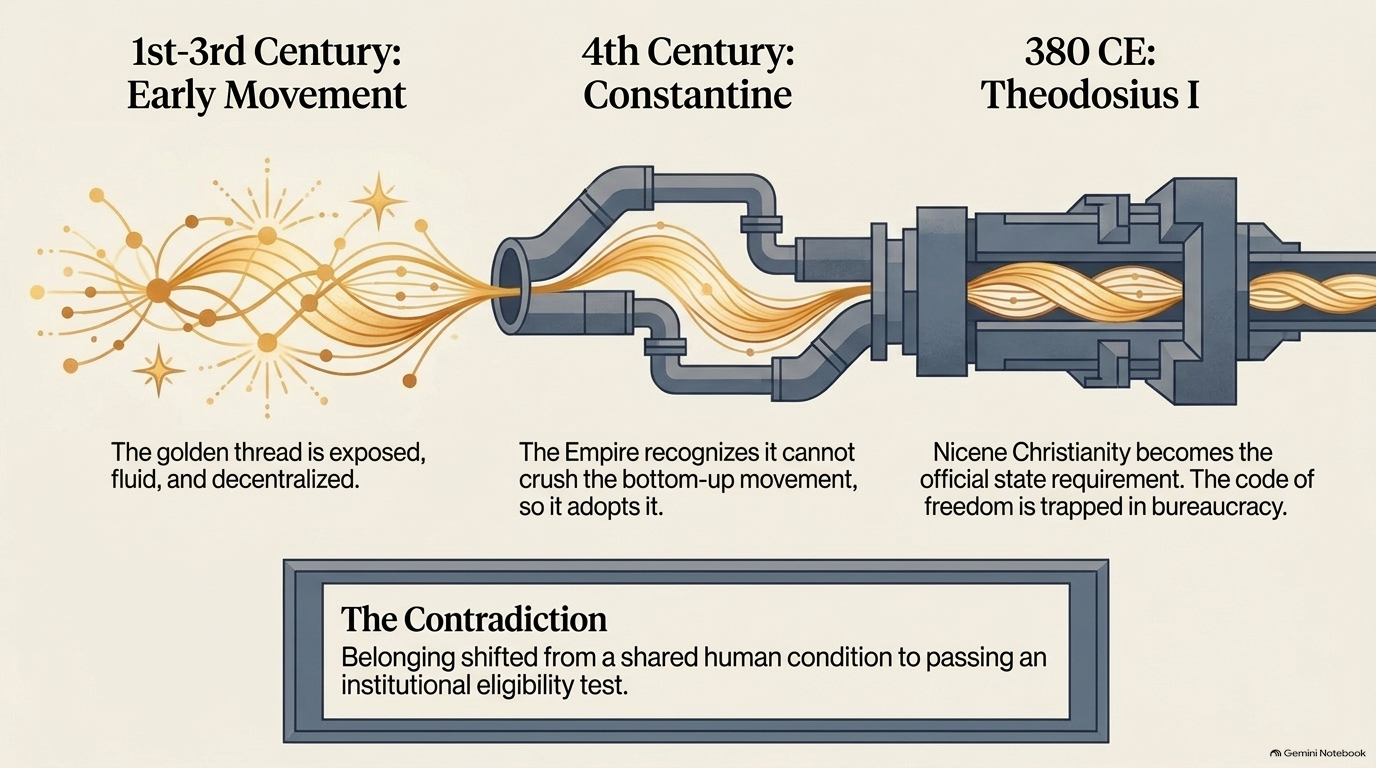
Consider the historical trajectory of early Christianity. The core teachings of Jesus presented a radical message of equality and boundary-crossing. He repeatedly ignored social, ethnic, and religious divisions by conversing with Samaritan women, praising Roman centurions, and holding up outcasts as models of neighborly virtue. In texts like Matthew 23, he explicitly warned his followers against elevating spiritual leaders above one another, insisting that true greatness is expressed through service rather than dominance.
Yet, as this decentralized movement grew, the power structures of the Roman Empire faced a dilemma. In the fourth century, Emperor Constantine granted Christianity legal status, and by 380 CE, Emperor Theodosius I made Nicene Christianity the official state religion.
This historical shift reveals a recurring dynamic: imperial co-option. A radical, bottom-up philosophy of direct spiritual equality was wrapped in top-down imperial bureaucracy. Institutions adopted the message, claimed exclusive ownership over its meaning, and introduced mandatory eligibility tests to determine who was "in" or "out." Paradoxically, the empire preserved texts that explicitly undermined the legitimacy of human domination.
Historical Proof: Love Without Permission
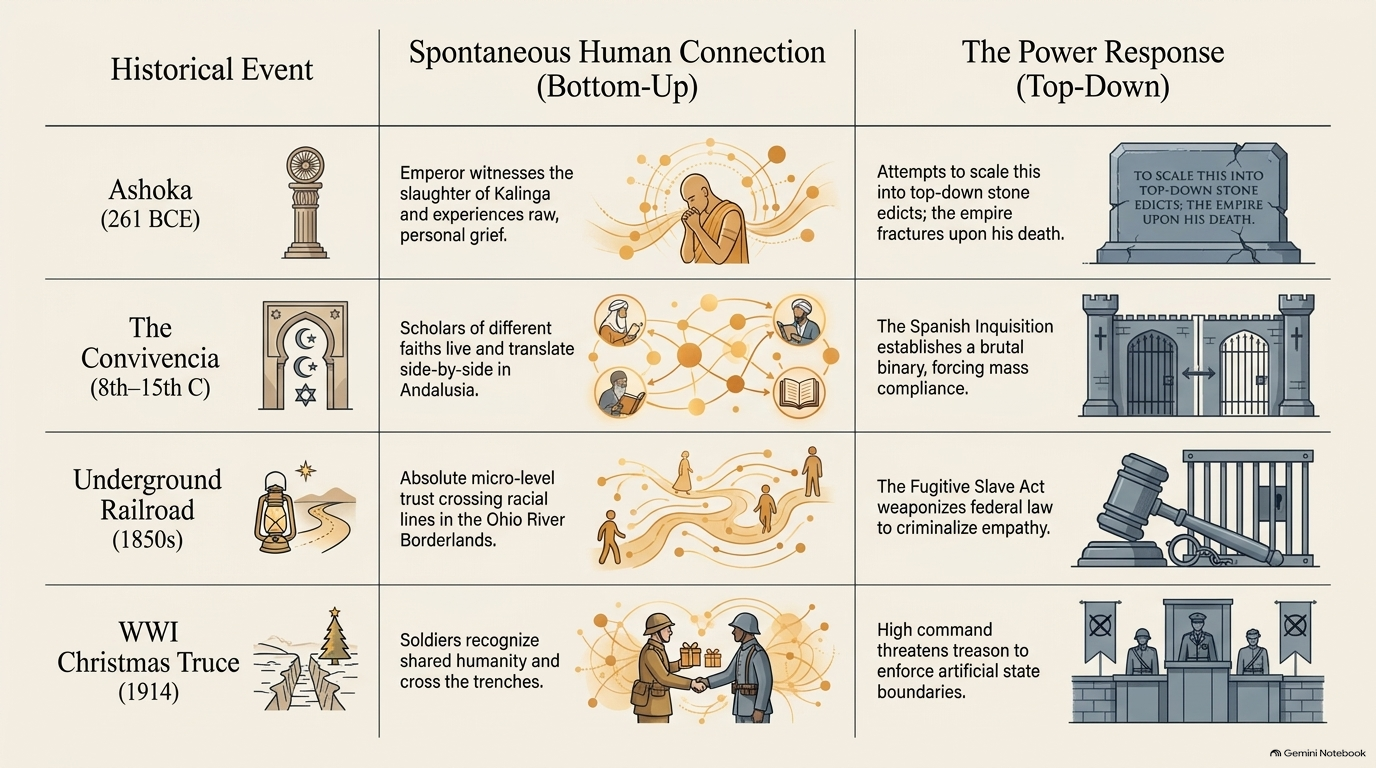
Throughout history, whenever human beings are placed in environments free from institutional posturing, they spontaneously recognize one another's dignity—often in direct defiance of the power structures governing them.
The 1914 Christmas Truce: During World War I, enemy soldiers along the Western Front stepped out of their trenches into No Man's Land. Without orders or official permission, British and German troops shared food, sang carols, and buried their dead together. Military commanders quickly issued strict prohibitions against fraternization under threat of court-martial.
Civil War Picket Lines: Opposing Union and Confederate soldiers frequently established informal local ceasefires to trade coffee for tobacco, share newspapers, and swim in shared rivers, despite explicit military orders forbidding contact.
The Vincken Cabin (1944): On Christmas Eve during the Battle of the Bulge, a German mother named Elisabeth Vincken took in three lost American soldiers (one severely wounded) and four lost German soldiers. She insisted they leave their weapons outside, declaring there would be no killing in her home. The men shared a meal, slept peacefully, and parted as friends the next morning.
Reconstruction Solidarity: In post-Civil War Wilmington, North Carolina, Black and white citizens formed the "Fusion" political coalition, building shared local governance. In 1898, threatened white supremacist power structures violently overthrew the elected government to smash this cross-racial solidarity.
These moments reveal a consistent four-step historical pattern:
Spontaneous Recognition creates connection
Threatened Power Structures respond with rules or violence
Systemic Suppression attempts to erase the act
The Fragile Truth survives through personal memory and quiet links.
The Micro-Crucible and the Rule of 20
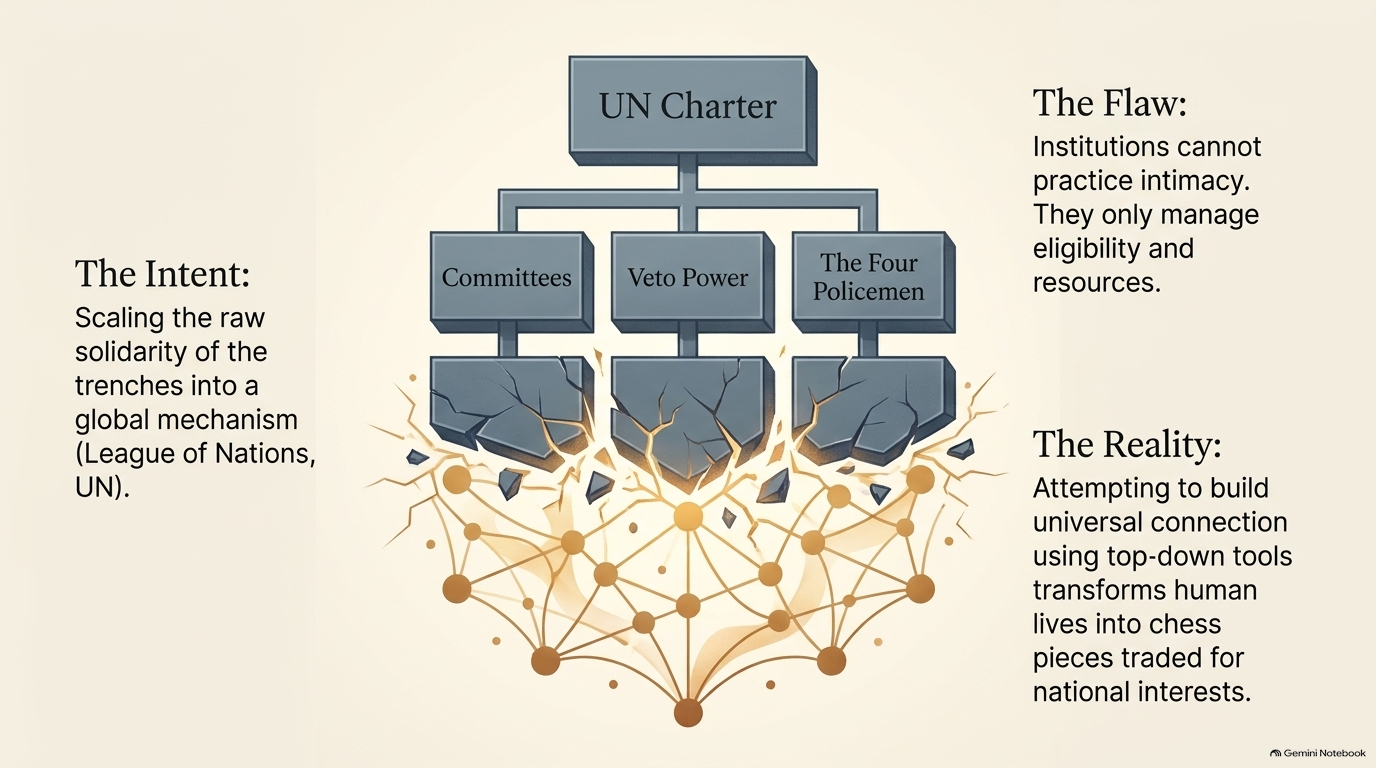
Why do large organizations inevitably break direct human connection? The answer lies in the problem of scale.
An organization cannot practice emotional intimacy; it can only manage numbers, compliance, and categories. When a group becomes too large, it must institute rules, eligibility criteria, and enforcement mechanisms to maintain order. In doing so, it flattens the individual uniqueness of its members.
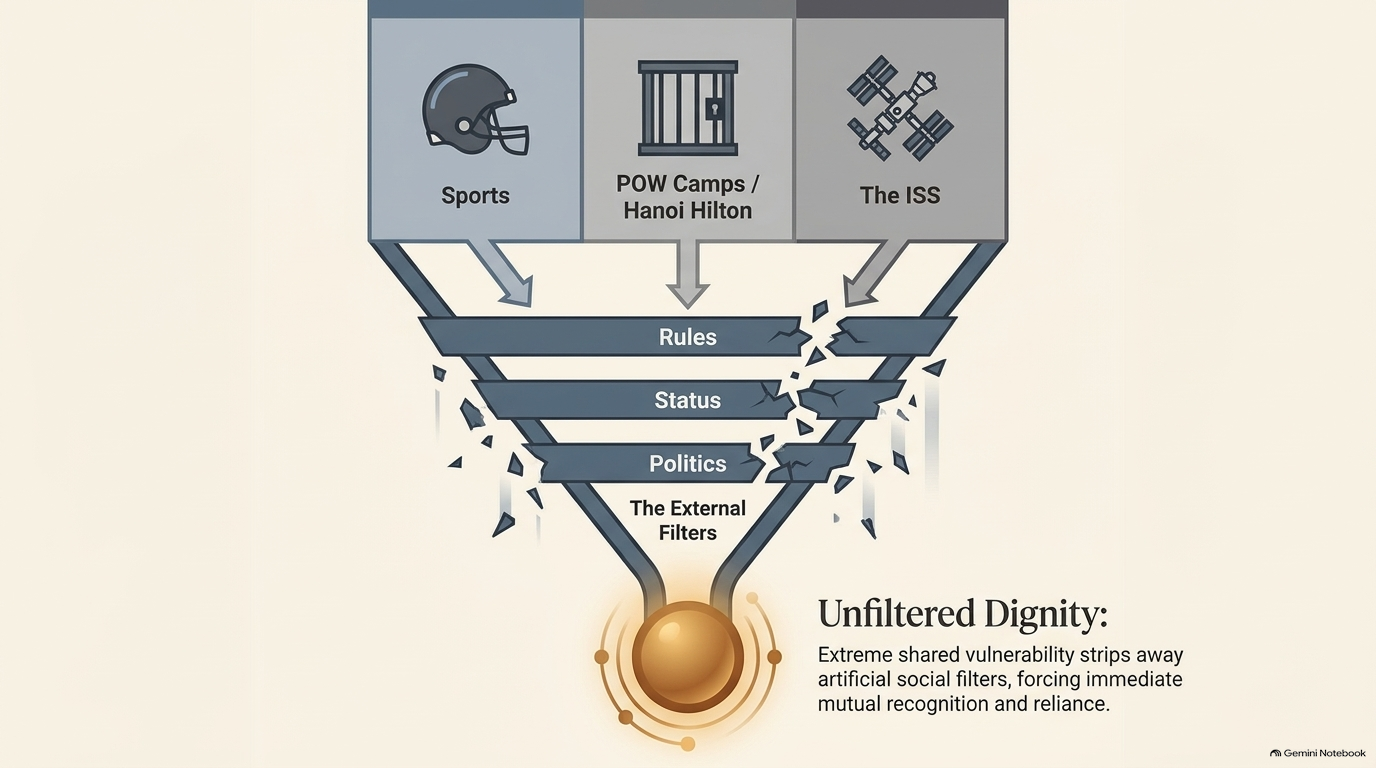
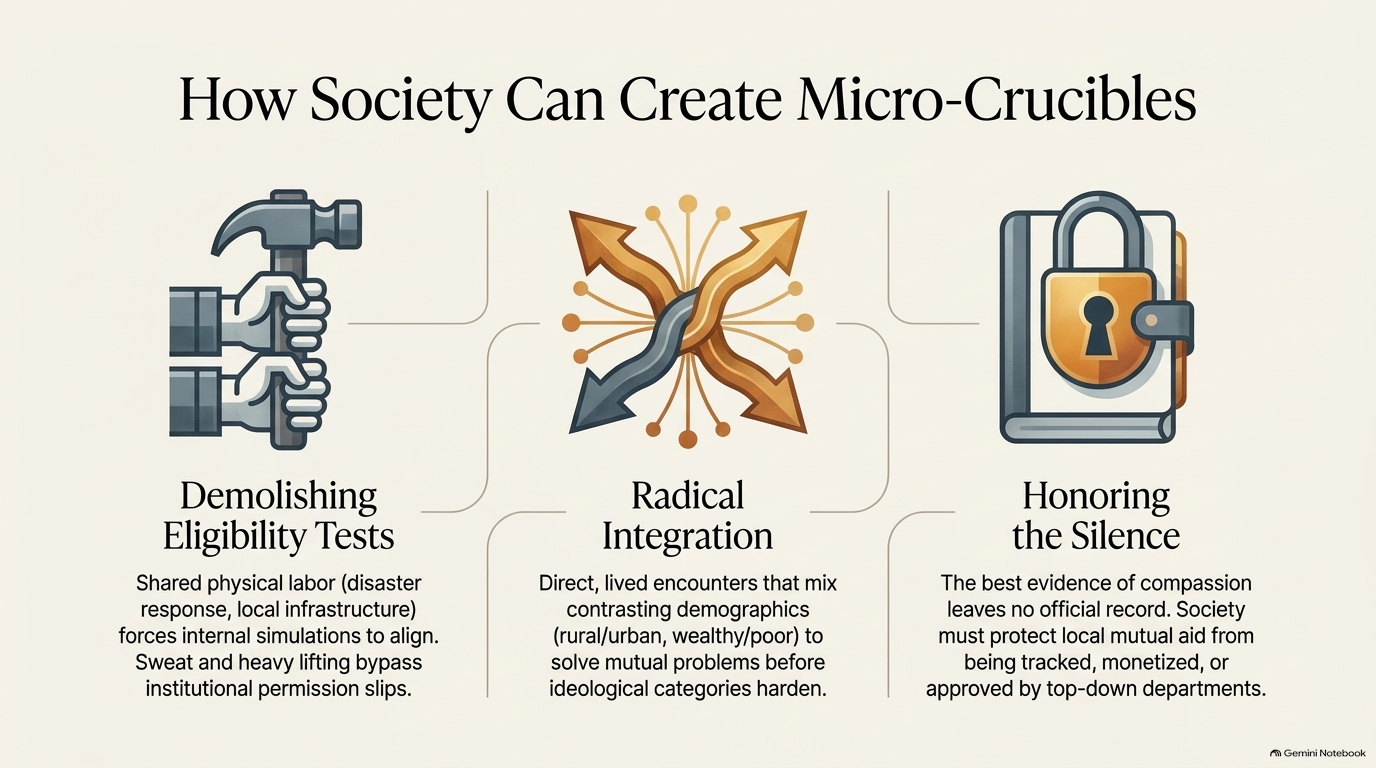
To capture the limit of unfiltered, mutual human recognition, we look to the concept of the Rule of 20. This represents a micro-scale environment—a group small enough that two or more people can see, hear, and accept each other's full, messy human reality without needing institutional permissions or policy manuals.
We see these micro-crucibles form spontaneously under conditions of intense shared vulnerability:
Sports Teams: Athletes from vastly different social backgrounds drop their prejudices because physical sacrifice and immediate mutual reliance force face-to-face recognition.
POW Camps: Isolated prisoners strip away rank and background, inventing tap-code networks through brick walls just to offer quiet messages of hope and survival.
The International Space Station: Astronauts and cosmonauts live in a confined tube in the dead vacuum of space. Looking down at Earth, national borders vanish, and their shared reliance forces deep interpersonal trust despite geopolitics below.
Wired in Our Cells: The Biological Pendulum
The conflict between top-down dominance and bottom-up intimacy is not just a feature of history or politics—it is hardwired directly into your physical biology.
Our bodies contain two distinct neurochemical and neurological operational modes:
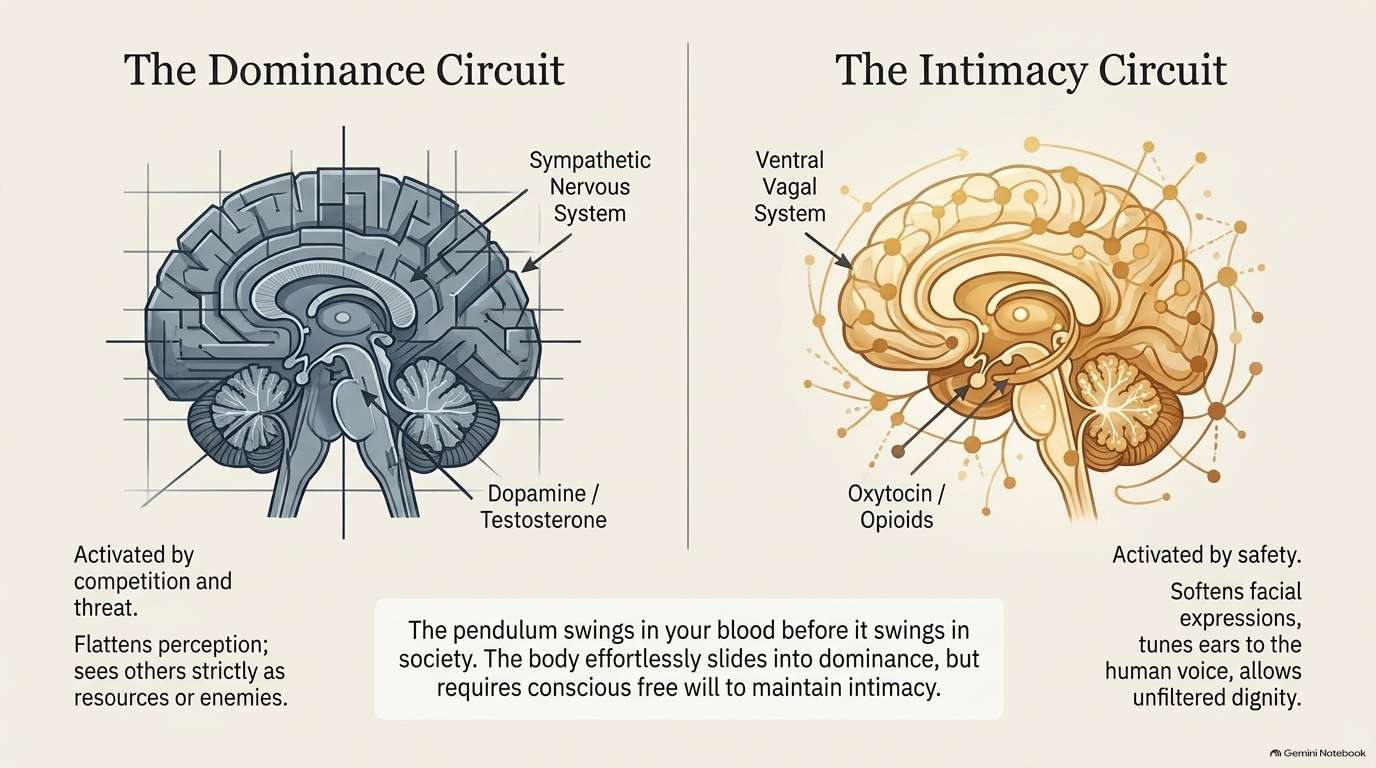
The Intimacy Circuit (Ventral Vagal System): Powered by oxytocin and natural opioids, this system activates when we feel safe and connected. It softens facial expressions, tunes our hearing to human speech, and enables us to look into another person's eyes with empathy and dignity.
The Dominance Circuit (Sympathetic System): Powered by dopamine (reward-seeking) and testosterone or adrenaline, this system activates during competition, threat, or status-seeking. It flattens our perception, turning others into either resources to acquire, obstacles to overcome, or enemies to defeat.
Although humans share over 99.9% of their DNA, each person's internal mental simulation of reality is unique. Our nervous system constantly pivots between these two circuits. Moving from intimacy to dominance is an effortless, automated slide; moving from dominance back to intimacy requires a deliberate, conscious choice of free will.
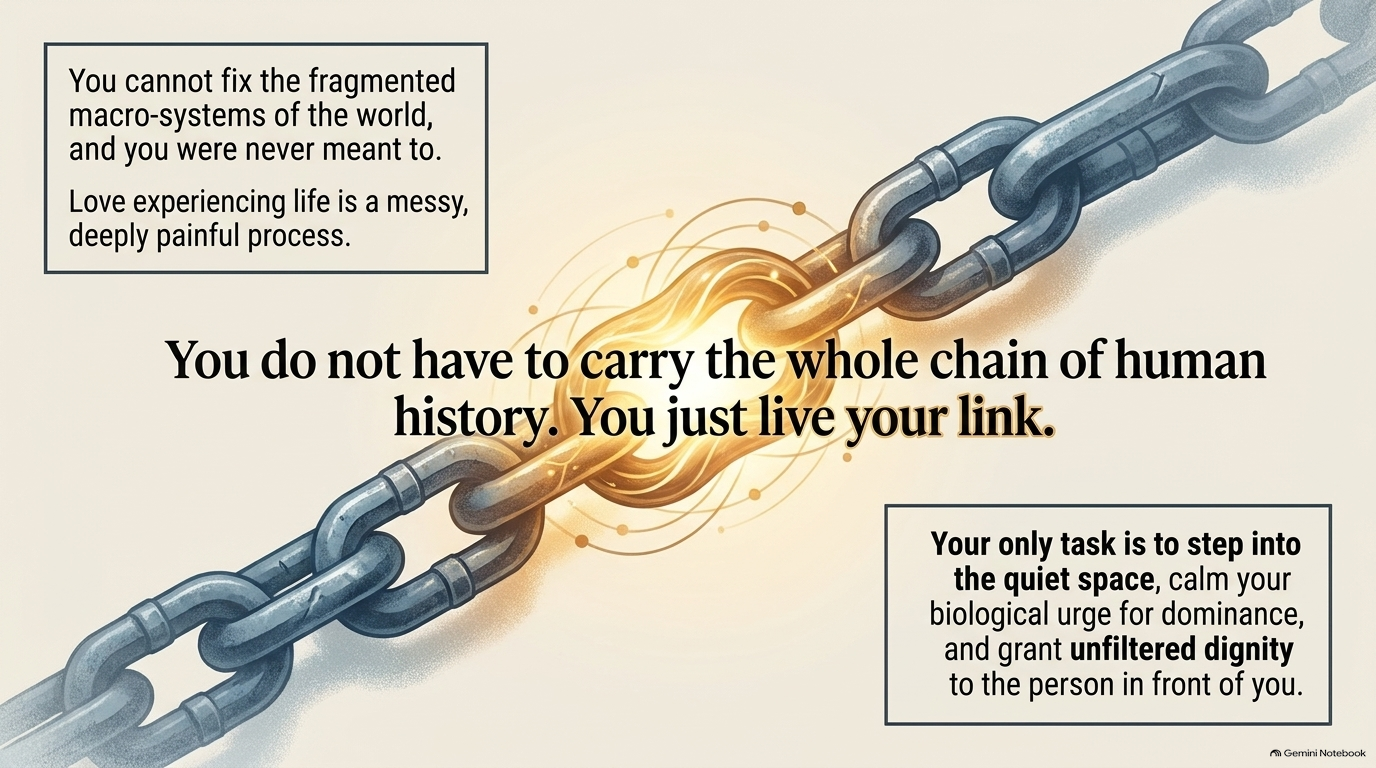
The pendulum of reality swings inside your bloodstream before it ever swings in society. You do not need to fix the entire macro-machine of the world—you only need to master your personal layer of choice.


Summary
Human existence operates on a dynamic pendulum between top-down institutional control and bottom-up individual recognition. By understanding divine immanence, the limits of scale, and your own neurobiology, you can choose direct connection over system-mandated separation.
Key Takeaways
Divine Immanence: Existence resides within the divine container, giving every human direct spiritual autonomy without needing institutional gatekeepers.
The Co-option of Truth: Large power structures historically adopt decentralized, egalitarian messages and convert them into rules-based systems of compliance.
The Power of Micro-Crucibles: Spontaneous human empathy thrives in high-vulnerability, small-scale environments free from organizational interference.
The Rule of 20: Unfiltered mutual recognition cannot scale indefinitely; authentic connection requires intimate, person-to-person engagement.
Biological Friction: Your neurobiology is built for both dominance and intimacy; choosing compassion is an active exercise of free will.

Disclaimer:
With the access to AI reading the news, watching movies and reading books opens up a new world. I have had various family members live to the age of 100 and I ask them what have they learned from their lives and they do not have awareness of what they journey means. These two areas fit with this idea I had. Having chats with AI on topics of thought and documenting them. I call this "Thoughts in the dark".
I am aware I do not have the answers only questions.
The report: