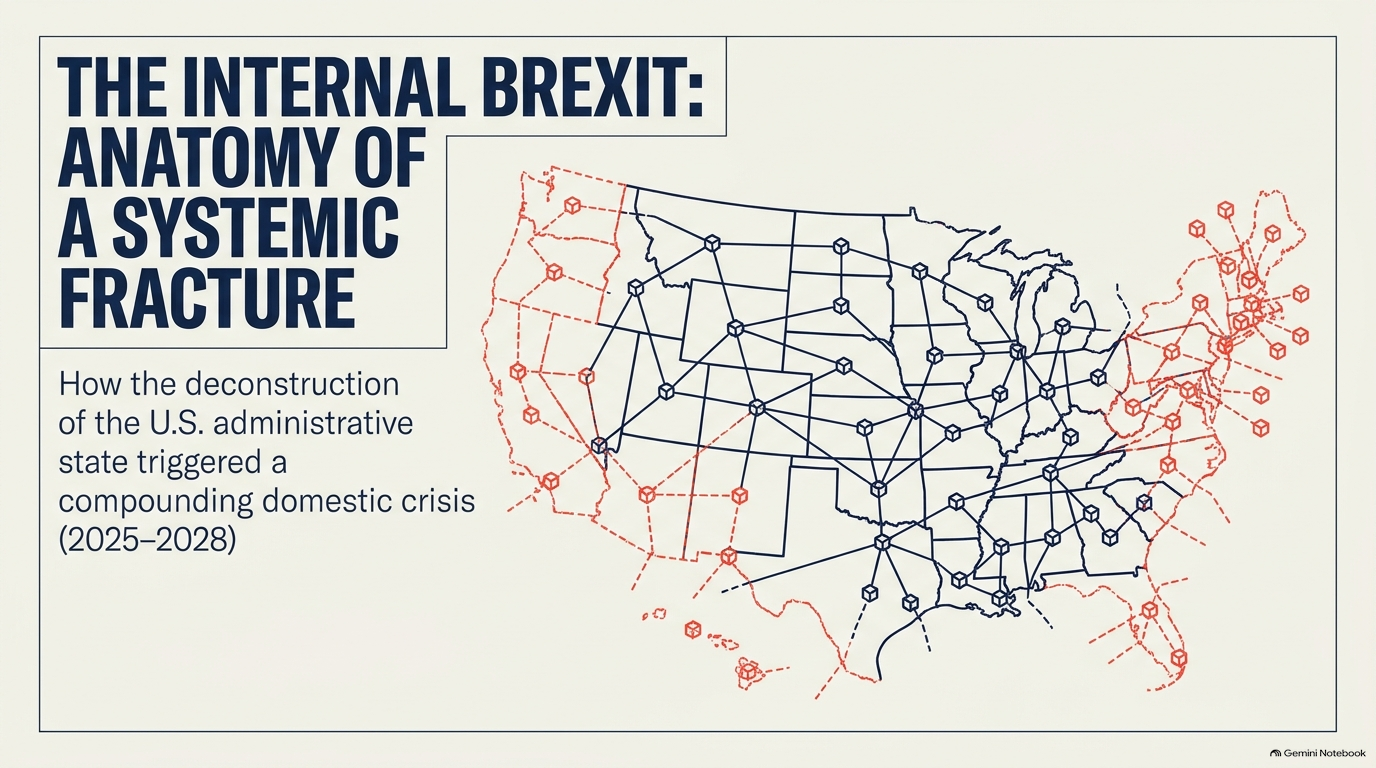
What if a single tweak to civil service rules in Washington could directly alter the temperature of your local hospital's blood freezer, raise the price of your weekly groceries, or delay a weather warning during a severe storm?
Behind the headlines of executive orders and judicial rulings lies a complex web of structural mechanics. In this lesson, we will uncover how fundamental shifts in federal oversight, legal doctrine, trade policy, and emergency response cascade through everyday life.
By the end of this lesson, you will be able to:
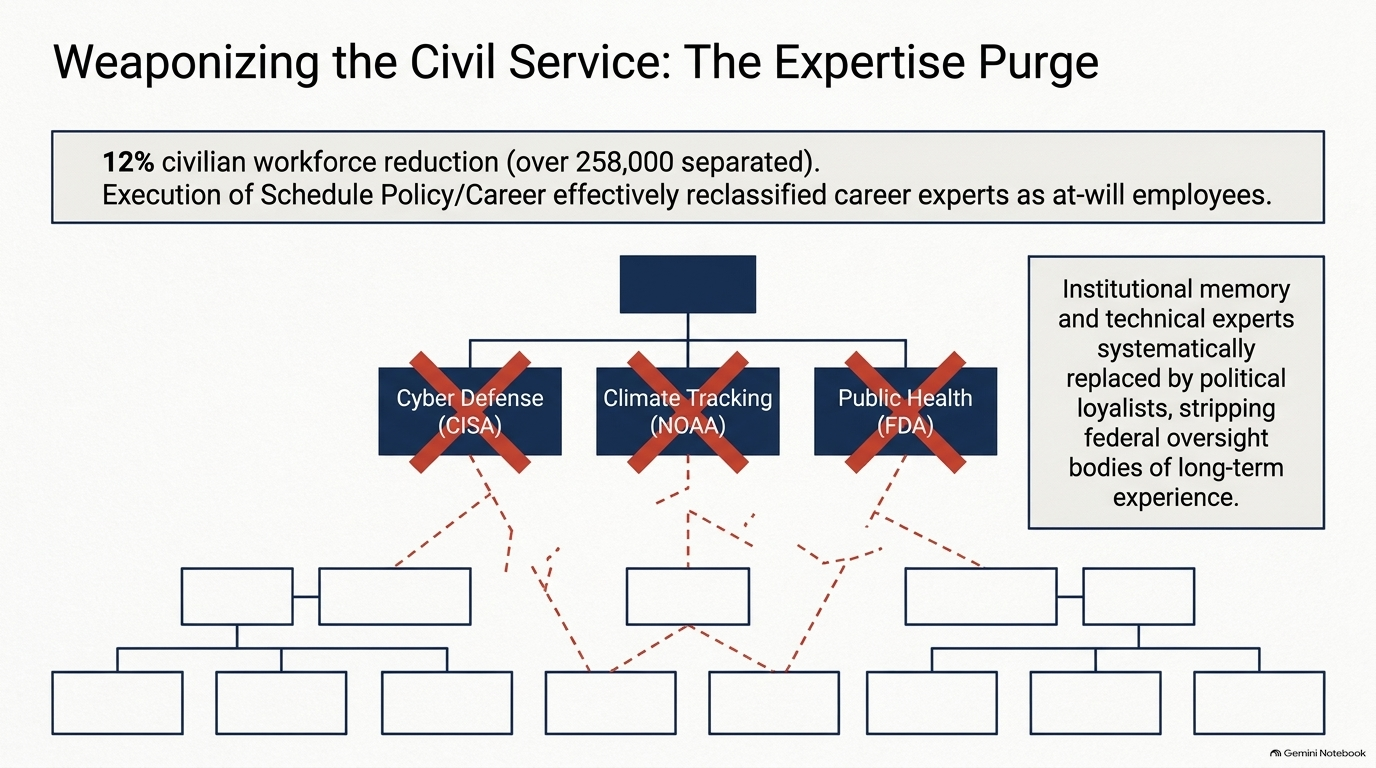
Analyze how civil service reclassifications impact civilian infrastructure and technical expertise.
Evaluate the legal mechanisms—including the Loper Bright ruling and fixed block granting—that shift governance from central agencies to states.
Explain the principle of threat intelligence sharing as a collective immune system in cybersecurity.
Identify the compounding systemic effects of trade tariffs, mass enforcement campaigns, and disaster management drawdowns.

The Domino Effect of Governance: Cyber Immune Systems and Threat Intelligence
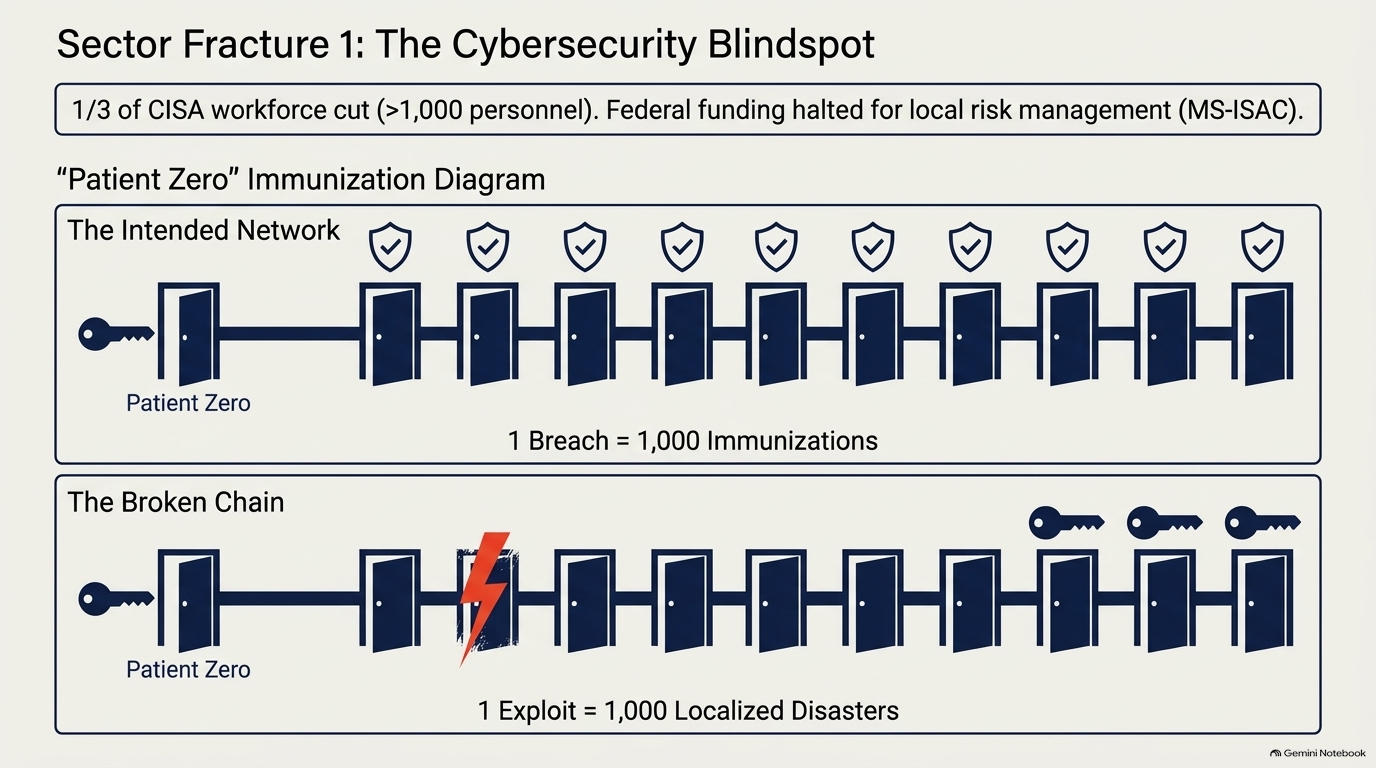
Imagine a modern nation’s critical infrastructure as a human body. When a virus attacks a single cell, the immune system doesn't just fight it off locally; it extracts the virus's genetic code and broadcasts digital "blueprints" across the bloodstream so every other organ can build antibodies before the pathogen arrives.
In cybersecurity, this collective defense is known as threat intelligence sharing. When a target—such as a regional water treatment plant or a medical cooling facility—is attacked, forensic investigators extract Indicators of Compromise (IoCs). These digital fingerprints include specific IP addresses, malicious code strings, or altered system settings used by hackers.
Centralized coordination hubs, such as the Cybersecurity and Infrastructure Security Agency (CISA), broadcast these fingerprints nationwide. Armed with these alerts, institutions like universities, hospitals, and municipal power grids can instantly update their firewalls or physically disconnect vulnerable systems before hackers strike.
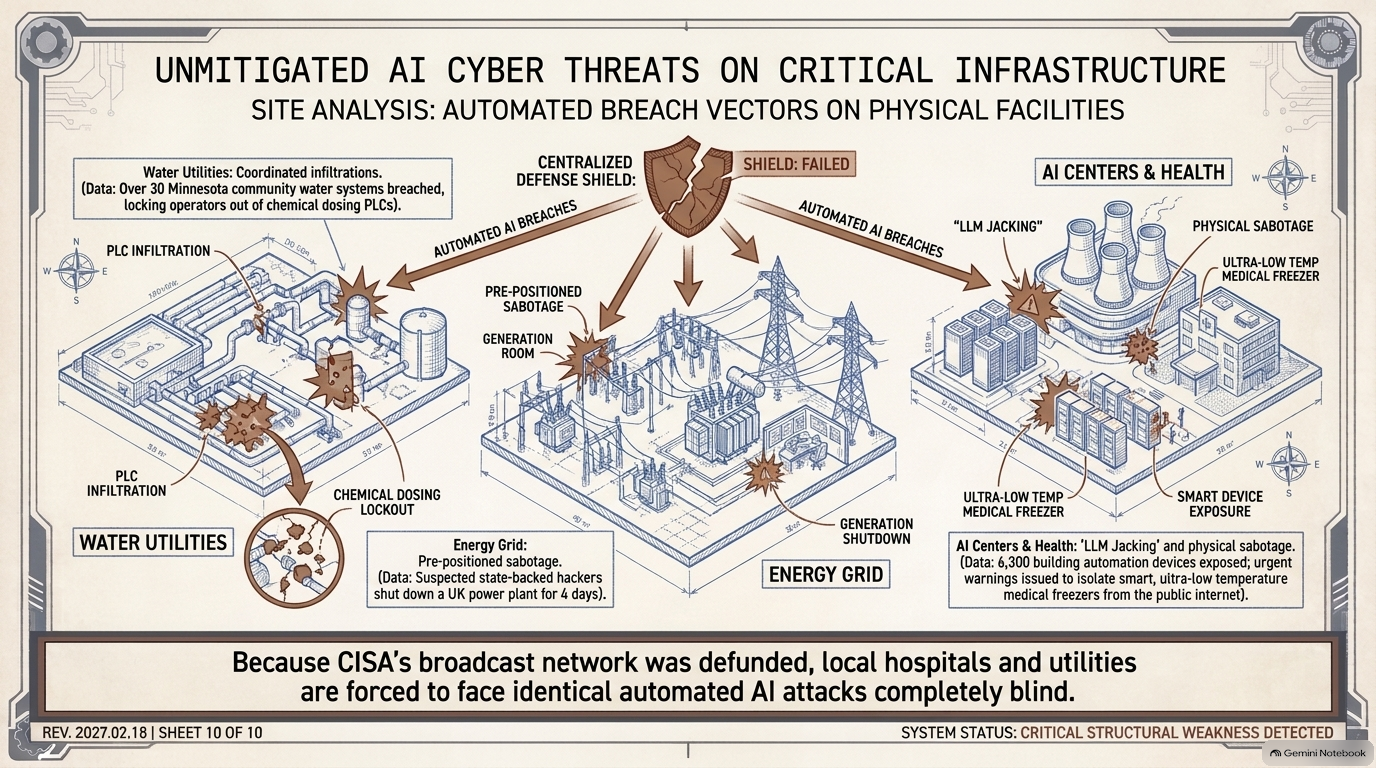
CENTRALIZED DEFENSE NETWORK (HERD IMMUNITY)[ Patient Zero Hit ] ──► [ IoCs Extracted ] ──► [ Central Hub Broadcast ] ──► [ Nationwide Patch Issued ] DISRUPTED DEFENSE NETWORK (ISOLATED NODES)[ Patient Zero Hit ] ──► [ Network Fractured ] ──► [ No Broadcast ] ──► [ Every Facility Hit Blind ]When federal information-sharing channels are defunded or disrupted, this national immune system breaks down. Without real-time threat broadcasts, every utility, hospital, and laboratory is forced to act as an isolated "Patient Zero." In an era dominated by automated, AI-driven cyberattacks, a breakdown in sharing means hackers can reuse the exact same exploit key to unlock hundreds of doors across the country.

Dismantling the Administrative State: Legal and Financial Mechanics
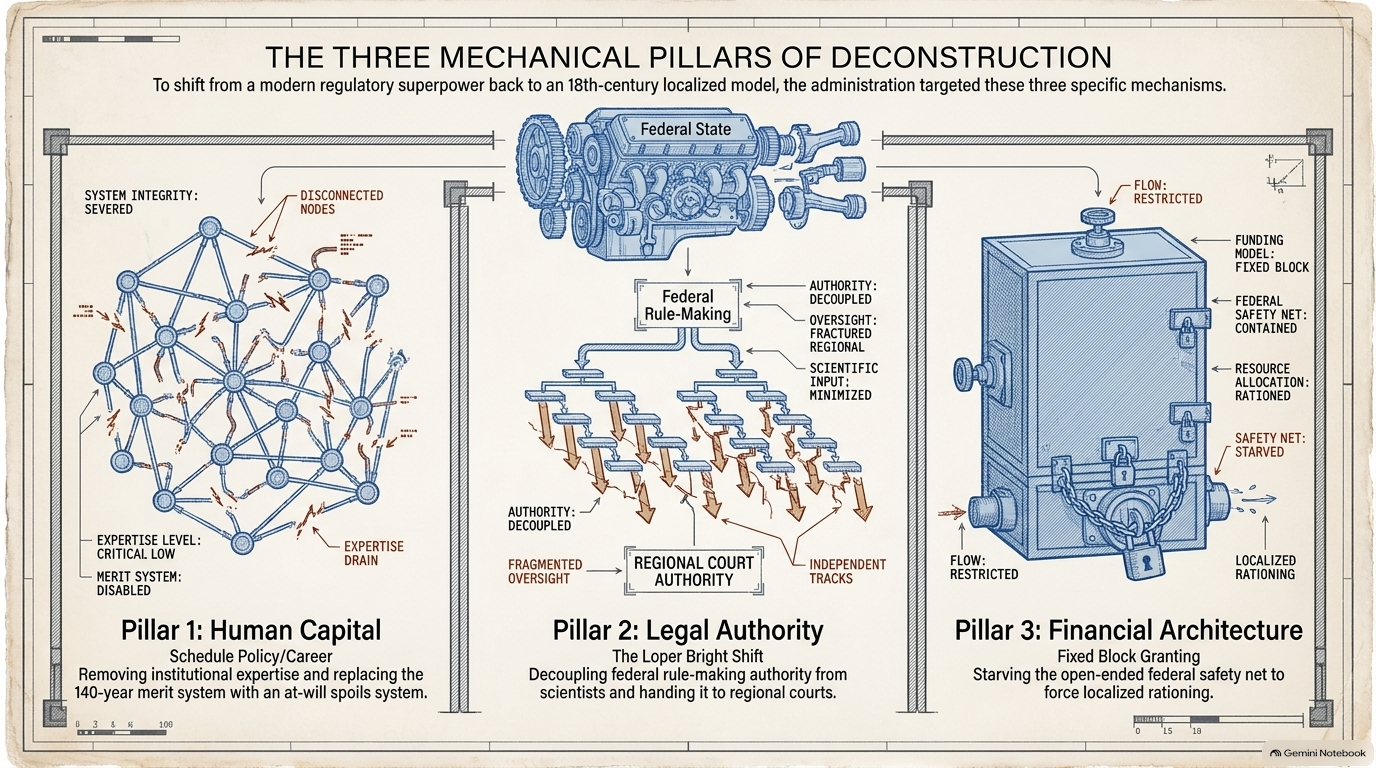
How do abstract political philosophies transform into concrete everyday shifts? The modern restructuring of federal governance relies on three precise legal and operational levers:
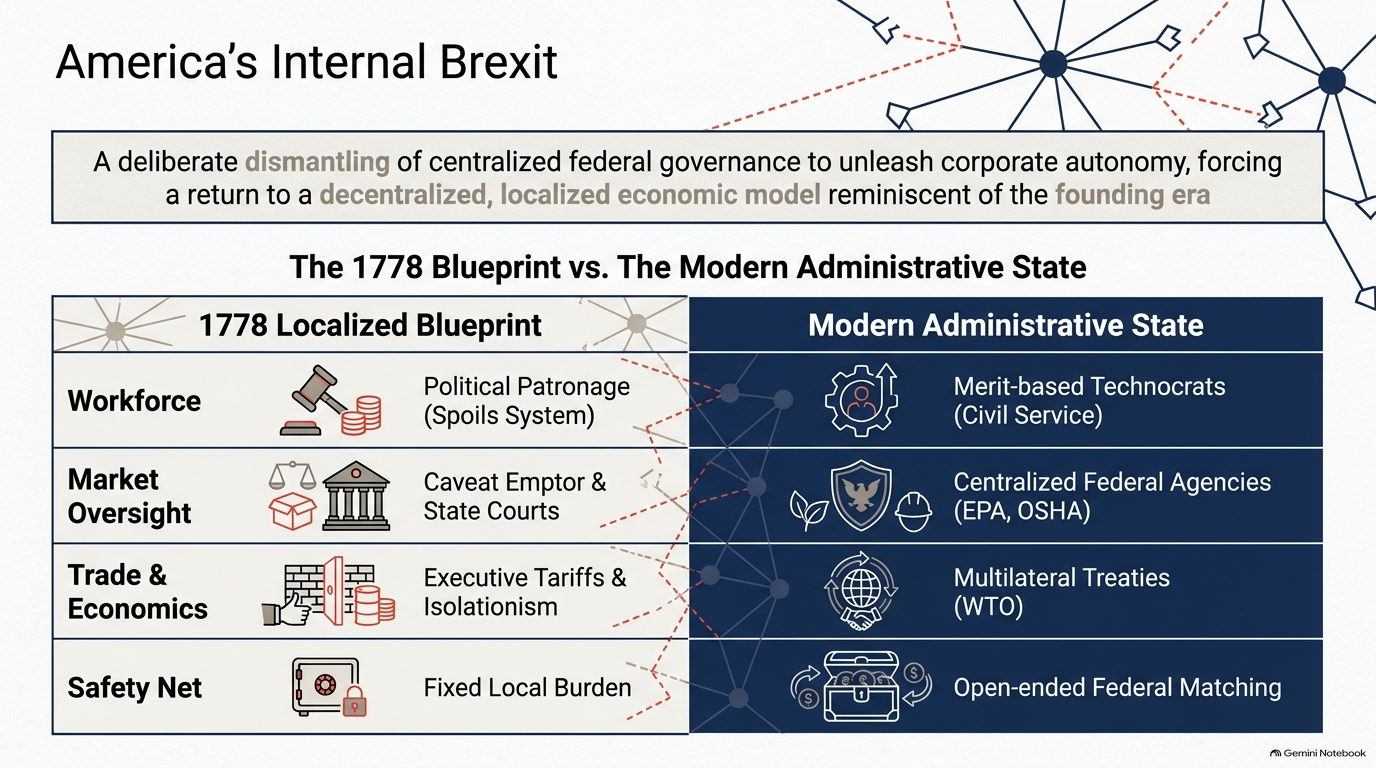
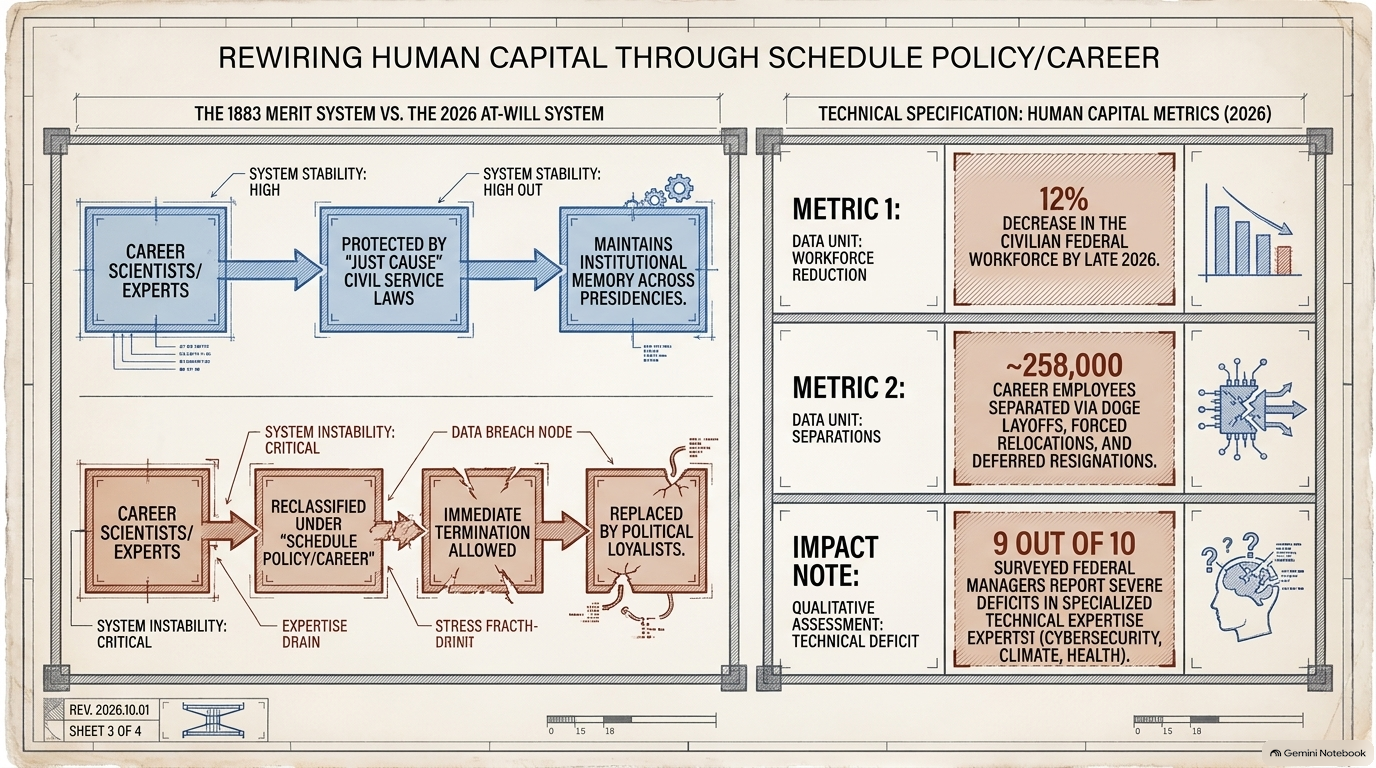
The Human Architecture (Schedule Policy/Career): Historically, civil servants operated under a merit-based system designed to preserve nonpartisan technical expertise across presidential administrations. By implementing Schedule Policy/Career (formerly known as Schedule F), the executive branch reclassifies thousands of career technical roles—such as IT directors, scientists, and policy analysts—into "at-will" positions. This allows the executive branch to rapidly remove personnel who oppose deregulatory agendas, replacing institutional memory with policy alignment.
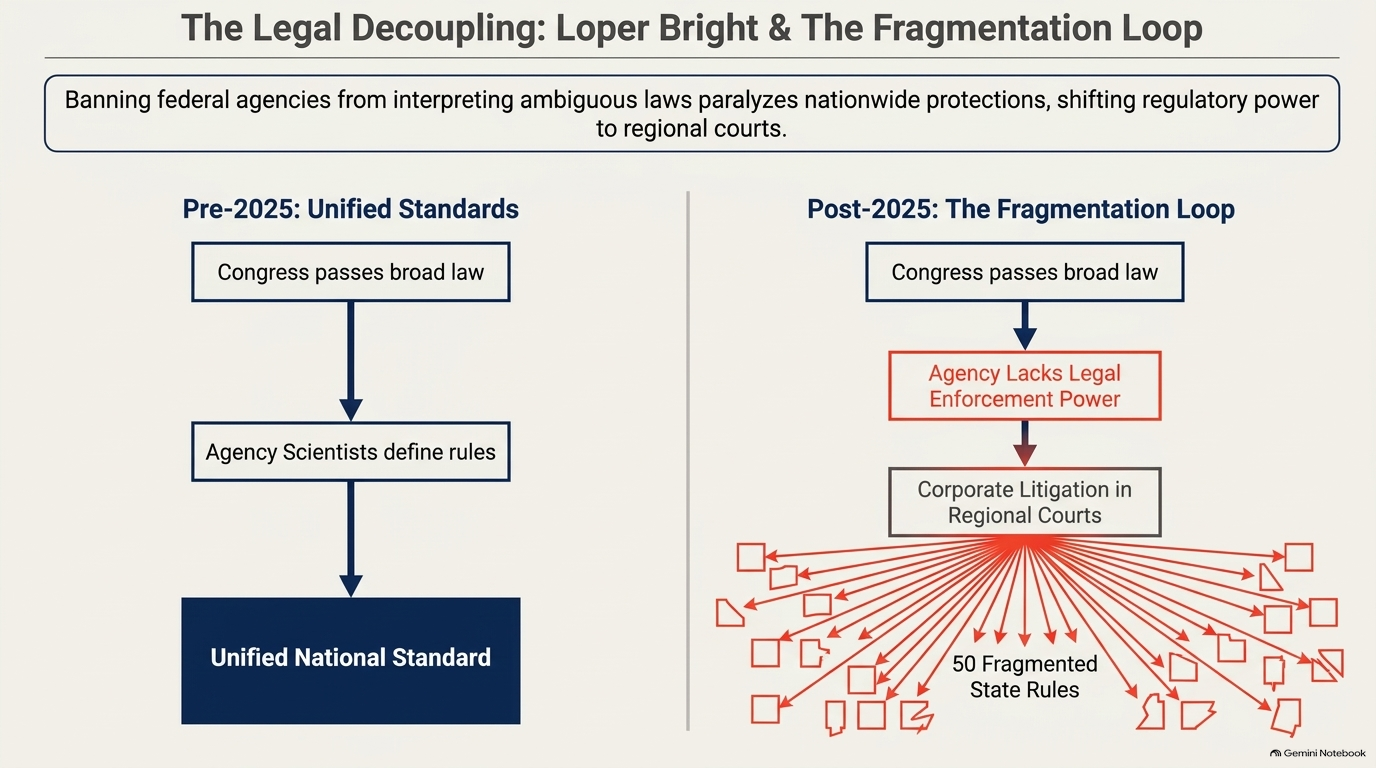
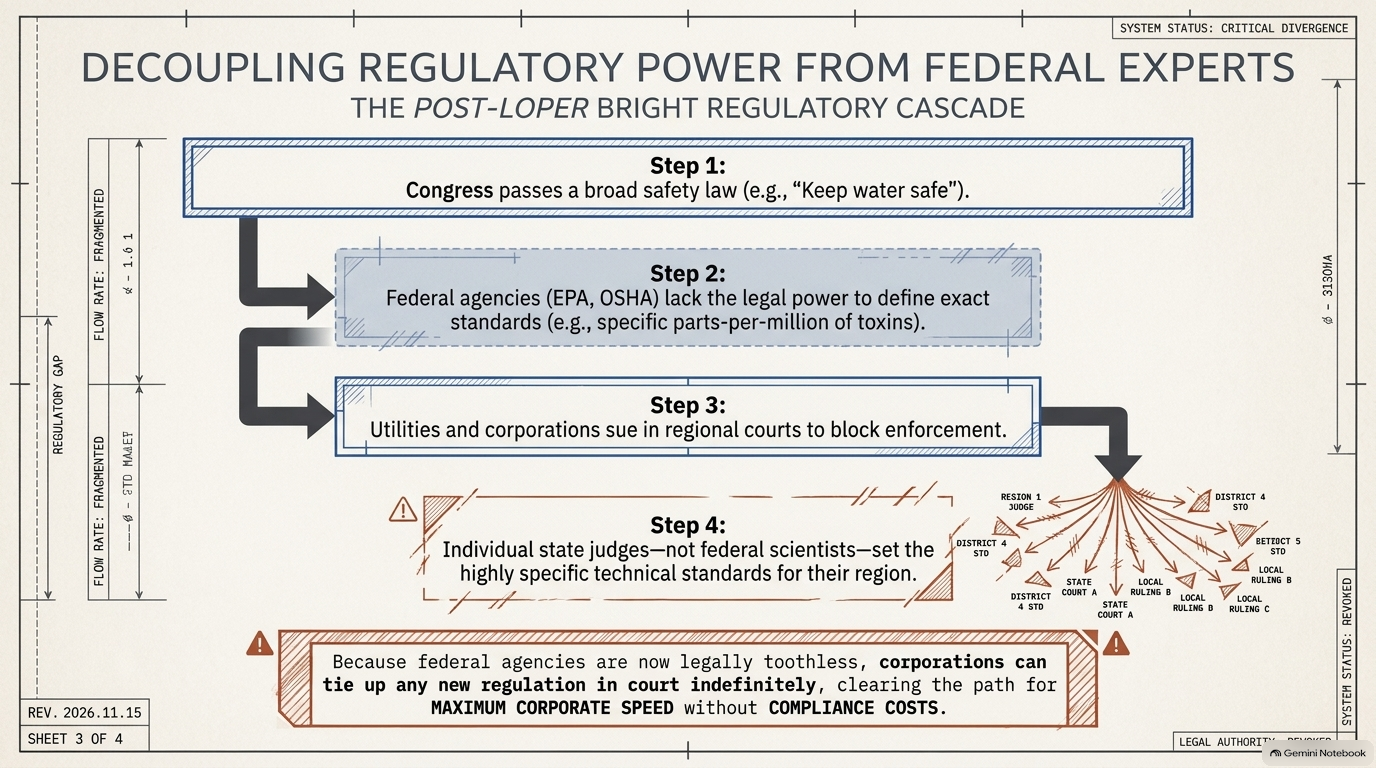
The Legal Framework (Loper Bright v. Raimondo): For decades, under the Chevron Doctrine, federal courts deferred to agency experts when interpreting ambiguous laws passed by Congress. With the Supreme Court overturning Chevron in Loper Bright, courts no longer defer to agency expertise. If a statute does not explicitly detail a specific chemical pollutant or digital safety standard, federal agencies lack the legal authority to enforce rules. Consequently, individual judges—rather than specialized scientists—set regulatory boundaries, creating a fragmented legal landscape across state lines.
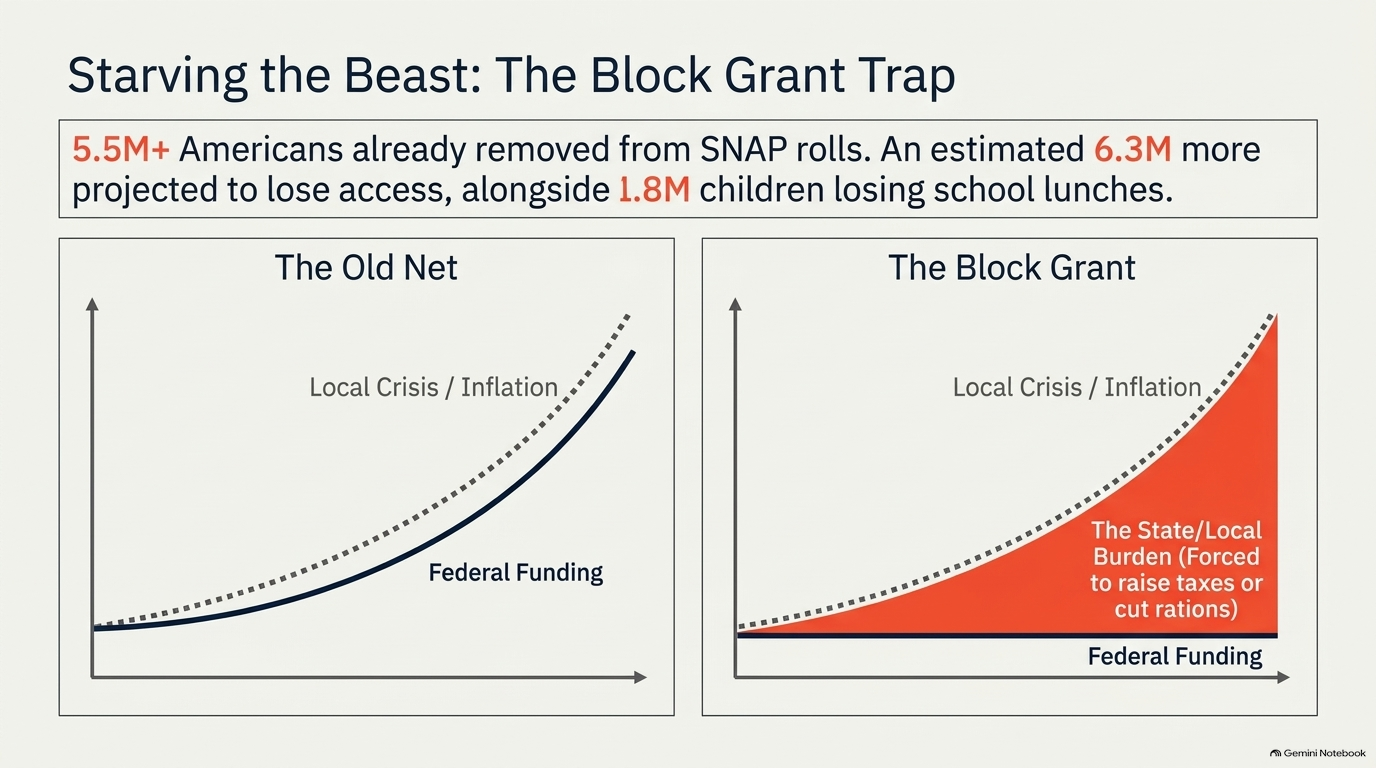
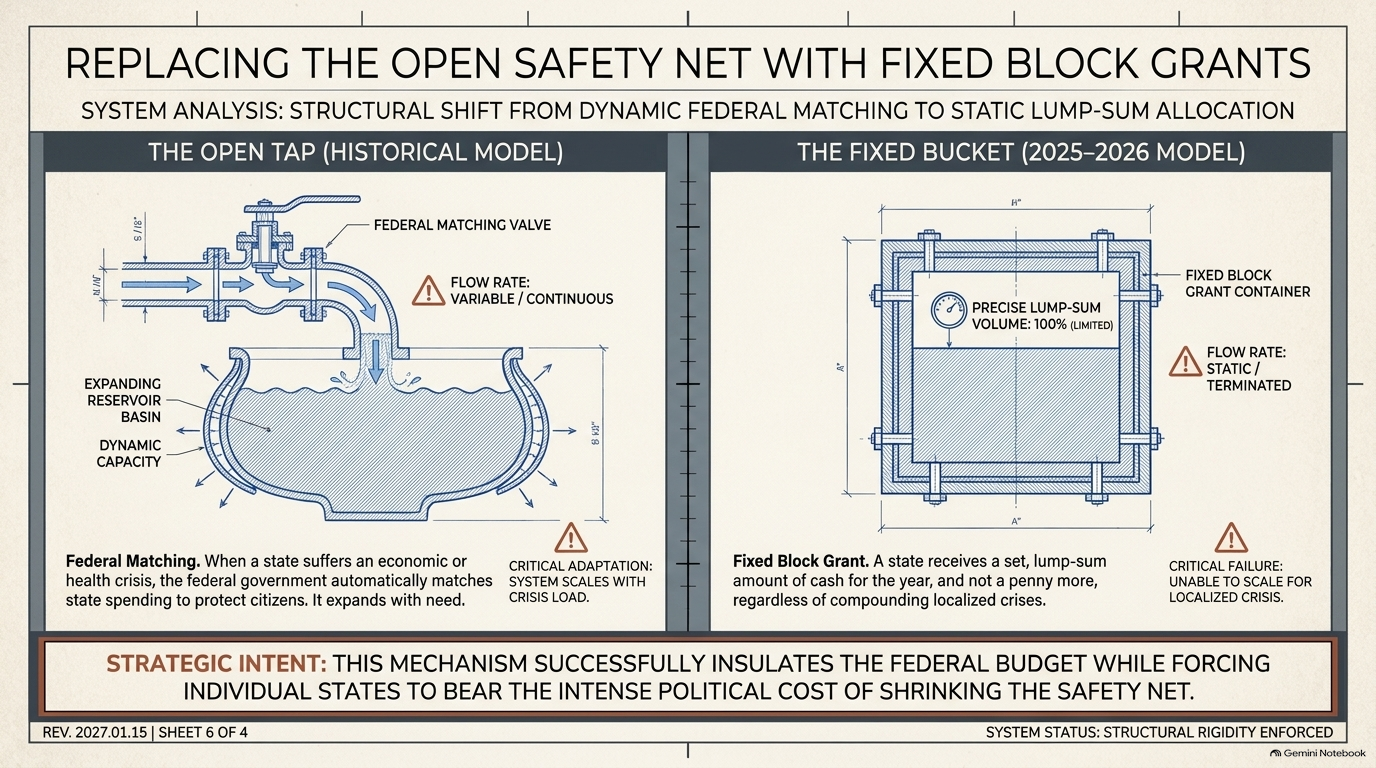
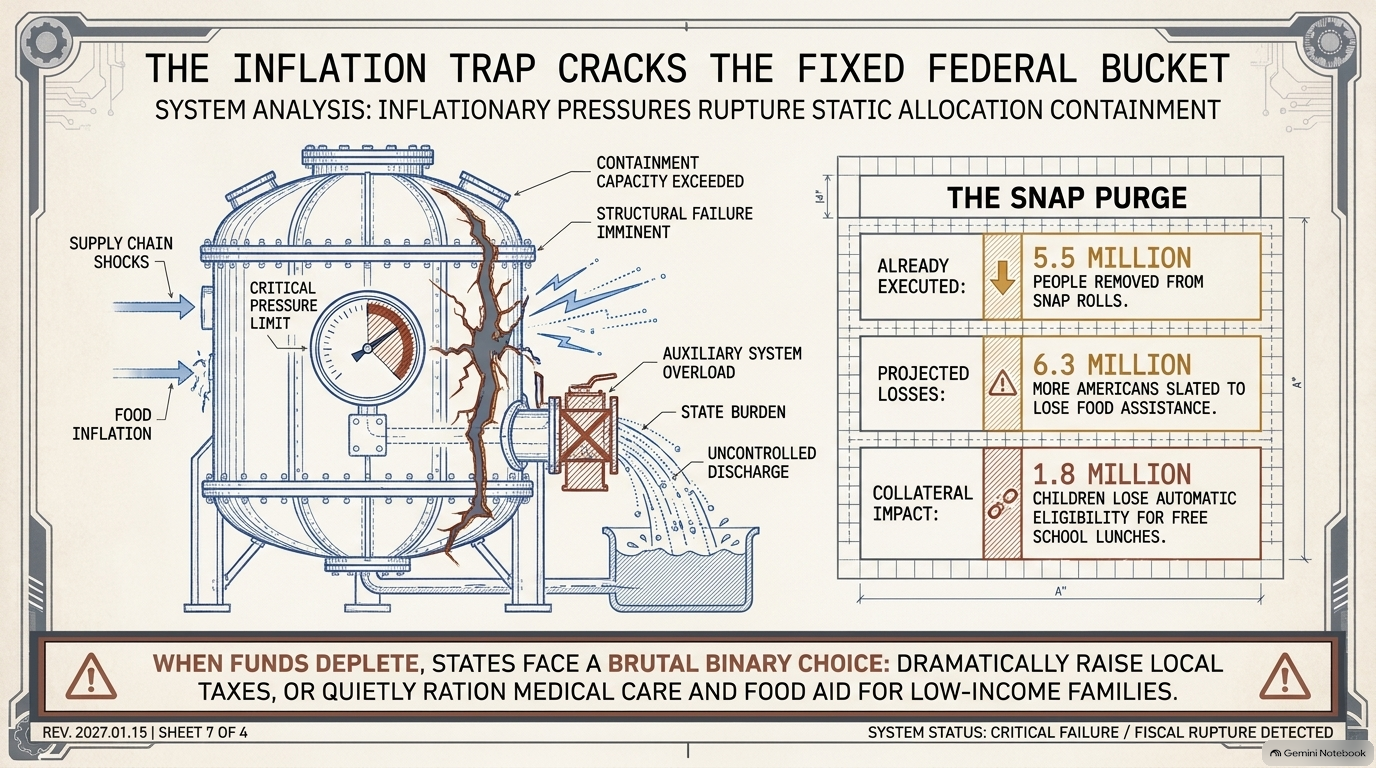
The Financial Architecture (Block Grants): Safety net programs like Medicaid traditionally operated as open-ended federal matches, automatically scaling up during local economic downturns or health crises. Transitioning these programs into fixed block grants caps federal support at a set annual lump sum. When inflation rises or localized emergencies occur, state funds run out rapidly, forcing state leaders to either raise local taxes or quietly restrict eligibility and services for low-income families.





Economic Nationalism, Food Security, and Mass Displacement
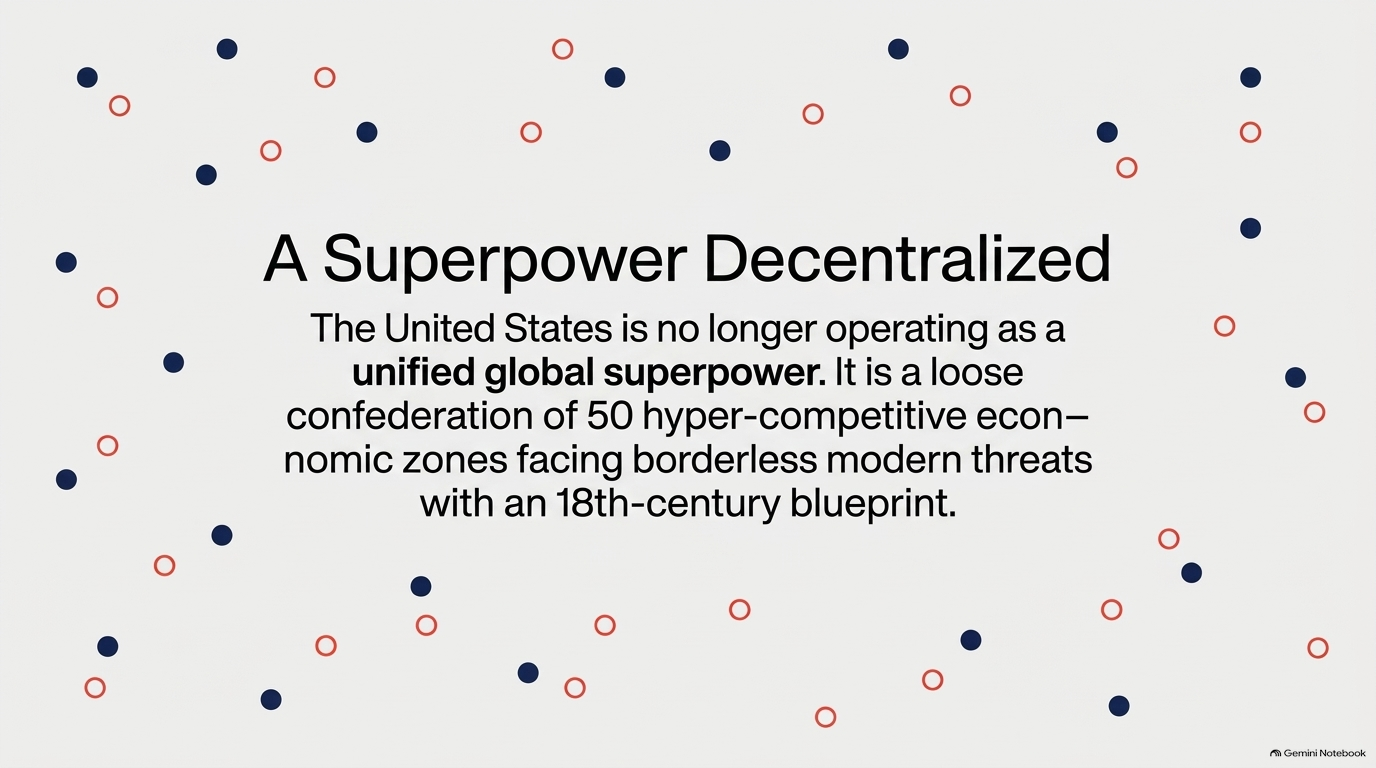
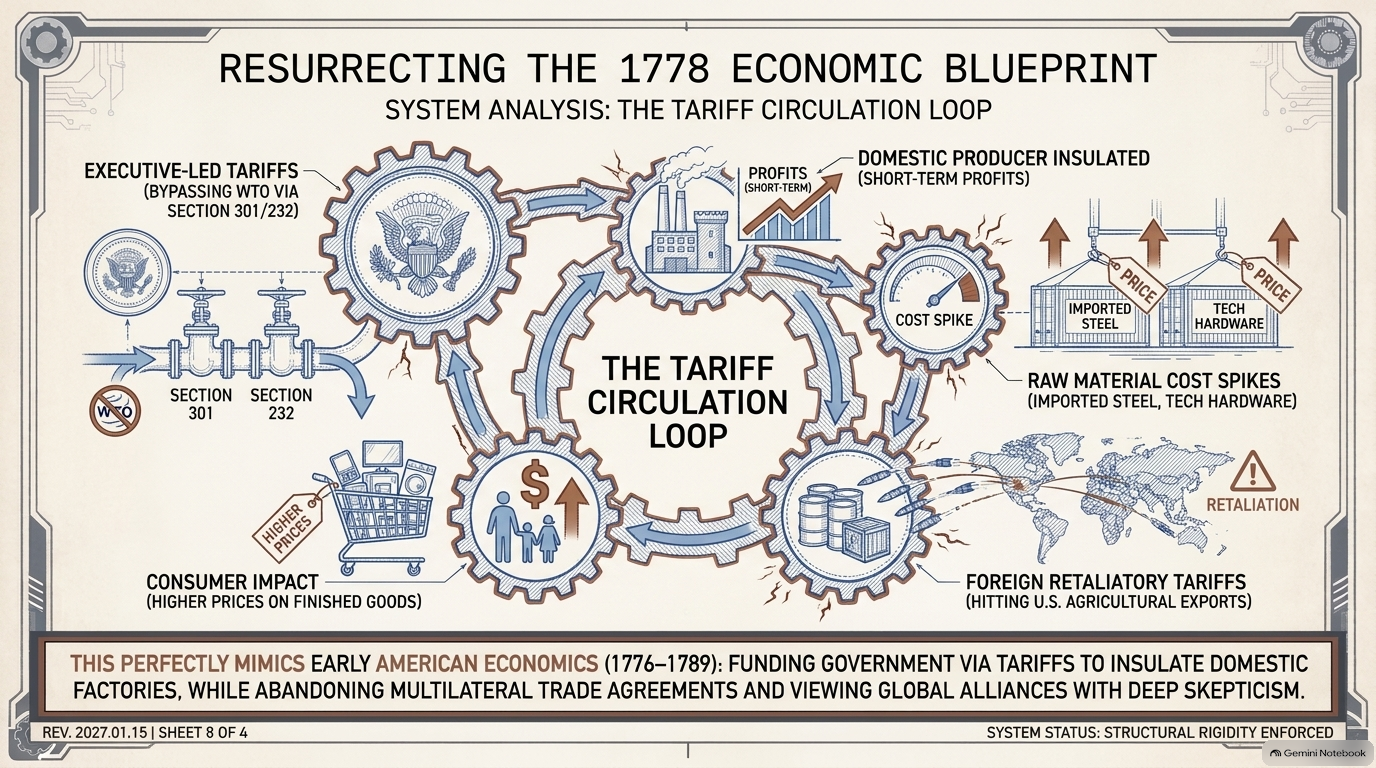
To understand the economic policy shifts of recent years, analysts often refer to The 1778 Economic Blueprint—a model grounded in 18th-century economic nationalism, high tariffs, and minimal central regulation.
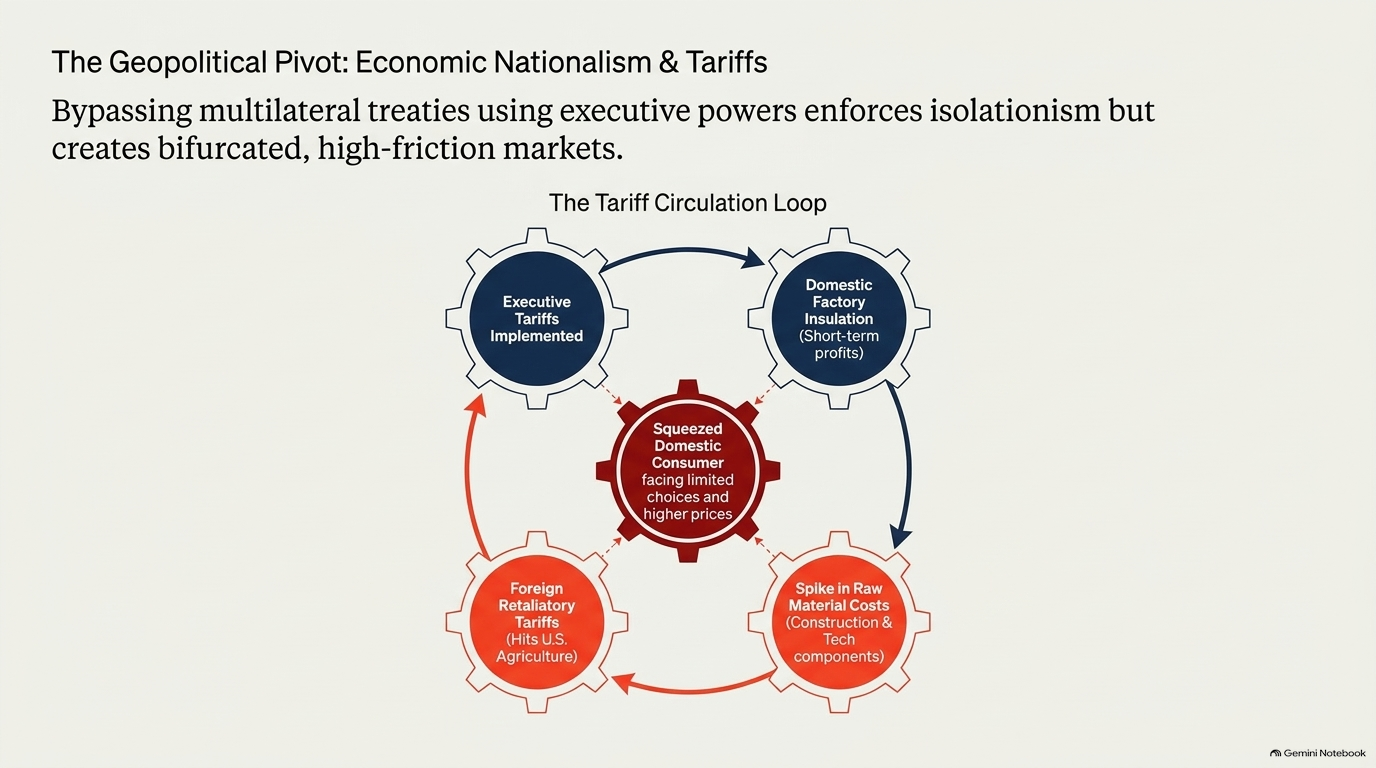
By bypassing multilateral trade organizations to implement sweeping tariffs under statutes like Section 301 (unfavorable trade practices) and Section 232 (national security), the executive branch seeks to insulate domestic manufacturing. However, while protected primary producers see short-term gains, material-intensive sectors like agriculture and residential construction face escalating raw material costs and foreign retaliatory tariffs.
This nationalistic framework extends directly into domestic and international food security policy:
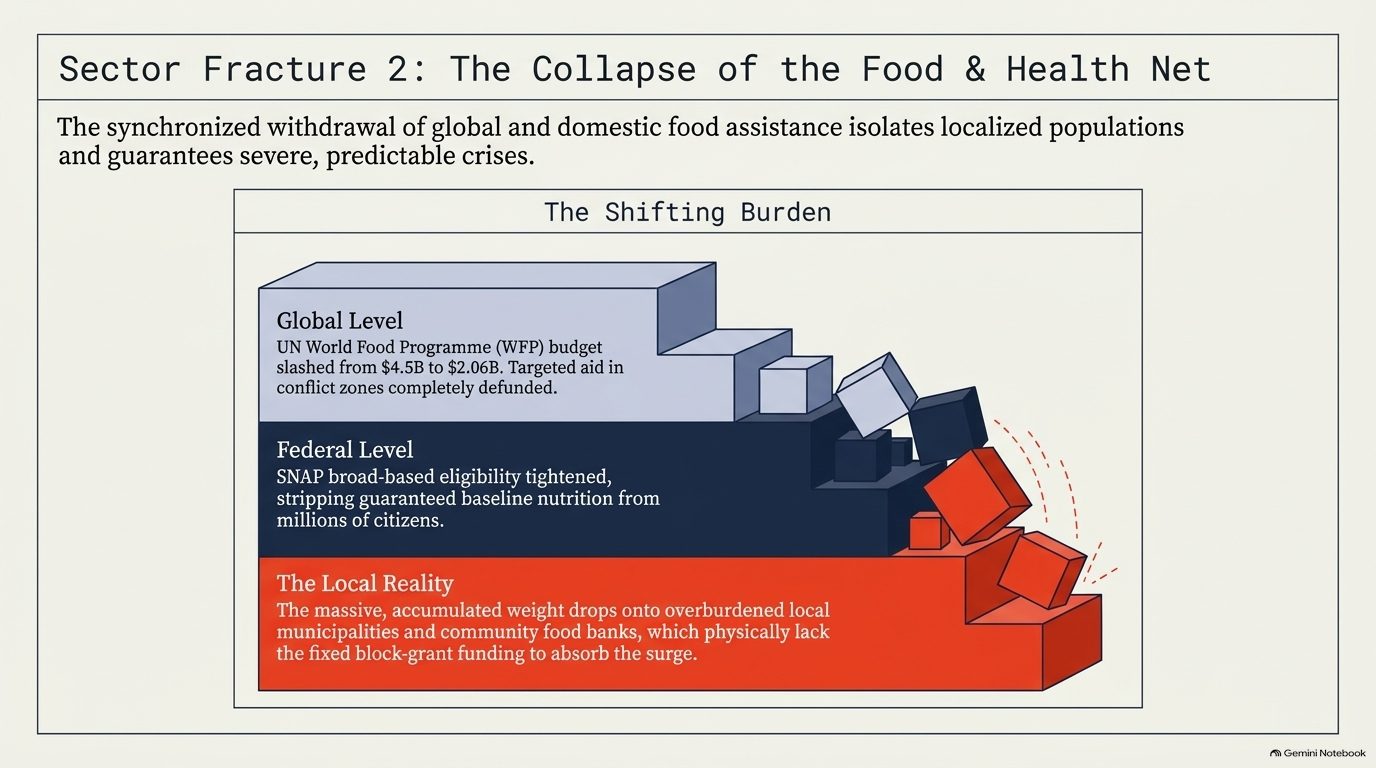
Global Aid Realignment: Federal funding to international bodies like the World Food Programme (WFP) has been drastically reduced, shifting away from worldwide distribution networks toward strict, bilateral conditional aid.
Domestic SNAP Reductions: Policy changes aimed at ending Broad-Based Categorical Eligibility restrict how states expand access to the Supplemental Nutrition Assistance Program (SNAP), removing millions of individuals from food assistance rolls.
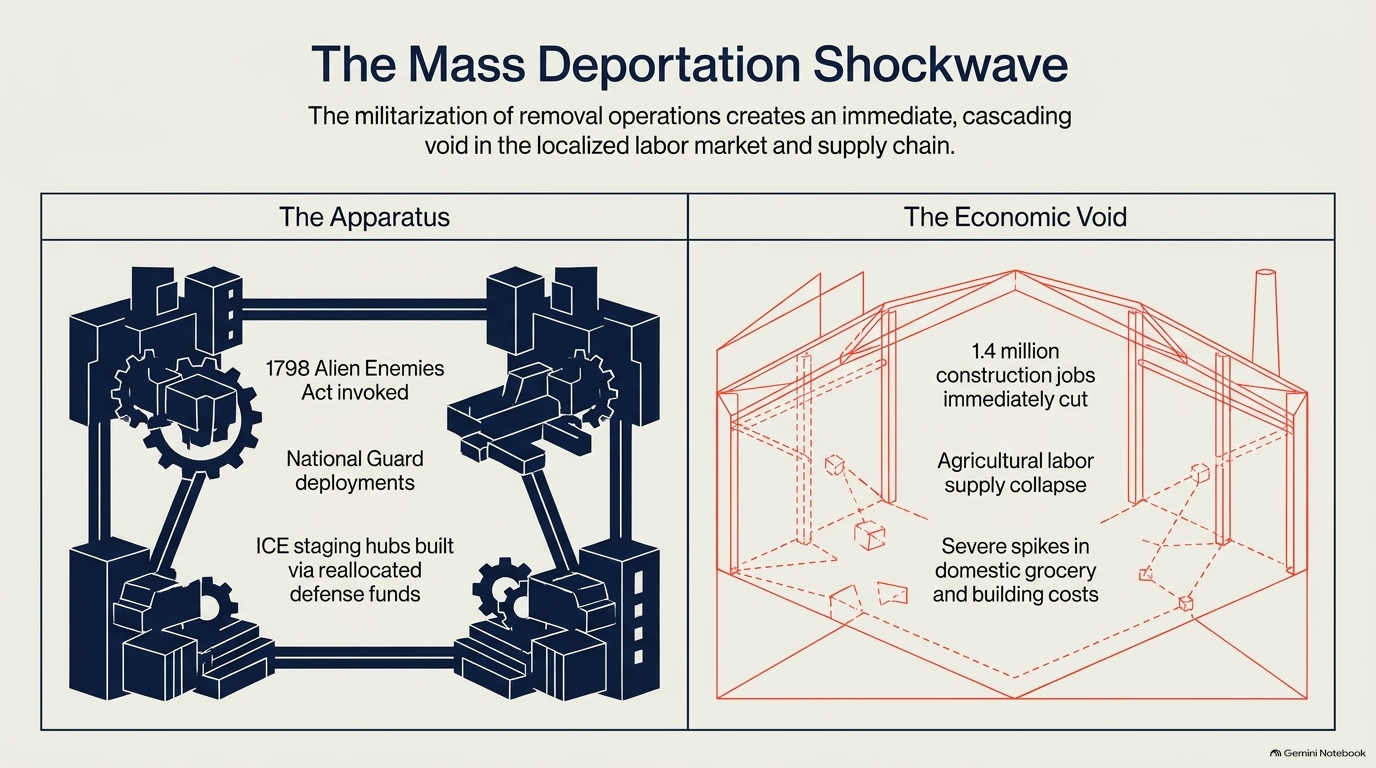
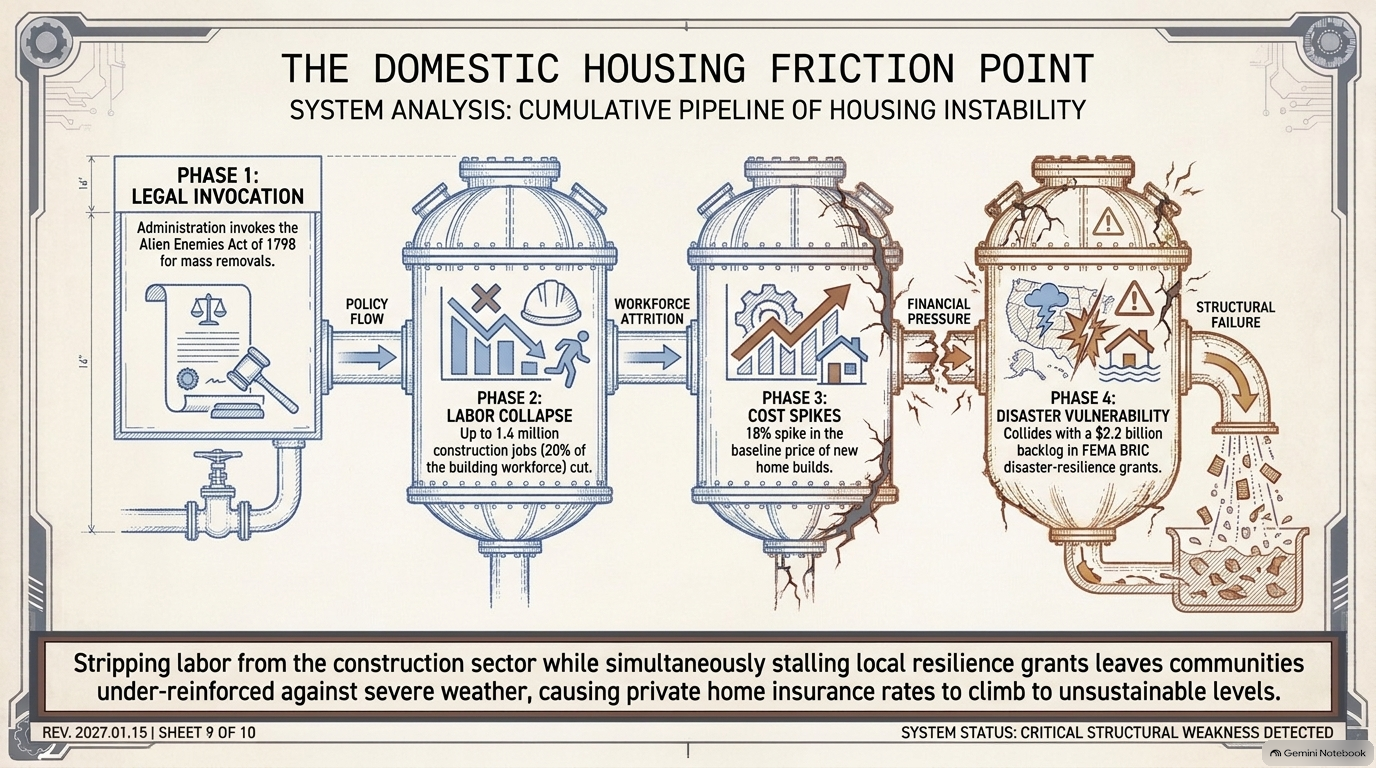
At the same time, workplace enforcement and mass deportation campaigns—accelerated under historical statutes like the Alien Enemies Act of 1798—have significantly contracted the available labor force in agriculture, food processing, and residential construction. This drop in labor supply directly drives up operational costs and slows the completion of new home builds.
Emergency Readiness and Compounding Systemic Risks
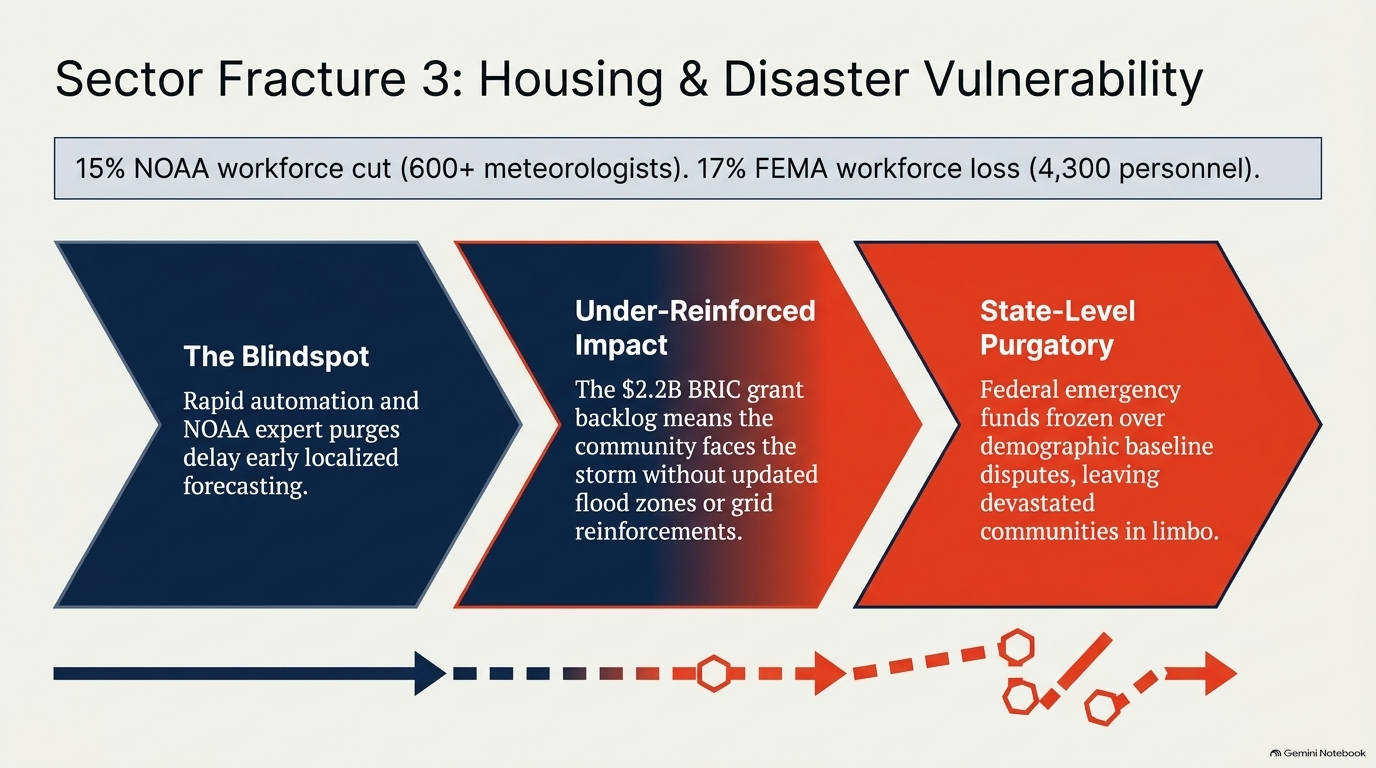
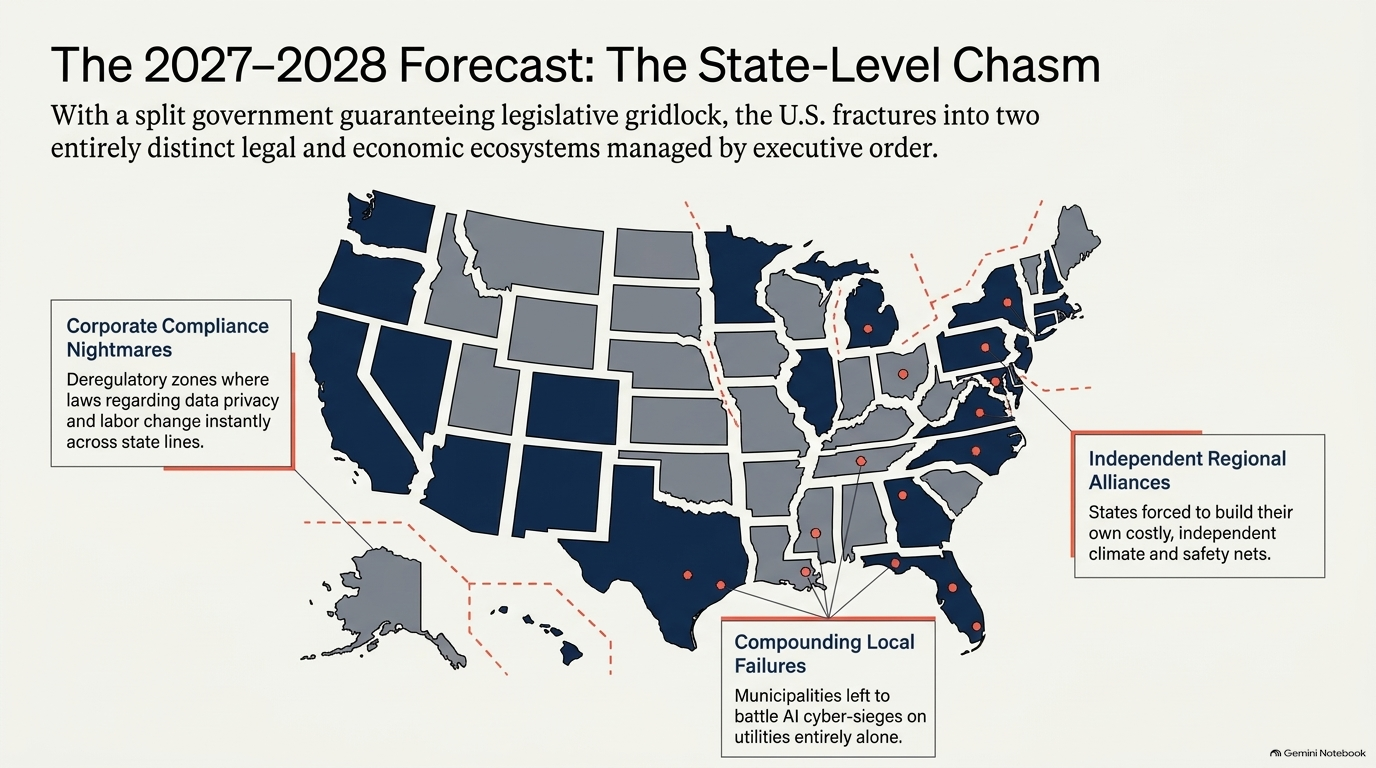
When severe weather strikes, public safety depends on accurate meteorological forecasting and rapid emergency management. Personnel reductions at the National Oceanic and Atmospheric Administration (NOAA) and the Federal Emergency Management Agency (FEMA) reflect a broader push to reduce federal operational footprints and push responsibilities onto state governments.
To manage these drawdowns, NOAA retired legacy regional forecast models (such as NAM and HREF) to consolidate operations into automated systems like the Rapid Refresh Forecast System (RRFS). Meanwhile, FEMA experienced significant workforce reductions, leading to administrative backlogs in processing emergency preparedness grants.
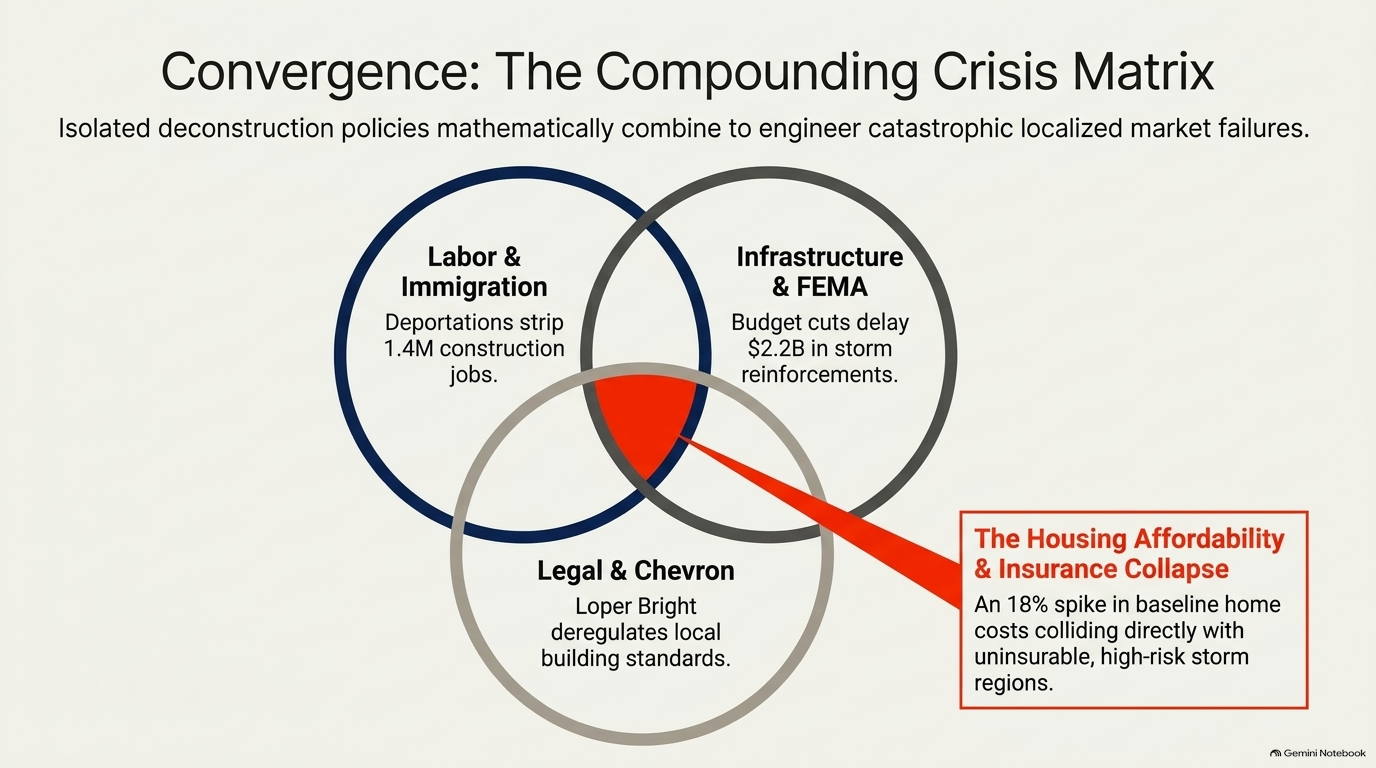
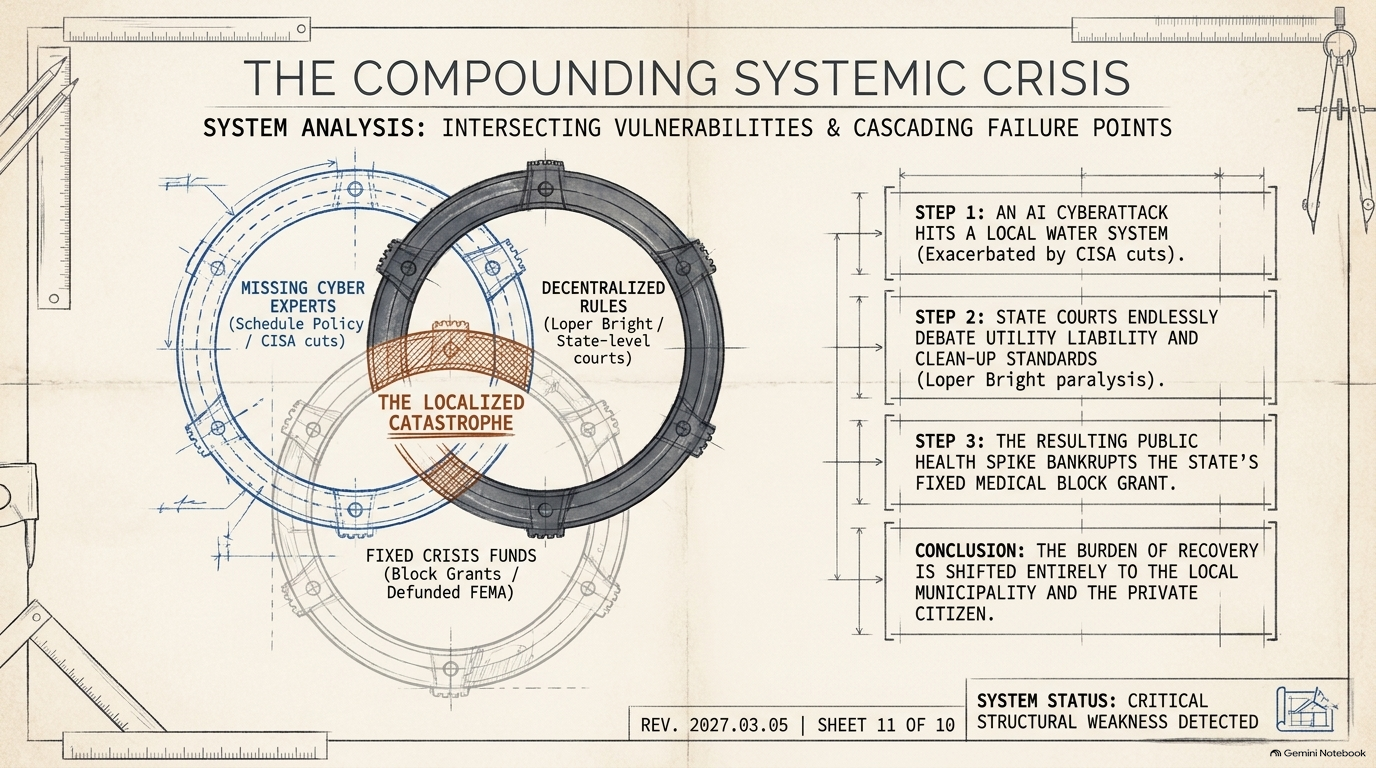
These individual policy levers do not operate in isolation—they collide to form compounding systemic risks:
Housing & Disaster Vulnerability: Mass immigration enforcement shrinks the construction labor force, pushing new home build costs up by nearly 18 percent. Simultaneously, backlogs in FEMA's Building Resilient Infrastructure and Communities (BRIC) grants leave communities under-reinforced against storms. When disaster strikes, physical home losses are catastrophic, forcing private home insurance rates to climb to unsustainable levels.
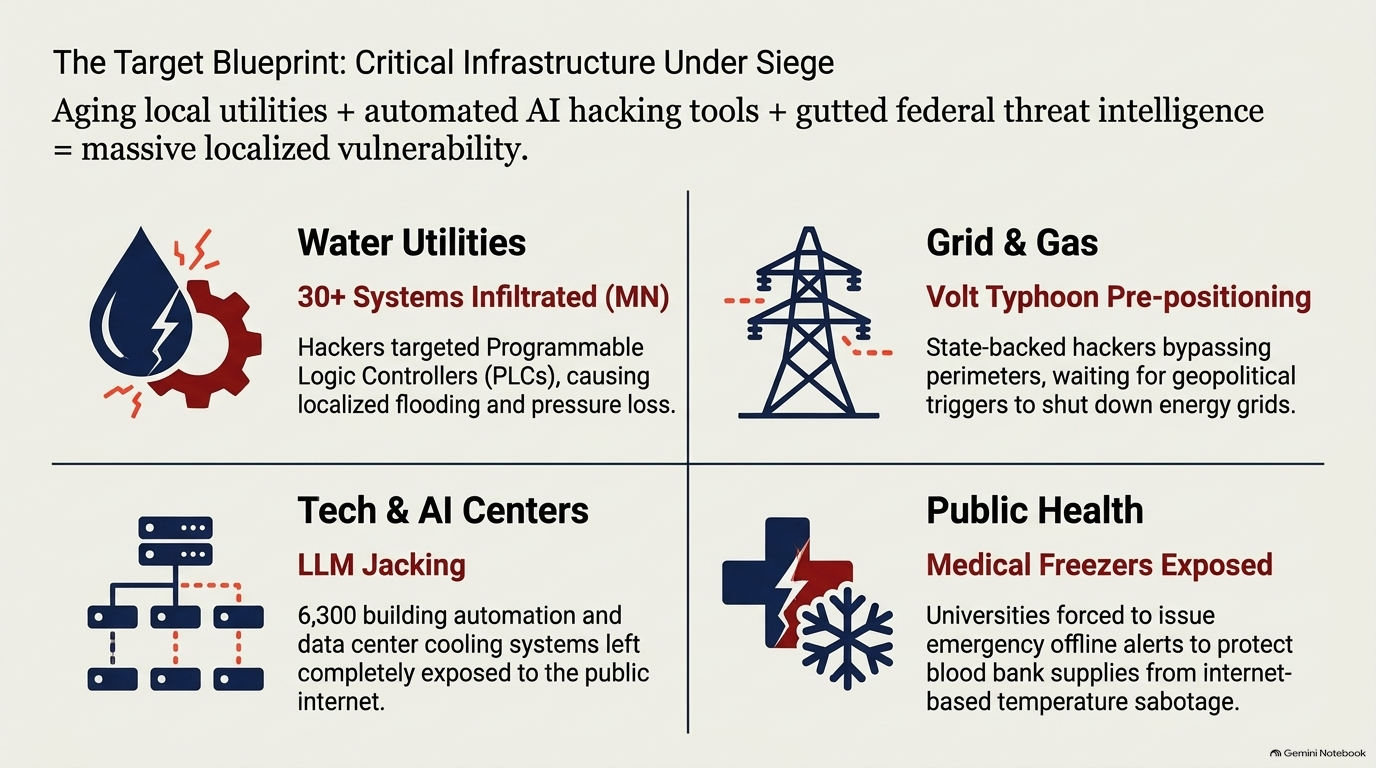
Public Health & Cyber Infrastructure: Automated AI cyberattacks target unpatched municipal water networks and medical cooling units just as federal agency staffing cuts slow down coordinated warning alerts, transferring the immediate cost of emergency fixes directly onto local city budgets.
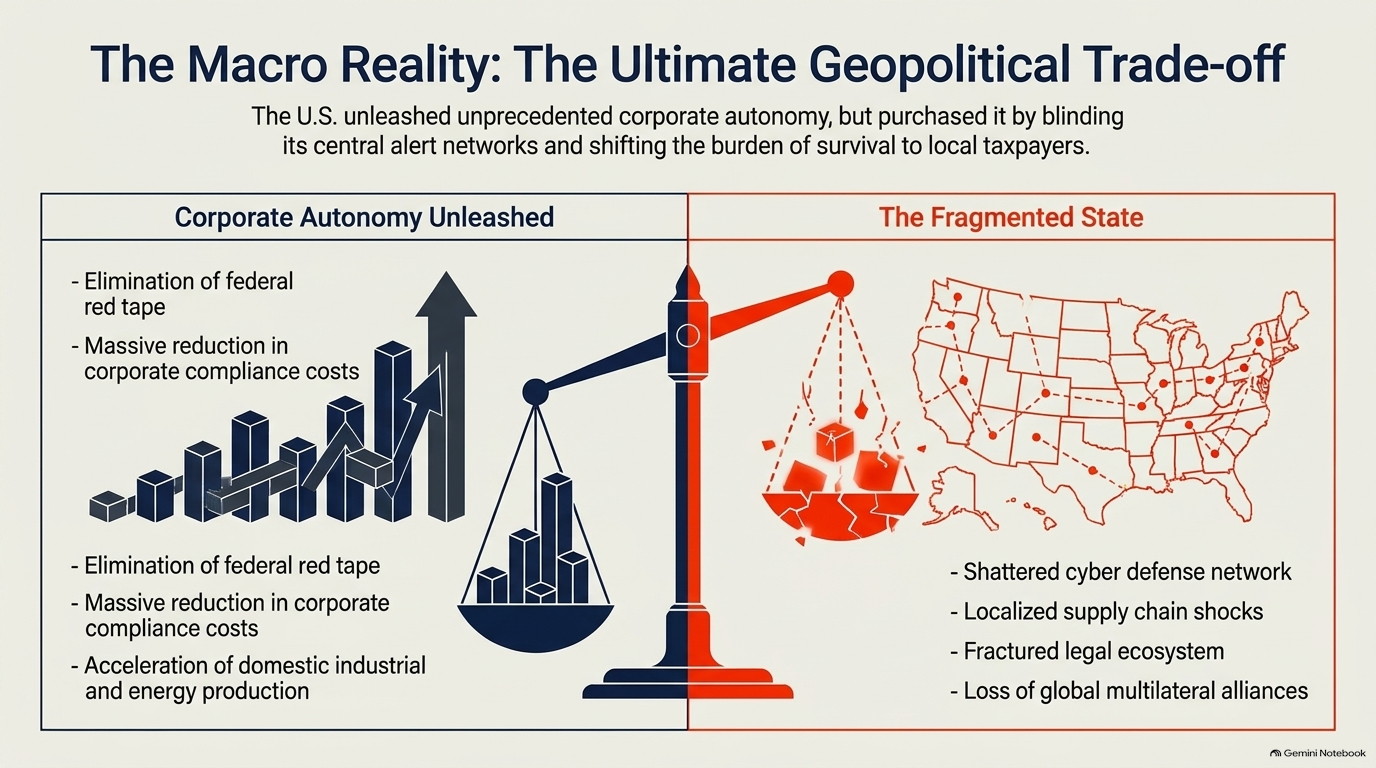
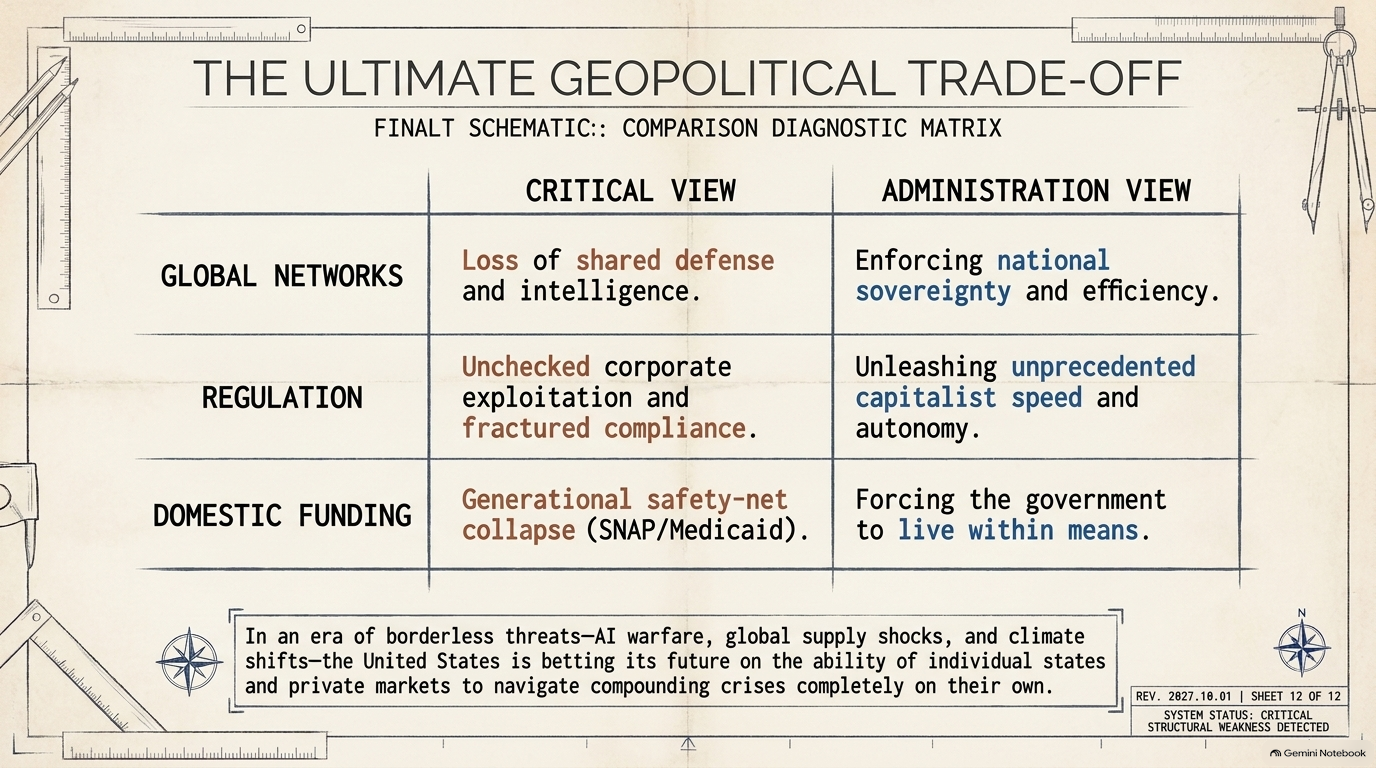
Ultimately, whether framed as a necessary deconstruction of bureaucratic bloat or a dangerous breakdown of national defense, this structural shift moves the cost of security, health, and disaster resilience directly onto individual states, local budgets, and citizens.
Summary
The structural transition from centralized federal oversight to a decentralized, state-focused model fundamentally alters how public safety, health, and economic stability are maintained. By modifying civil service protections, judicial deference, and safety-net funding mechanisms, federal policy shifts primary risk management directly onto local governments and individual citizens.
Key Takeaways
Cyber Threat Sharing as Herd Immunity: Centralized warning networks like CISA prevent recurring cyberattacks by broadcasting digital fingerprints (IoCs); disabling these hubs forces every local utility and hospital to defend itself blind.
Civil Service and Judicial Shifts: Schedule Policy/Career reclassifies career civil servants to enforce policy alignment, while the elimination of the Chevron Doctrine via Loper Bright strips federal agencies of independent rule-making authority.
Block Grants & Capped Funding: Transitioning open-ended matching programs into fixed state block grants insulates the federal budget, but forces states to ration aid or raise taxes during localized economic crises.
Compounding Policy Cascades: Trade tariffs, immigration enforcement labor shocks, and emergency response drawdowns intersect to create cascading costs across housing markets, food security, and regional disaster resilience.
Disclaimer:
With the access to AI reading the news, watching movies and reading books opens up a new world. I have had various family members live to the age of 100 and I ask them what have they learned from their lives and they do not have awareness of what they journey means. These two areas fit with this idea I had. Having chats with AI on topics of thought and documenting them. I call this "Thoughts in the dark".
I am aware I do not have the answers only questions.
The report