
What if everything you were taught in twelve years of civics classes wasn't designed to show you how power actually works—but to keep you from ever pulling its levers?
By unpacking the bridge between political philosophy and constitutional engineering, this lesson transforms abstract civics into an actionable toolkit for grassroots leverage.
Analyze the structural difference between civic aesthetic education and civic mechanics.
Deconstruct how modern concepts like "market meritocracy" replace ancient doctrines of absolute power.
Examine how the U.S. Constitution's inversion of sovereignty and federalism empowers everyday citizens.
Evaluate practical mechanisms of direct democracy, administrative oversight, and municipal budget auditing.
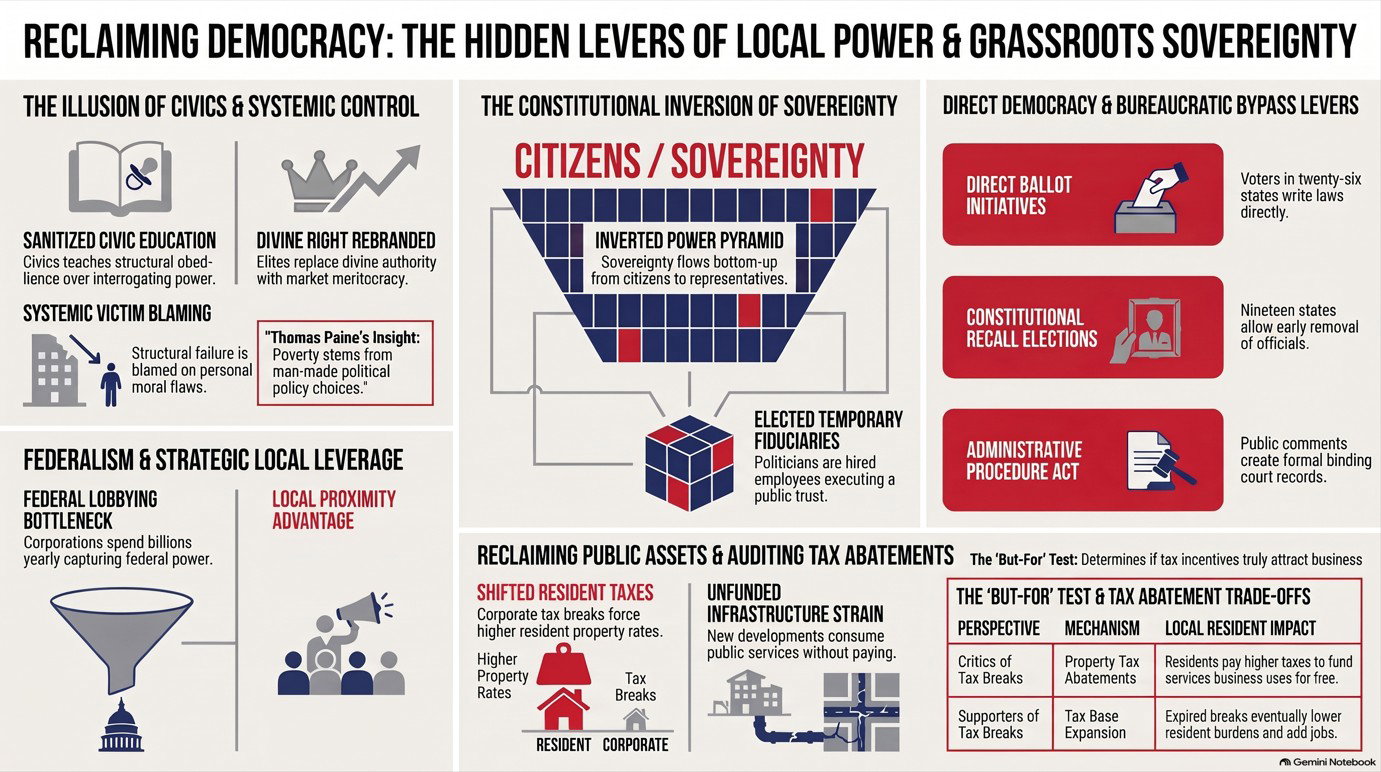
The Civic Fairy Tale vs. The Engine Room of Power
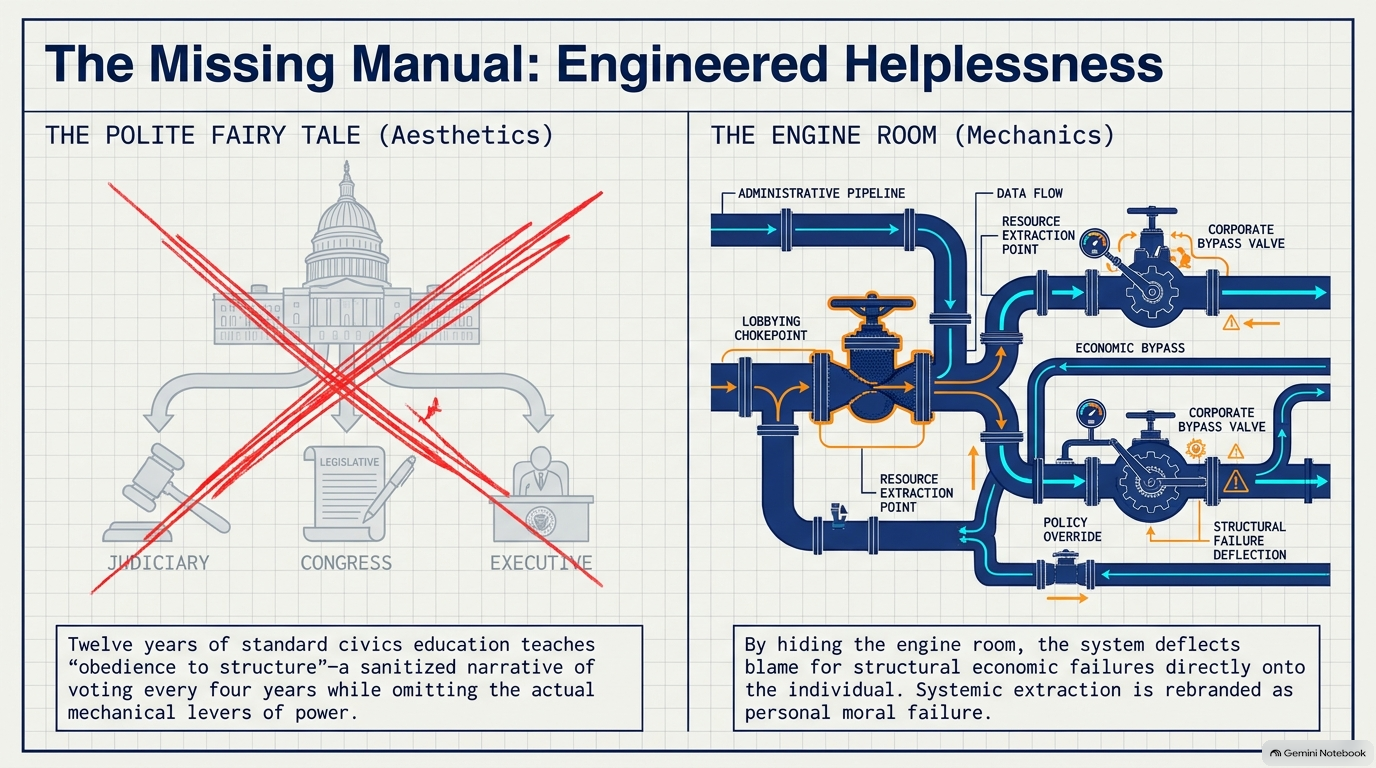
Standard civics education frequently focuses on aesthetics rather than mechanics. Students memorize the three branches of government, recite the Pledge of Allegiance, and are taught that casting a vote once every two to four years is the absolute peak of civic duty. This sanitized model hides the actual dynamic of power.
Imagine buying a complex vehicle and receiving an owner's manual that teaches you how to wash the windows and adjust the mirror, but intentionally tears out every page explaining how the engine, spark plugs, or transmission function. When the vehicle breaks down, you have no choice but to rely entirely on outside experts.
From Divine Right to Market Meritocracy
When structural power is hidden, systemic economic failures—such as stagnant wages, doubling rent, or medical debt—are reframed as individual moral shortcomings. This deflection follows a long historical arc:
Ancient & Medieval Monarchies: Rulers, Egyptian pharaohs, and established churches claimed that poverty was a divinely assigned place. To question one's suffering was to rebel against God (Divine Right of Kings).
Modern Corporate Elites: Today's ruling class replaces clerical robes with corporate suits, rebranding this dynamic as "market meritocracy." The market is treated as a flawless arbiter of human worth: extreme wealth is viewed as natural merit, while economic struggle is dismissed as personal failure.
The Breakthrough of Thomas Paine
In Rights of Man, political philosopher Thomas Paine broke through this narrative by writing in plain, street-level English for working people in taverns and workshops. Paine asserted a fundamental truth: "The fault is not in the persons, but in the system." Poverty and economic disenfranchisement are not unchangeable destinies—they are man-made policy choices designed to keep regular citizens divided and self-blaming.

Inverting Sovereignty & The Strategic Advantage of Federalism
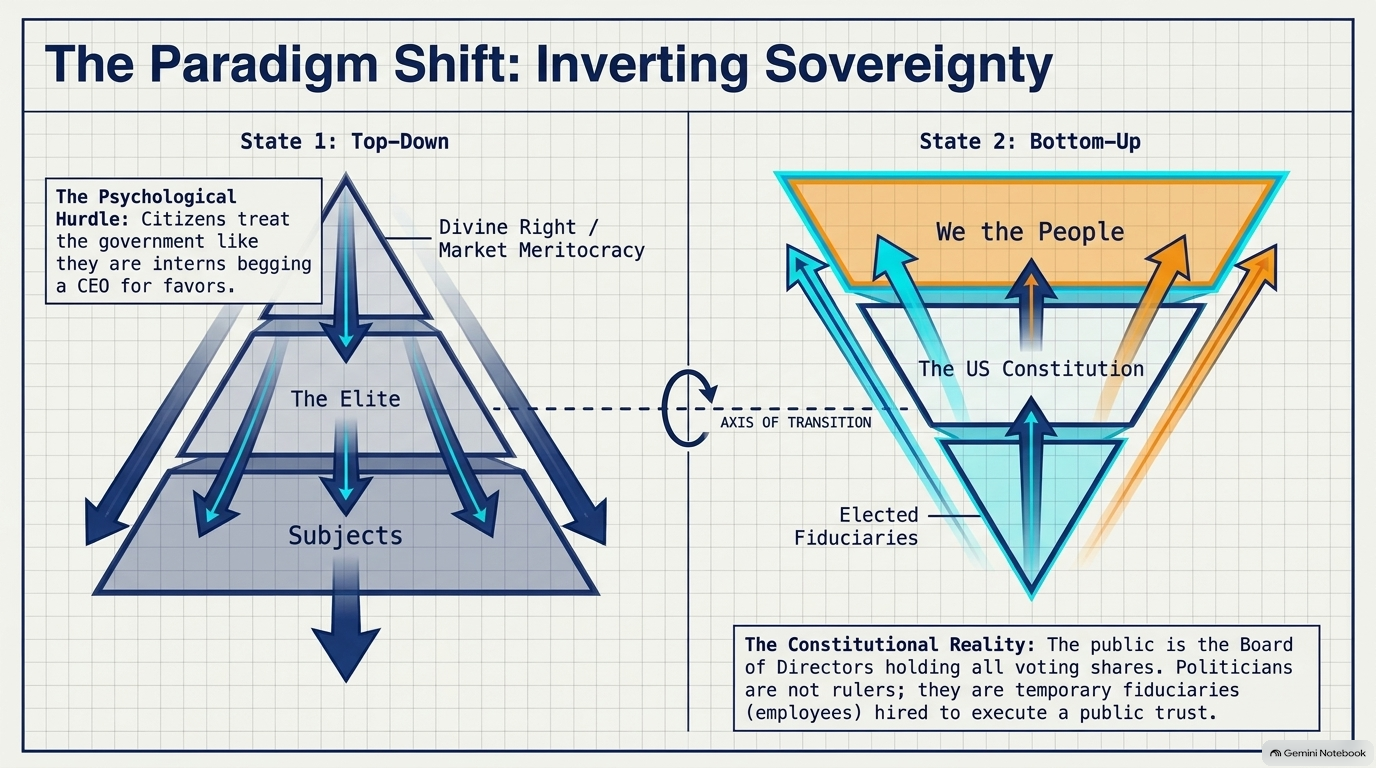
To dismantle elite dominance, citizens must understand how the U.S. constitutional architecture was engineered. Historically, power flowed top-down: God → King → Aristocracy → Subjects. The U.S. Constitution inverted this hierarchy: We the People → Constitution → Elected Representatives.
Politicians as Fiduciaries
Under this inverted framework, elected officials are not rulers to be petitioned; structurally, they are temporary fiduciaries—employees hired to execute a public trust.
Consider a corporate analogy: Everyday citizens represent the Board of Directors holding all voting shares. When citizens approach elected officials like subservient interns begging a CEO for favors, they surrender the sovereign authority granted to them by the Constitution.
Federalism as a Leverage Multiplier
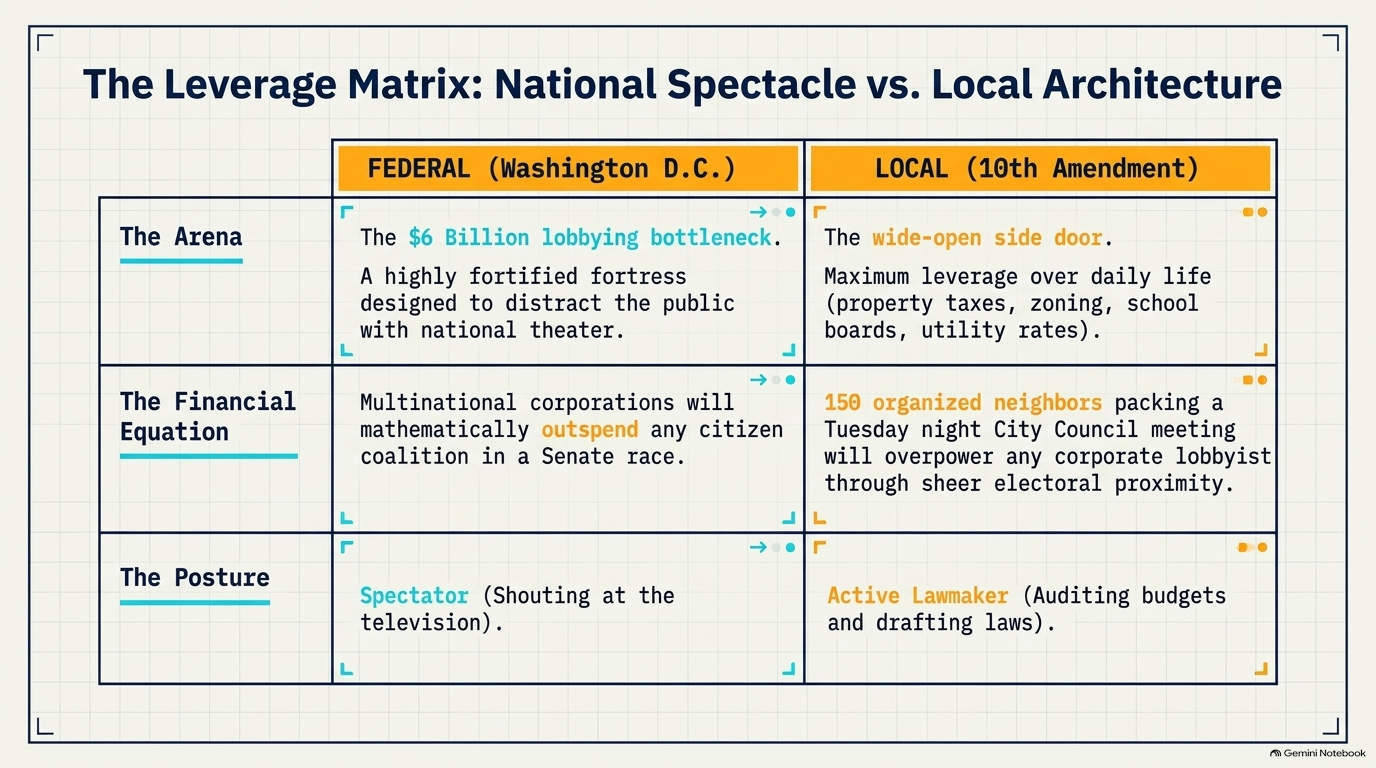
While corporate entities spend over $6 billion annually lobbying Washington, D.C., everyday citizens often fall into the trap of fixating exclusively on federal spectacle. However, under the 10th Amendment, vast governing authority is reserved directly to states and local municipalities.
Daily life is primarily governed at the local level:
Local Directives: Property taxes, zoning codes, school curricula, public transit, utility rates, and local policing budgets are set by city councils, school boards, and county commissions.
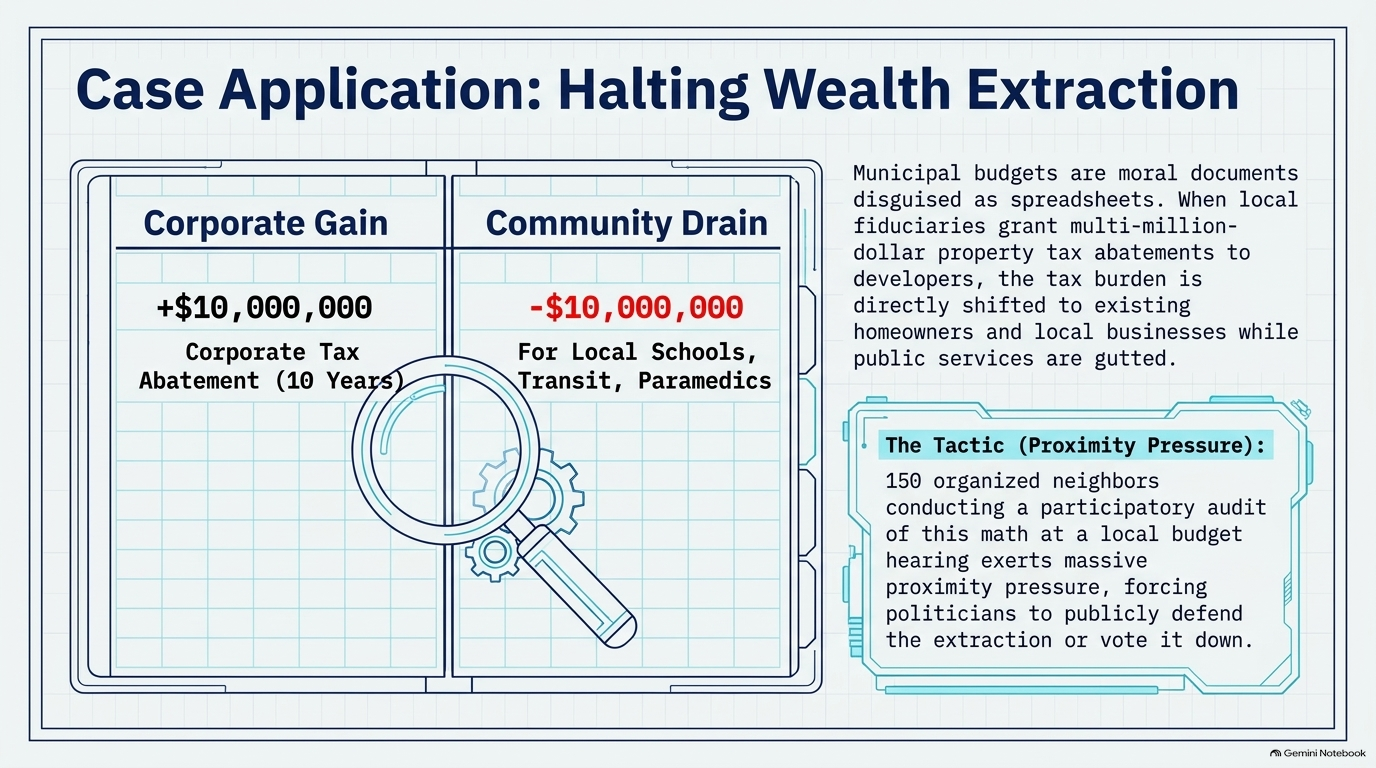
Proximity Math: A multinational corporation can easily outspend citizens in a federal Senate race. However, 150 organized neighbors showing up consistently to a Tuesday night city council meeting hold immense leverage. Because local council members often win elections by small vote margins, organized local pressure directly impacts their electoral survival.

Rerouting Captured Systems: Direct Democracy & Administrative Levers
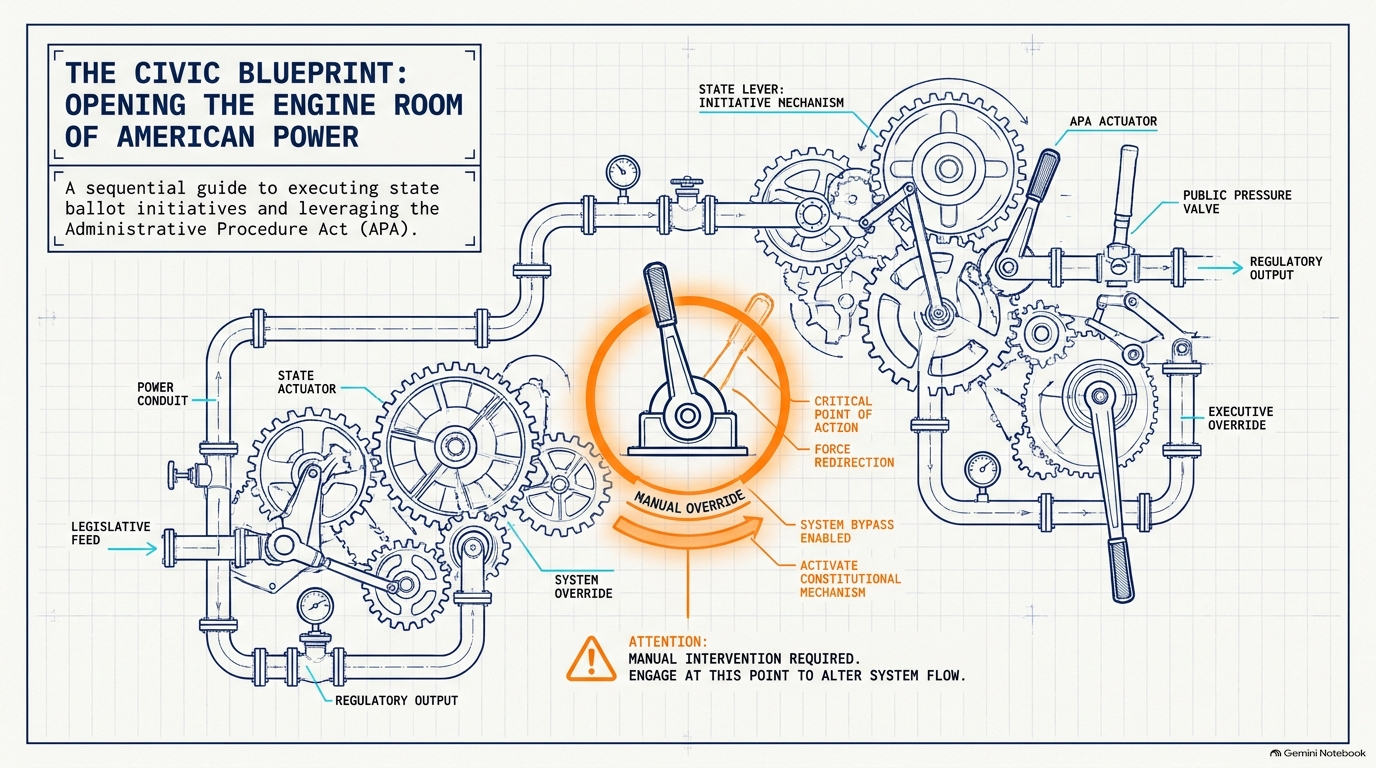
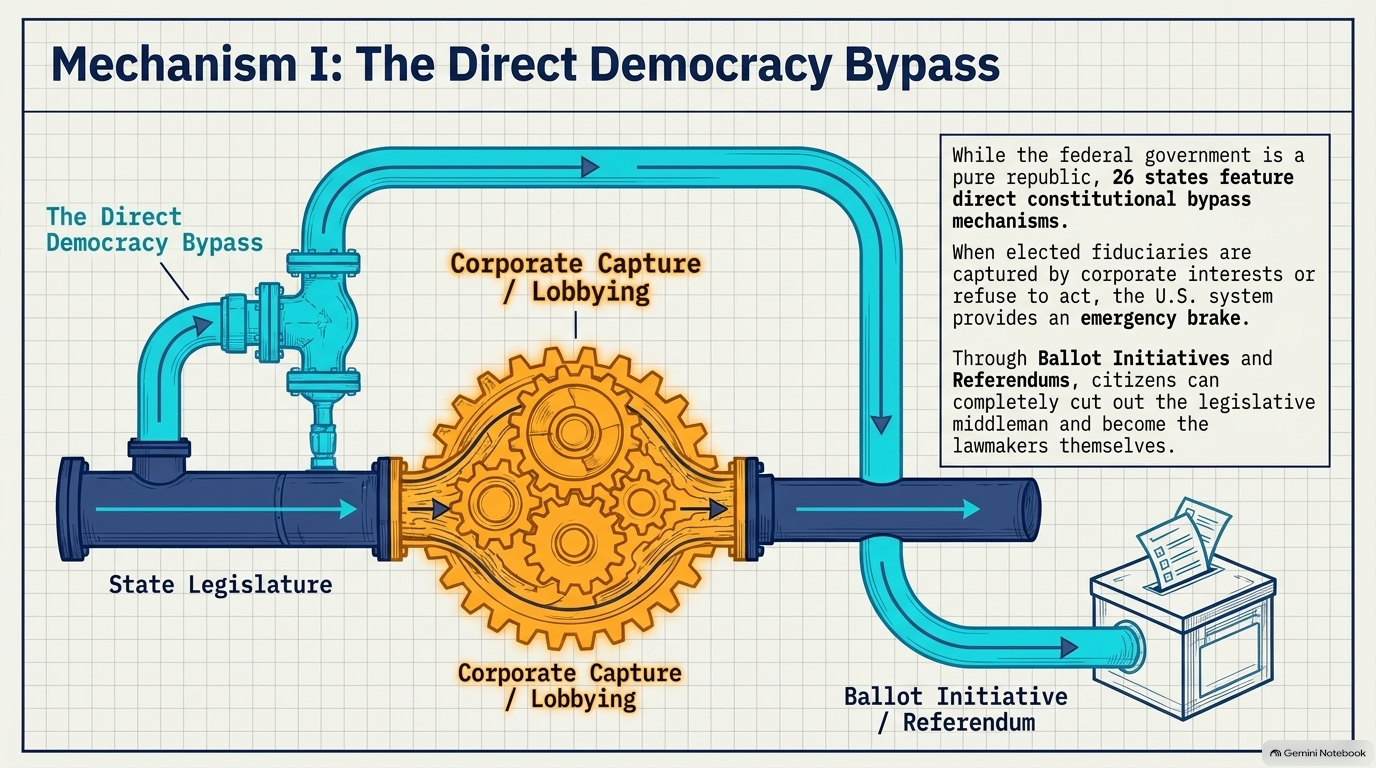
When local legislatures become unresponsive or captured by corporate interests, the constitutional framework provides specific structural bypass mechanisms.
Direct Democracy at the State Level
While the federal government is a pure constitutional republic, 26 states allow direct constitutional mechanisms that bypass state legislatures entirely:
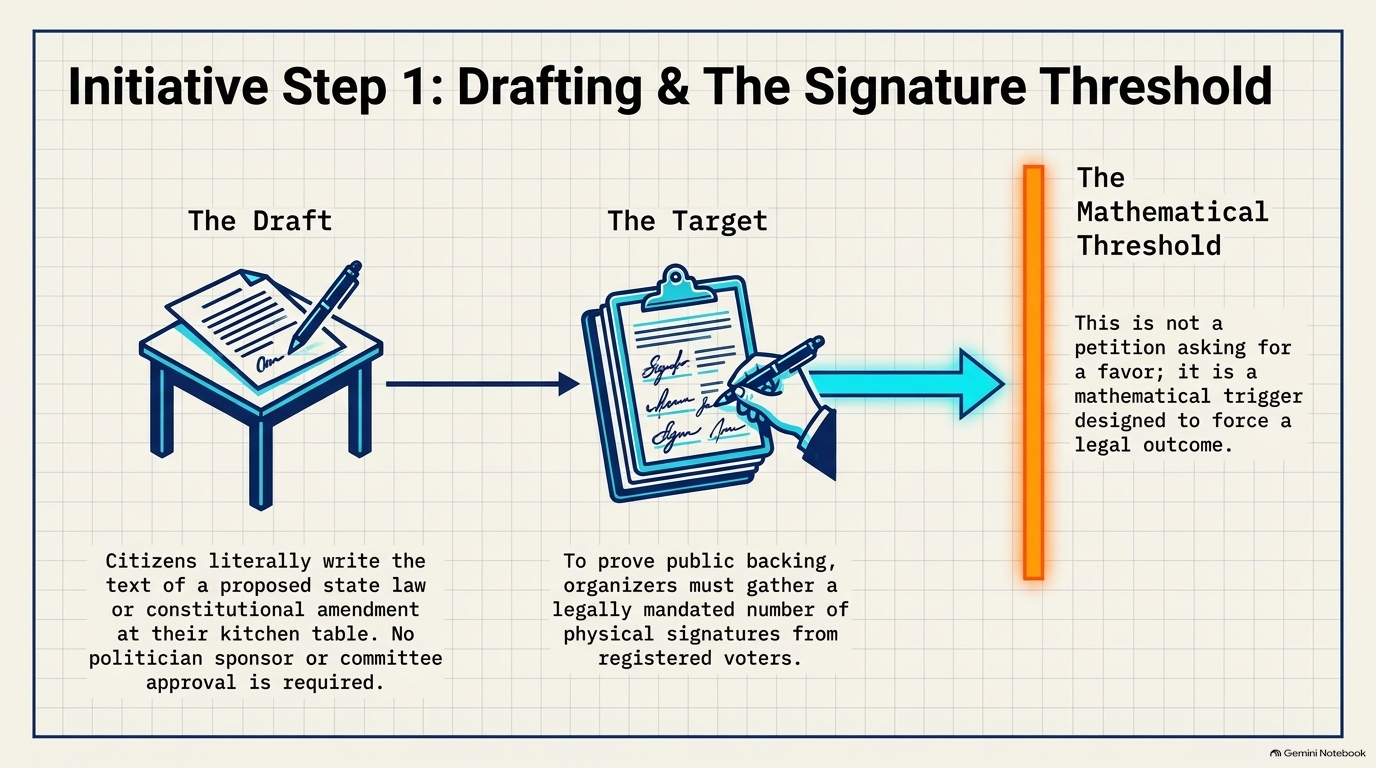
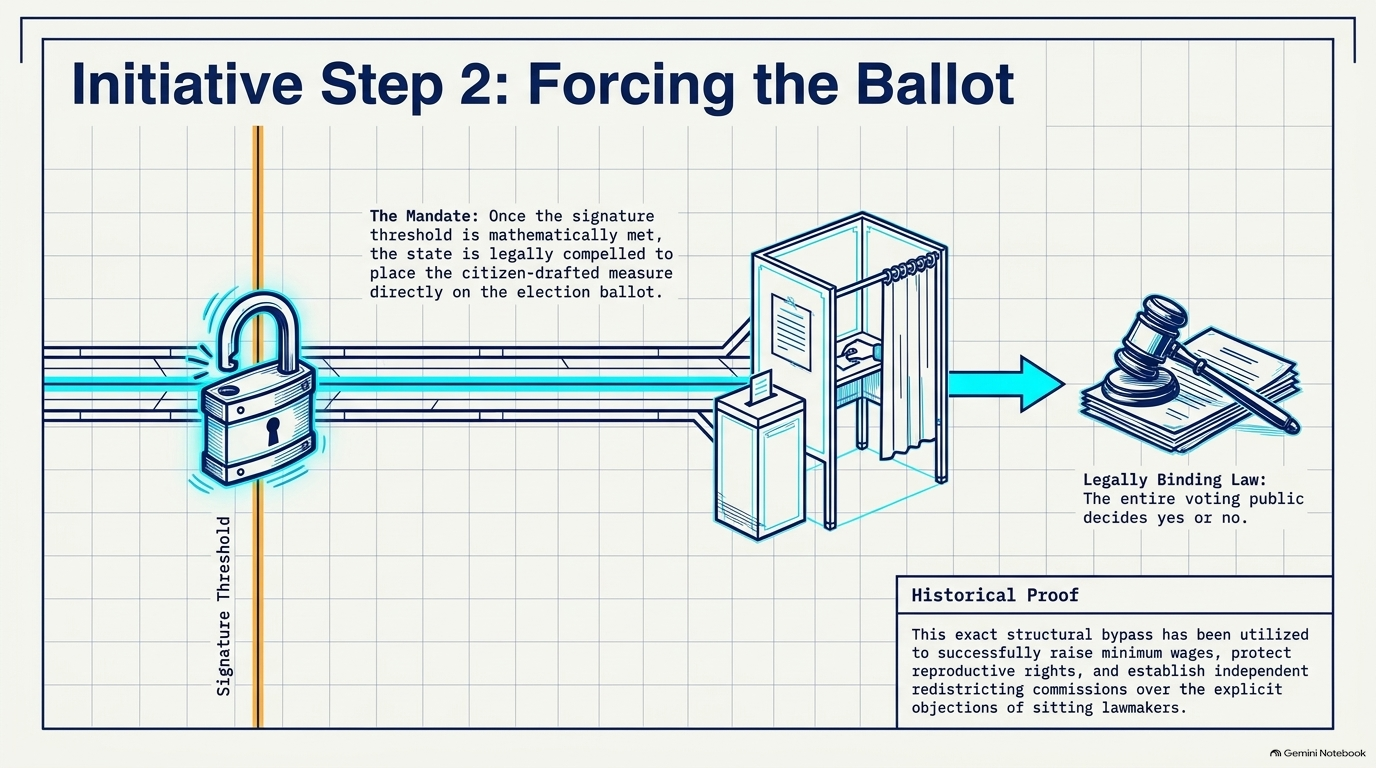
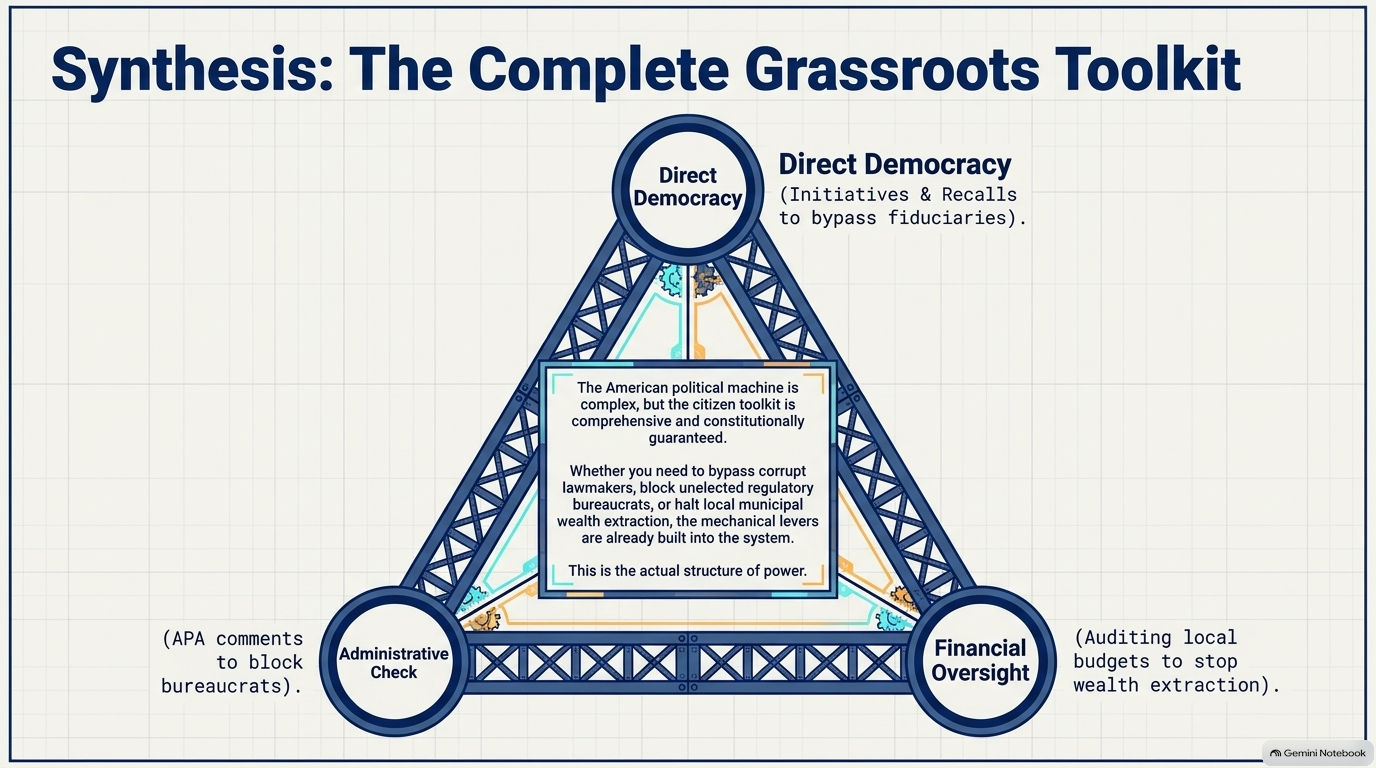
Ballot Initiatives & Referendums: Citizens can independently draft laws or constitutional amendments, gather required signatures, and place measures directly on the ballot. Voters have used this mechanism to raise minimum wages, protect reproductive rights, expand voting access, and establish independent redistricting commissions.
Recall Elections: Available in 19 states, voters possess the power to remove elected officials from office before their terms expire if they violate public trust.
The Administrative Procedure Act (APA) of 1946
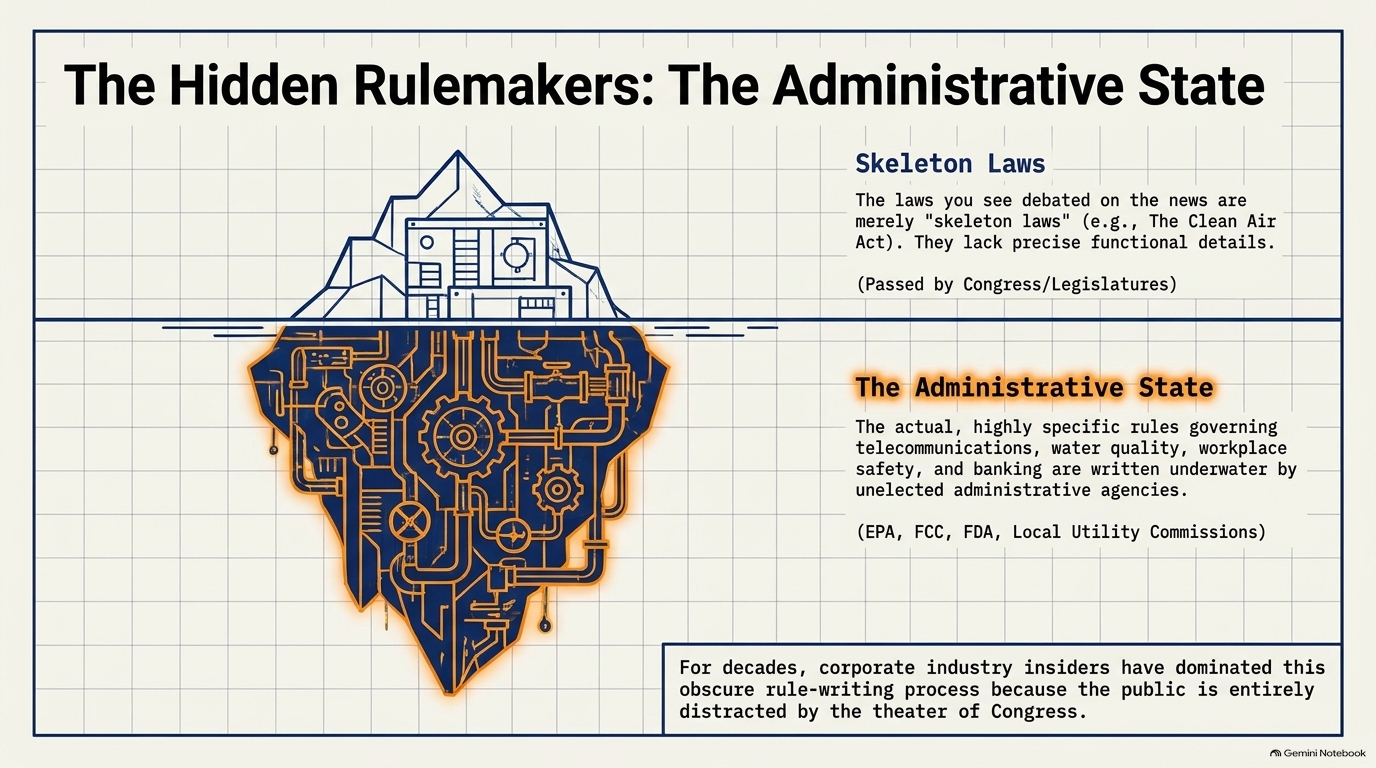
Legislative bodies often pass broad statutory "skeletons," leaving regulatory agencies to fill in the detailed governing rules. To keep unelected bureaucracies accountable, the Administrative Procedure Act (APA) establishes a mandatory public oversight process:
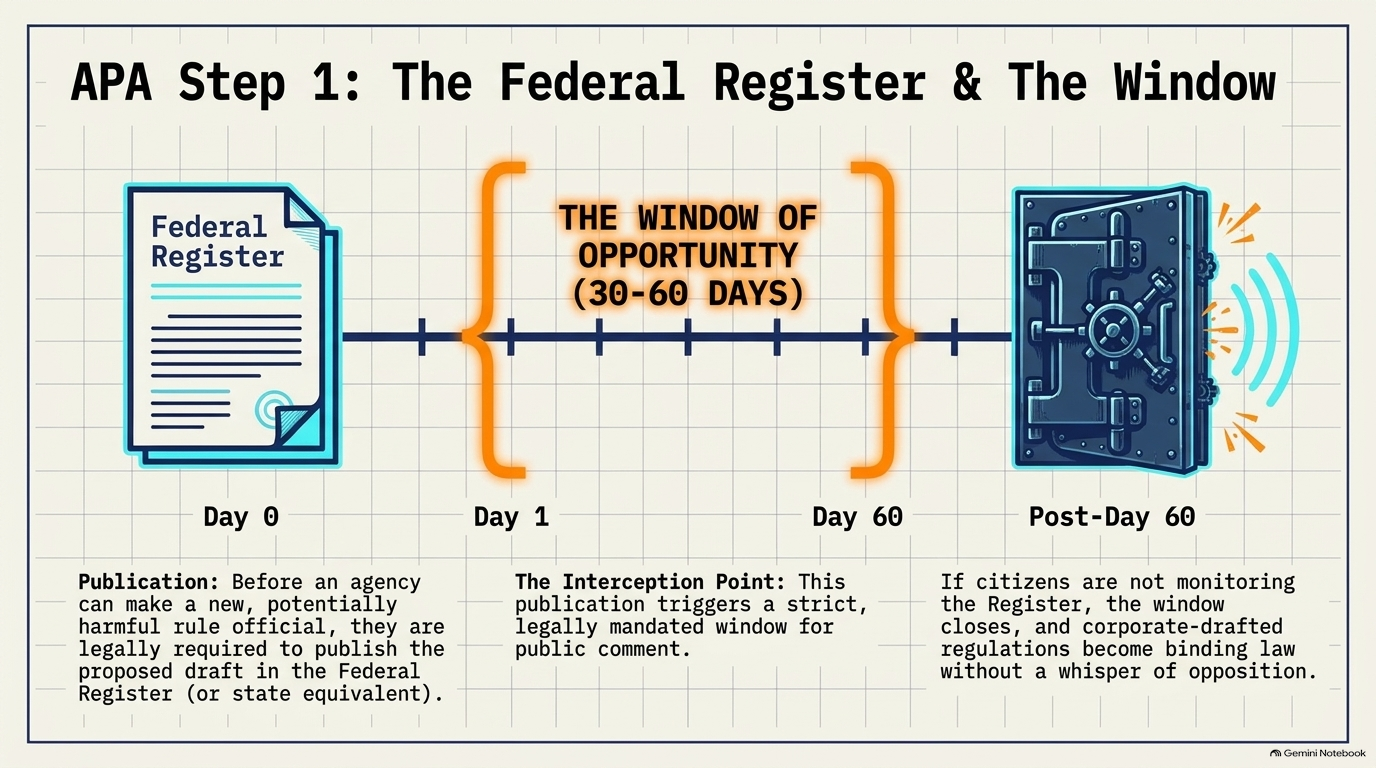
Publication: Proposed agency rules must be published in the Federal Register.
Public Comment Period: Agencies are legally required to open a 30- to 60-day window for public input.
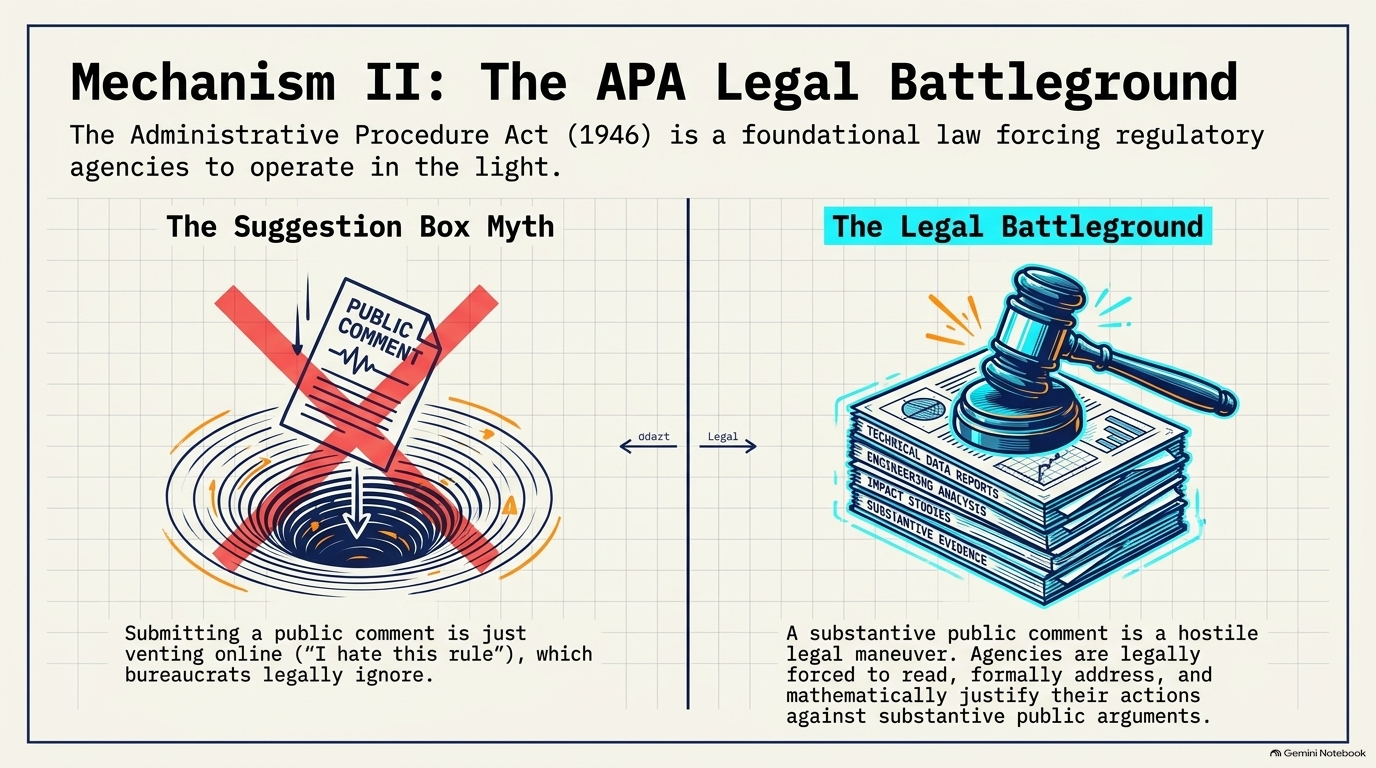
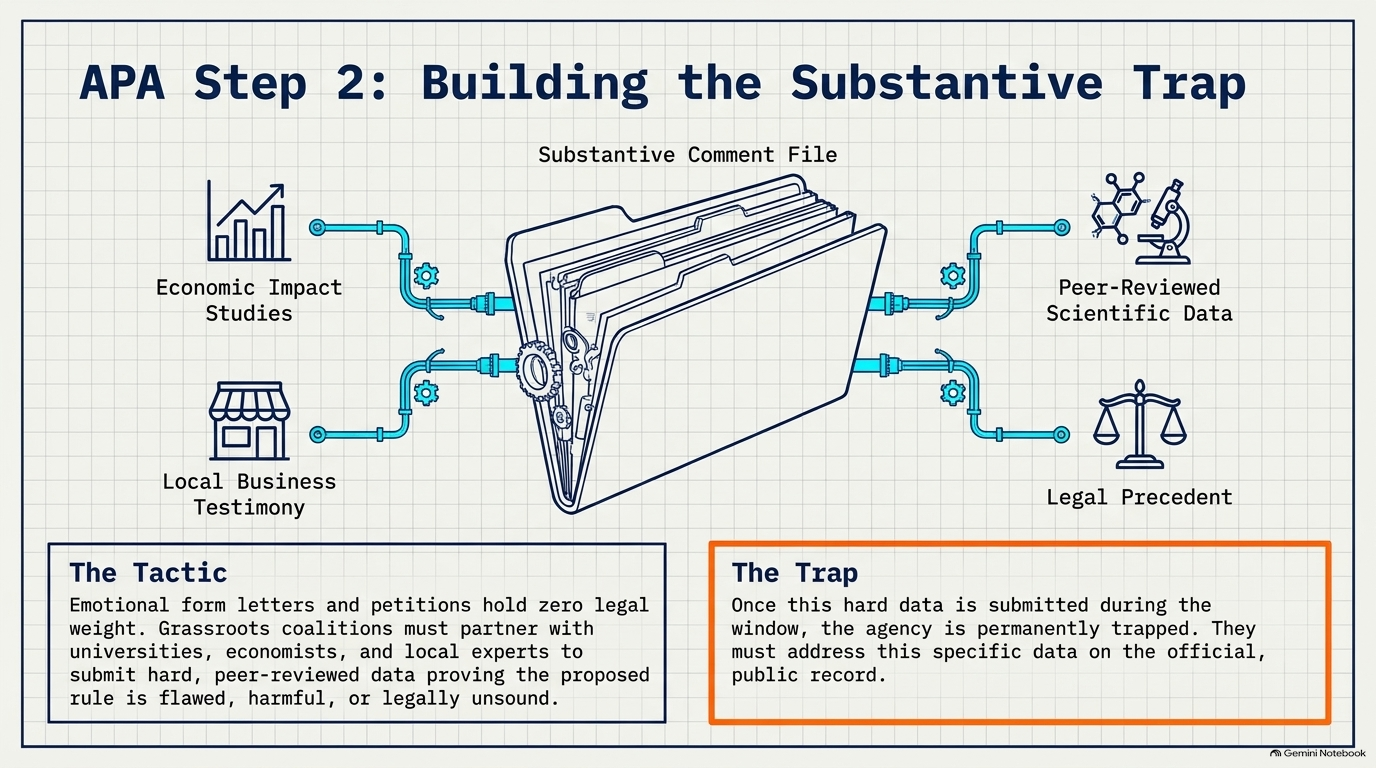
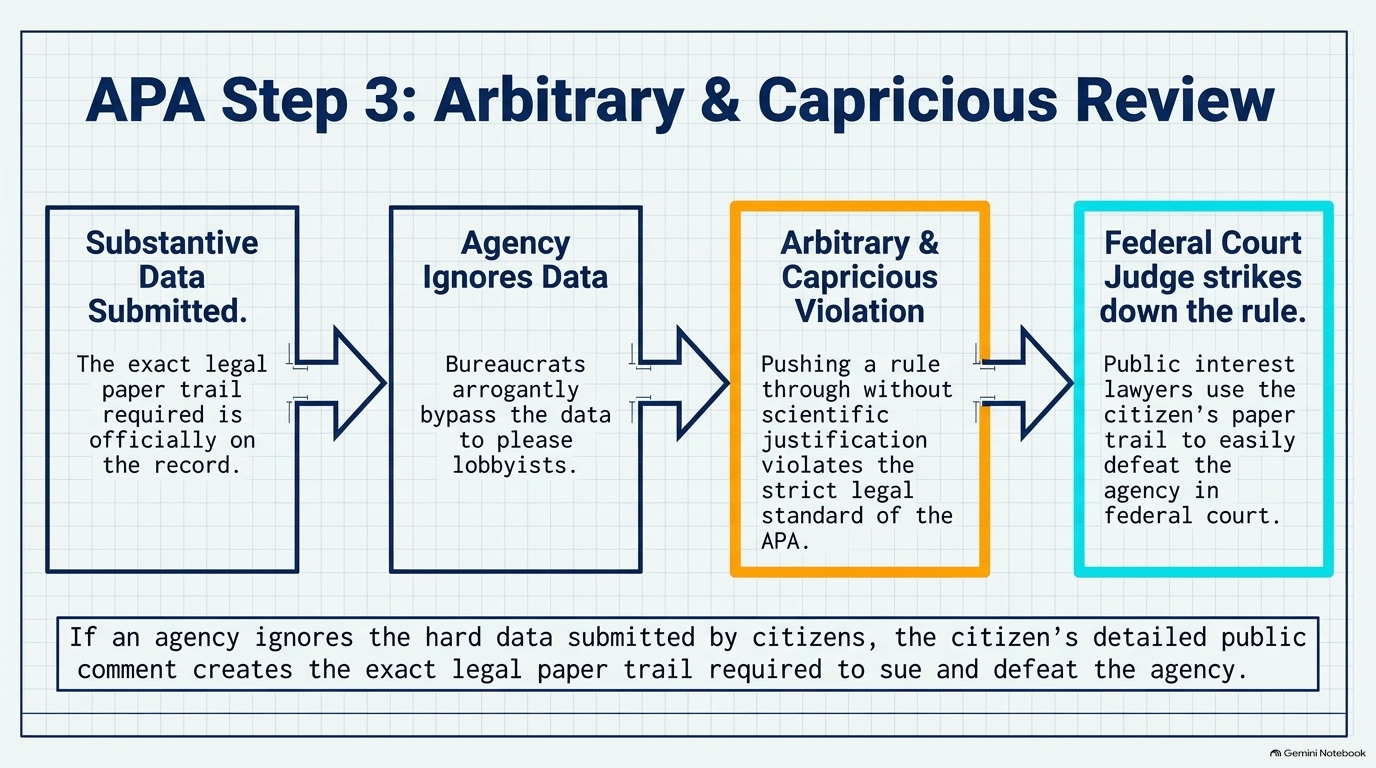
Substantive Record: Public comments are not suggestion boxes. Agencies are legally bound under the "arbitrary and capricious" standard to respond to substantive, evidence-backed submissions.
Legal Paper Trail: If an agency ignores scientific, economic, or environmental data submitted during public comment, grassroots coalitions can use that formal paper trail to sue the agency and strike down the rule in court.
The Power of the Purse: Auditing Local Business Tax Breaks
Municipal and state budgets are moral documents disguised as spreadsheets. How local governments allocate tax revenues directly reflects community priorities. A central area of local grassroots leverage involves auditing business tax breaks, such as property tax abatements.
The Ripple Effect of Tax Abatements
When a local government exempts a major corporation or developer from property taxes for 10 to 20 years, it creates three immediate economic shifts:
Tax Burden Shifting: Because local jurisdictions operate under balanced-budget mandates, lost corporate tax revenue must be offset. Cities frequently raise property taxes, sales taxes, or utility fees on existing homeowners, small businesses, and renters.
Unfunded Infrastructure Strain: Corporate developments increase heavy truck traffic on roads, demand expanded water and power grids, and bring new residents into public school systems. Without corporate tax contributions, existing residents absorb the cost of these upgrades through tax increases or local bond measures.
The "But-For" Risk: Economists evaluate whether a company would have expanded "but for" the tax break. If the business would have located there anyway, the tax giveaway represents a pure loss of public revenue.
Participatory Oversight
By attending mandatory public budget hearings, organized groups of citizens can audit developer giveaways, contrast tax abatements with underfunded local infrastructure (such as schools or public safety), and force local officials to justify wealth transfers in front of the community.
Summary
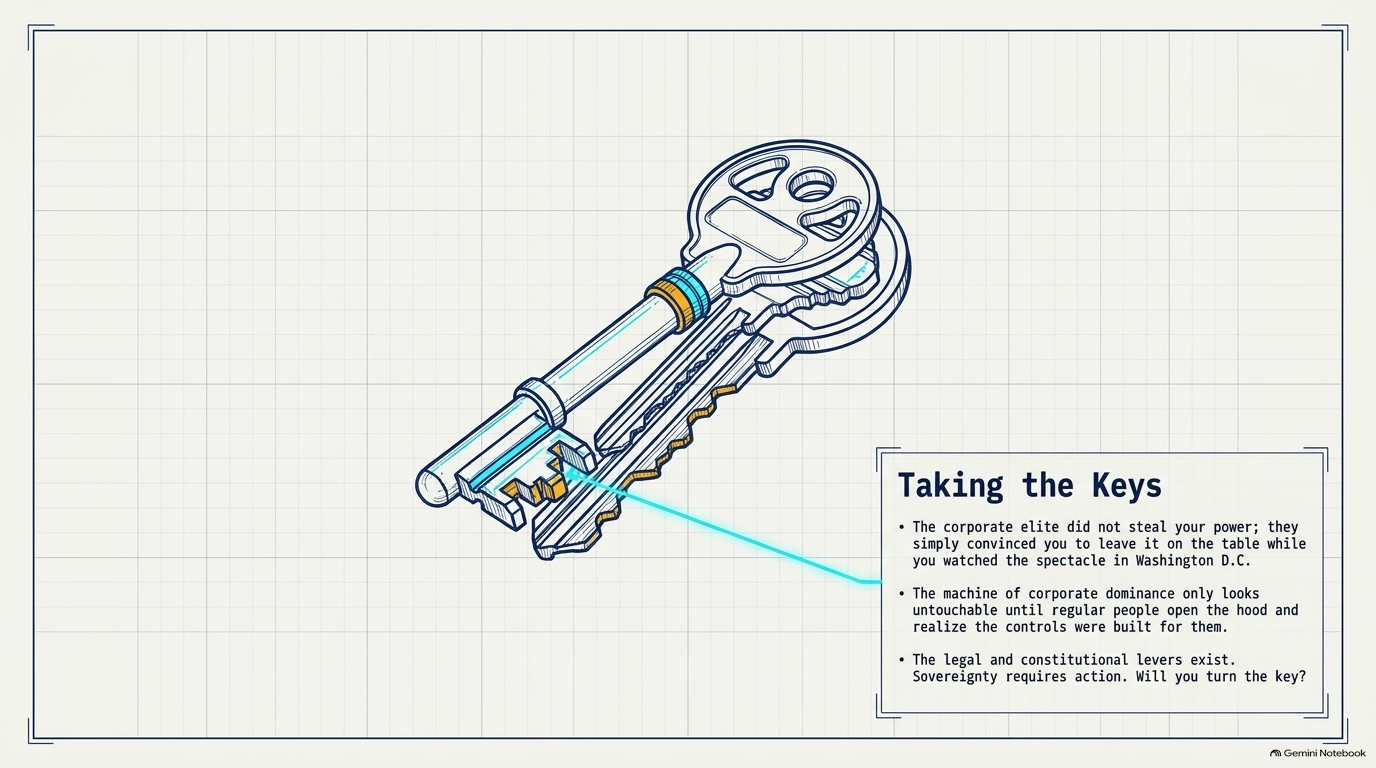
Real civic power does not lie in passive, national spectator politics; it is embedded in the structural levers engineered directly into local governments, administrative laws, and state constitutions.
Key Takeaways
Mechanics Over Aesthetics: Standard civics often teaches obedience to structure, hiding how power is actually contested and weaponized.
Systemic Analysis: Economic distress is driven by policy choices and structural design, not personal moral failure.
Inverted Sovereignty: Under the U.S. Constitution, citizens hold primary authority; elected officials act as temporary fiduciaries.
The 10th Amendment Advantage: Organized local groups hold significant leverage over local councils, school boards, and county commissions compared to federal lobbying channels.
Direct Action Levers: Ballot initiatives, recall elections, APA public comment trails, and budget audits provide actionable mechanisms to challenge captured authority.
Disclaimer:
With the access to AI reading the news, watching movies and reading books opens up a new world. I have had various family members live to the age of 100 and I ask them what have they learned from their lives and they do not have awareness of what they journey means. These two areas fit with this idea I had. Having chats with AI on topics of thought and documenting them. I call this "Thoughts in the dark".
I am aware I do not have the answers only questions.