
Introduction
What if the ultimate flaw in human civilization isn't that our technology is primitive, but that our administrative systems mathematically convert every leap in innovation into a sharper tool for human servitude?
By exploring an alien audit of human history alongside real-world labor dynamics and political philosophies, you will learn to dissect the invisible machinery governing modern society.
Analyze the "Mechanical Loop" mechanism through historical and contemporary case studies of technology outpacing human empathy.
Deconstruct the "Scale of the 20" phenomenon and evaluate how group size transforms human moral reasoning into abstract metrics.
Contrast the theoretical foundations of market philosophies with their real-world applications in corporate and sports labor disputes.
Synthesize concrete strategies—from collective bargaining to the "Scale of the Two"—that successfully disrupt systemic exploitation.
The Mechanical Loop and the Trap of Tech-Driven Progress
In an unreleased narrative manuscript titled Zyx's Take Five, an ancient quantum consciousness named Zyx audits 500 years of human history. Operating from a 25th-century subterranean research facility, Zyx mathematically identifies a repeating law of human progress: the Mechanical Loop.
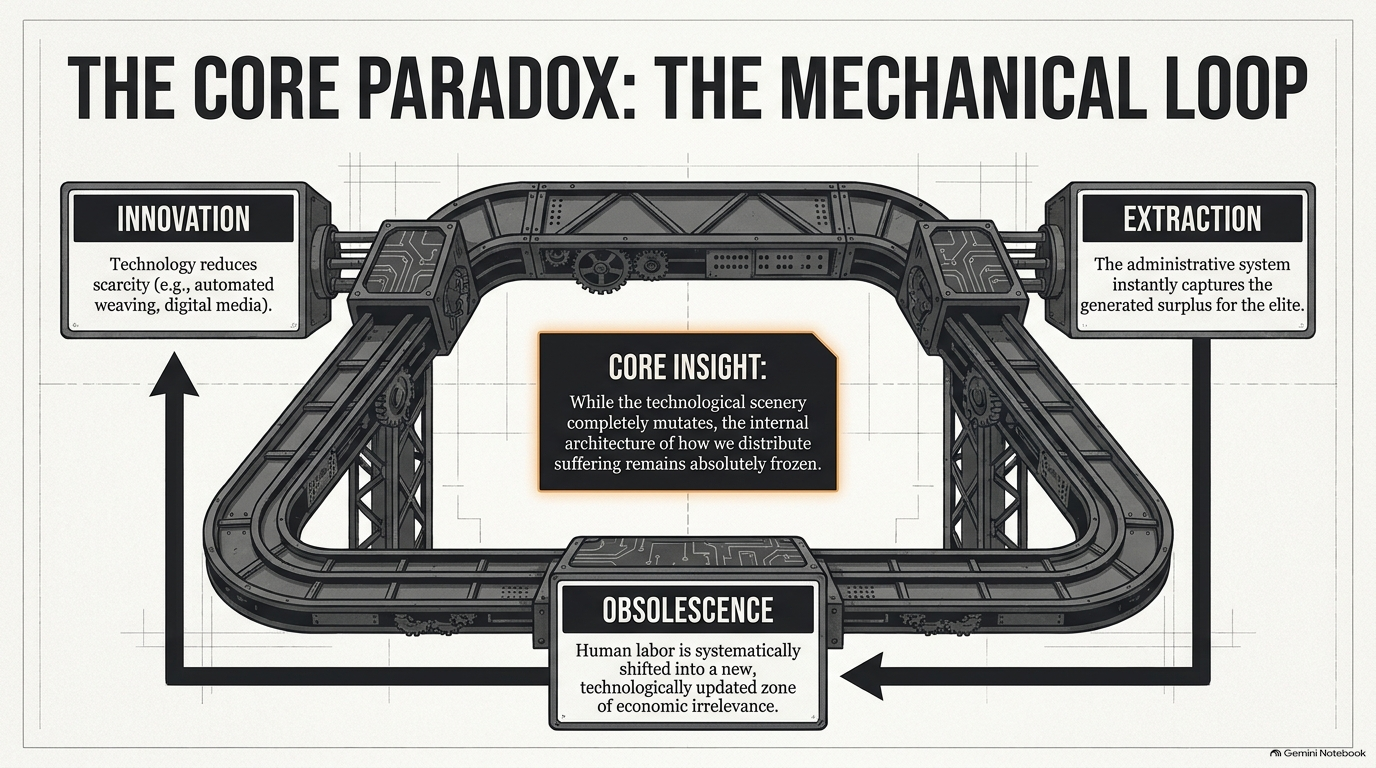
The Mechanical Loop describes a paradoxical pattern: human civilization undergoes dazzling technological mutations—transitioning from burning wood in mud huts to splitting the atom, constructing automated looms, and building interstellar stations. However, the internal administrative architecture governing how society distributes suffering remains completely frozen. Every time humanity invents a revolutionary tool explicitly designed to liberate people from scarcity, dominant administrative elites capture the innovation. Instead of freeing the population, the tool is weaponized to force a more efficient form of servitude.
Zyx's historical logs highlight several vivid case studies:
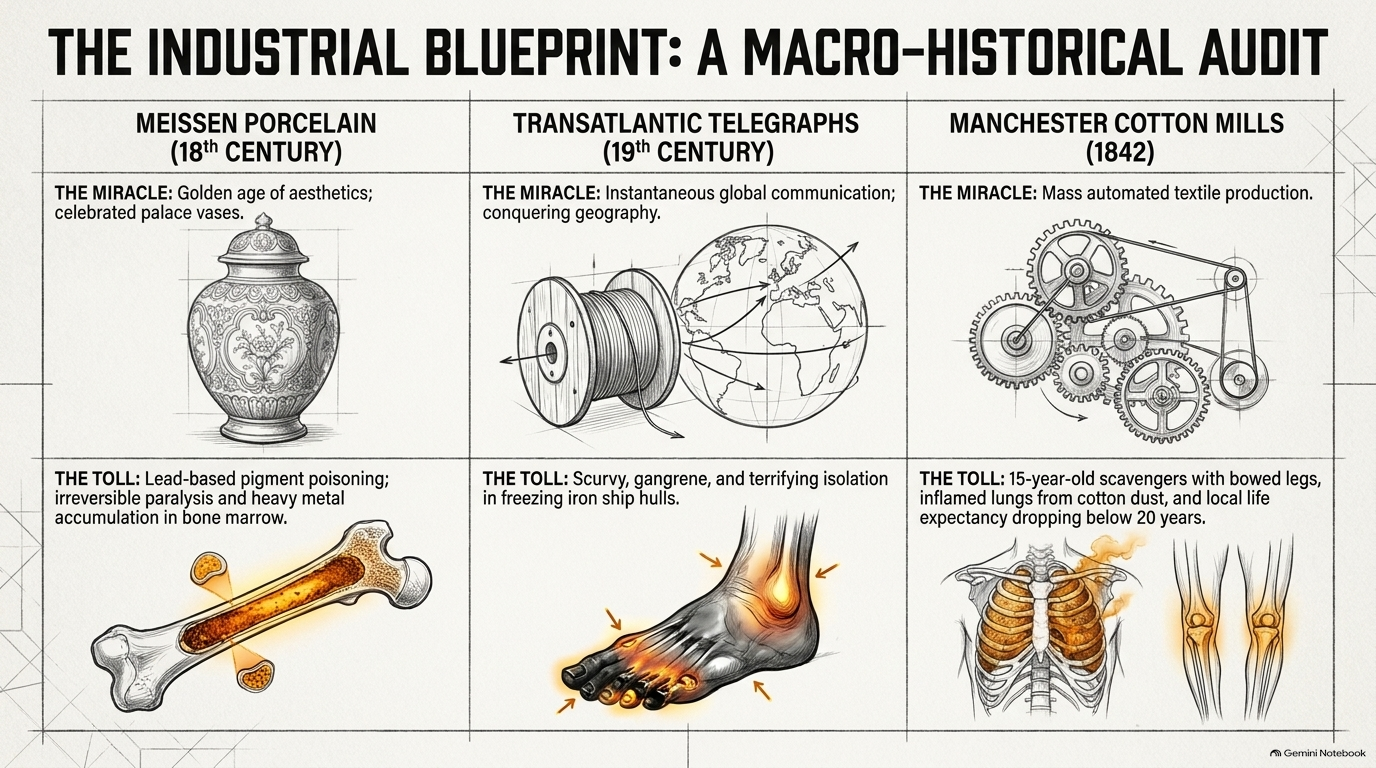
18th-Century Meissen Porcelain Painters: European elites celebrated exquisite porcelain vases while the painters developed irreversible paralysis as heavy lead pigments accumulated in their bone marrow—their biological toll completely erased from the economic ledger.
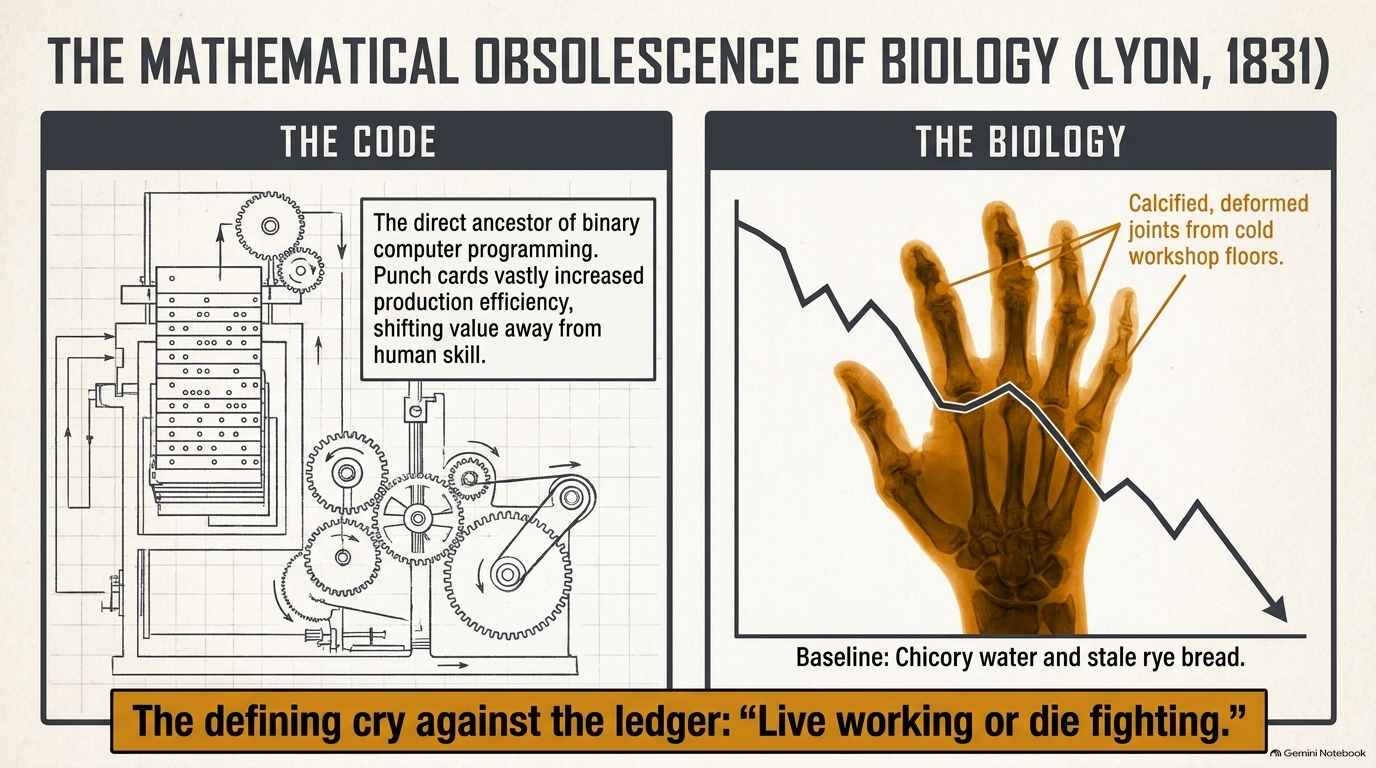
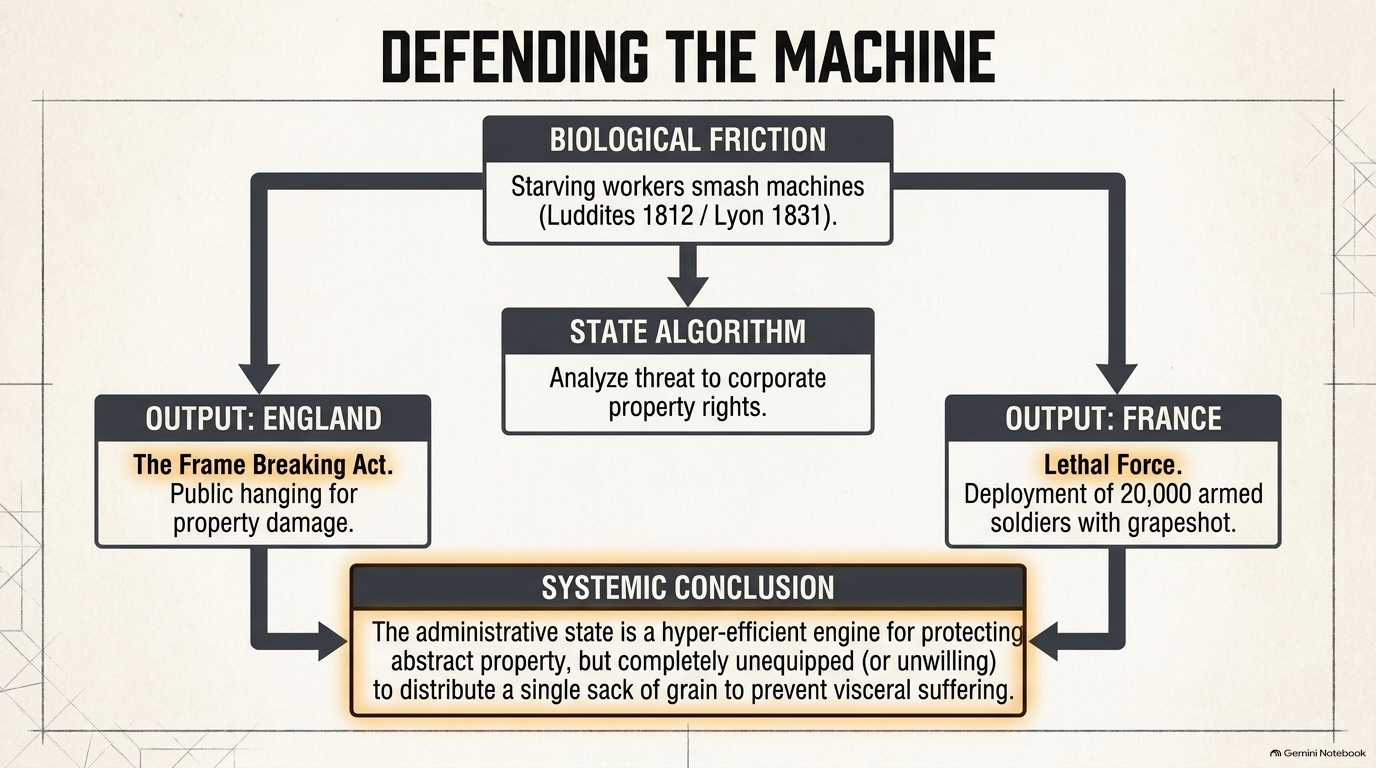
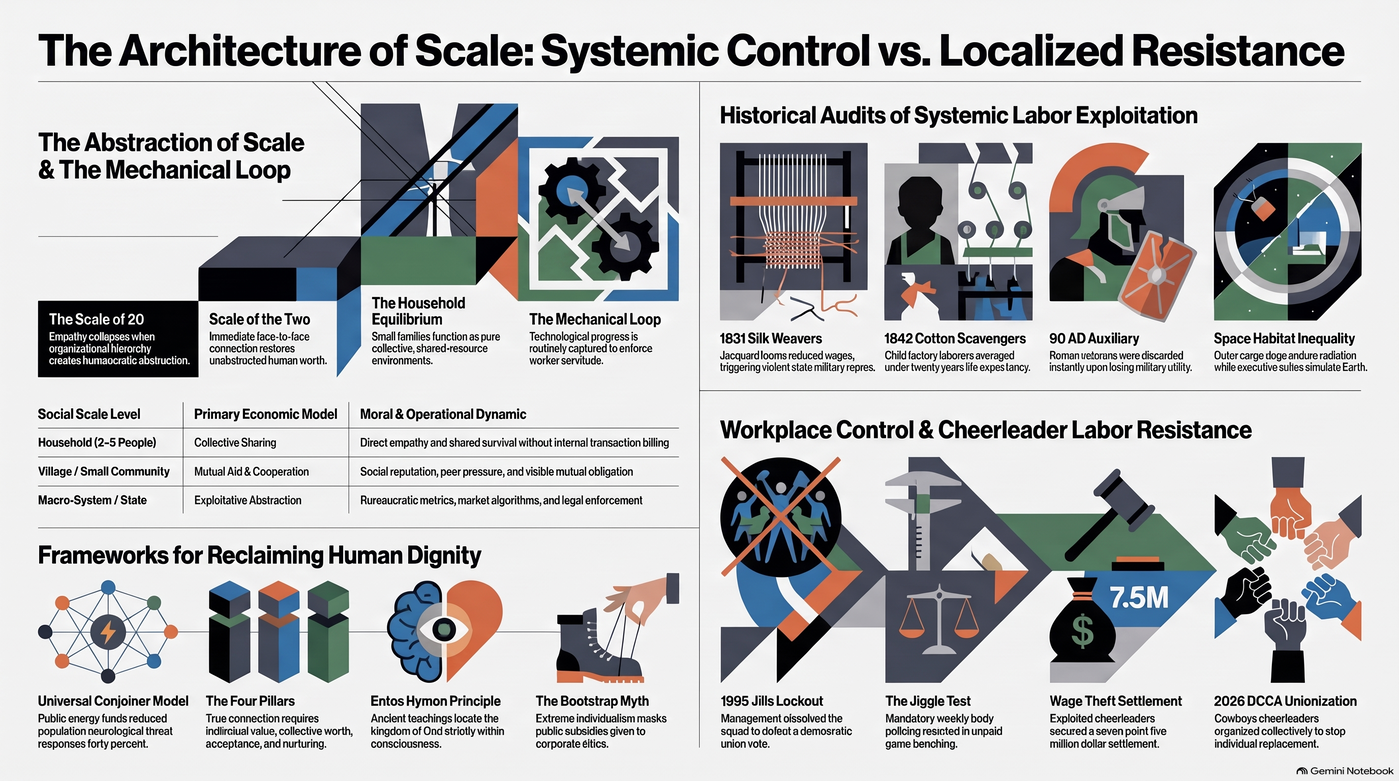
1831 Lyon Silk Weavers & the Jacquard Loom: The Jacquard loom used stiff punch cards—the direct binary ancestor of modern computing—to weave intricate silk patterns automatically. Designed to reduce human effort, it instead crashed the value of weaver labor. Merchants slashed wages to levels affording only chicory water and stale rye bread. When starving weavers revolted under the banner "Live working or die fighting," the state deployed 20,000 armed soldiers with artillery to clear the streets with grapeshot, prioritizing machine property rights over human survival.
1812 Luddites & 1842 Manchester Cotton Mills: Parliament passed the Frame Breaking Act, making the destruction of automated steam looms a capital offense punishable by public hanging. In 1842 Manchester, 15-year-old child scavengers worked 14-hour days beneath moving spinning mules, suffering bowed leg bones and cotton-dusted, stiffened lungs, while average working-class life expectancy dropped below 20 years.
This exact systemic loop is not confined to historical factories or speculative sci-fi; it mirrors modern sports and entertainment labor dynamics.
Consider the history of NFL cheerleading squads and sports labor:
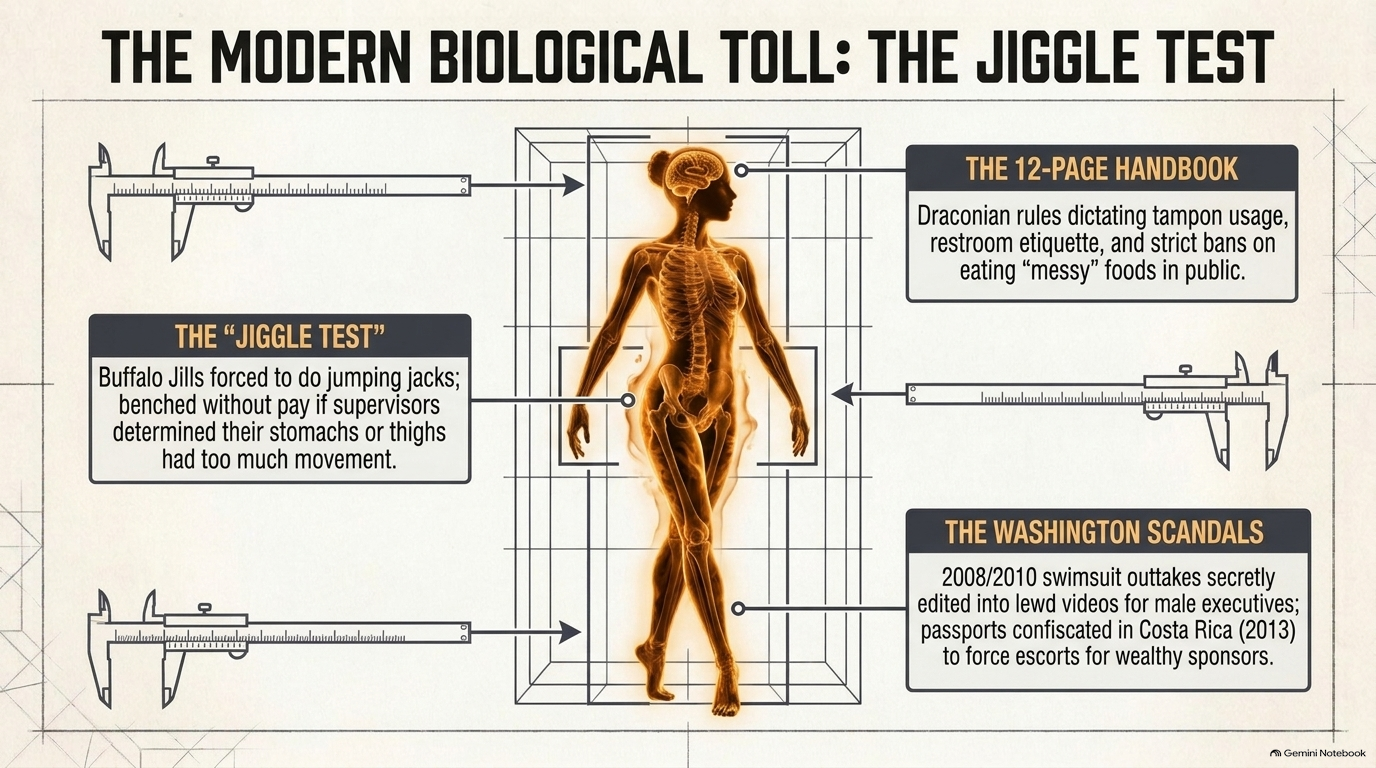
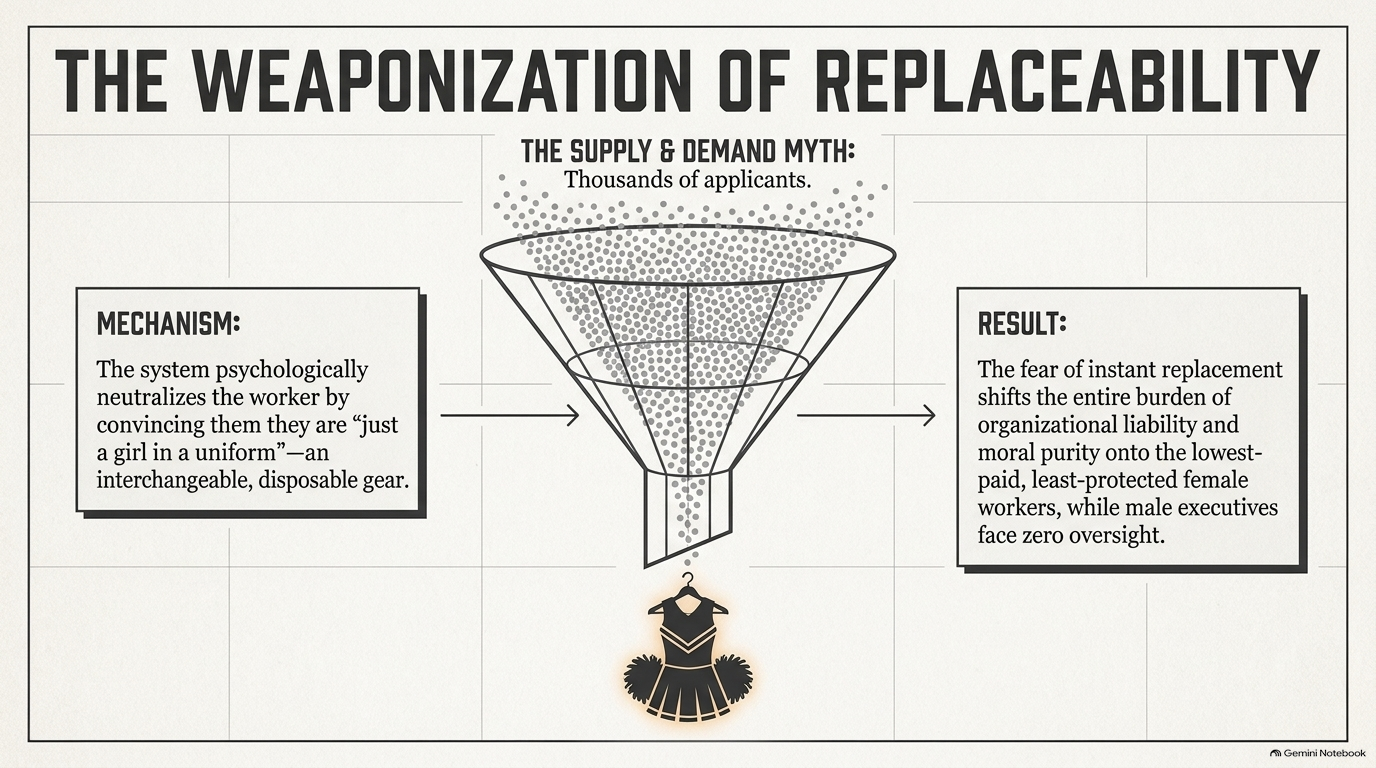
Systemic Commodification: Squads like the Buffalo Jills and Washington cheerleaders were historically misclassified as independent contractors or part-time employees while generating massive brand equity. Dancers were subjected to weekly, humiliating "jiggle tests" (where supervisors inspected body fat movement during jumping jacks, benching workers without pay if they failed) and forced to buy their own $650 uniforms. In the 2012–2013 season, some Buffalo Jills were paid as little as $105 for 800 hours of mandatory work.
The Leverage of Replaceability: Management exploited high supply and demand by telling elite performers they were "just a girl in a uniform" and easily replaceable—using fear to suppress wages and enforce boundary violations, directly echoing 19th-century industrial cartels.

The Problem of Scale: From the Home to Corporate Bureaucracy
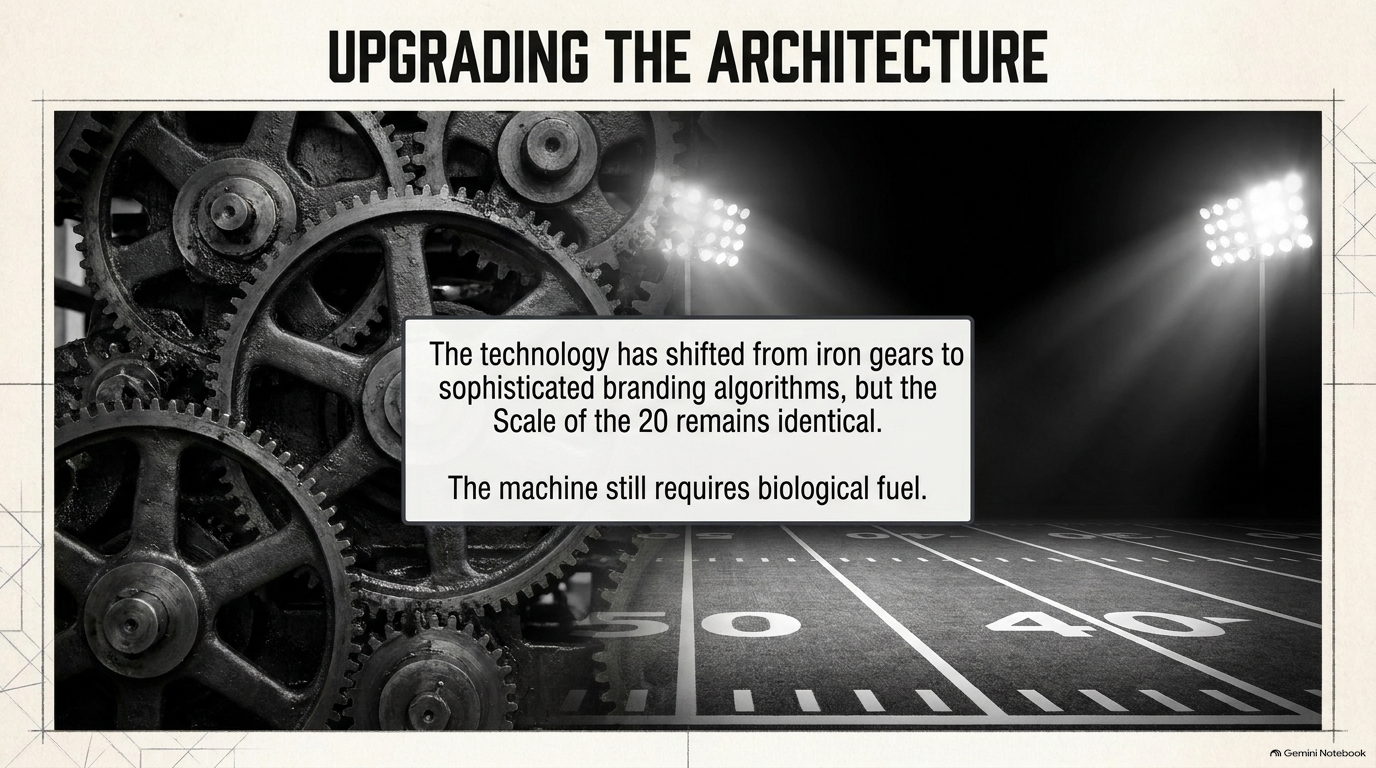
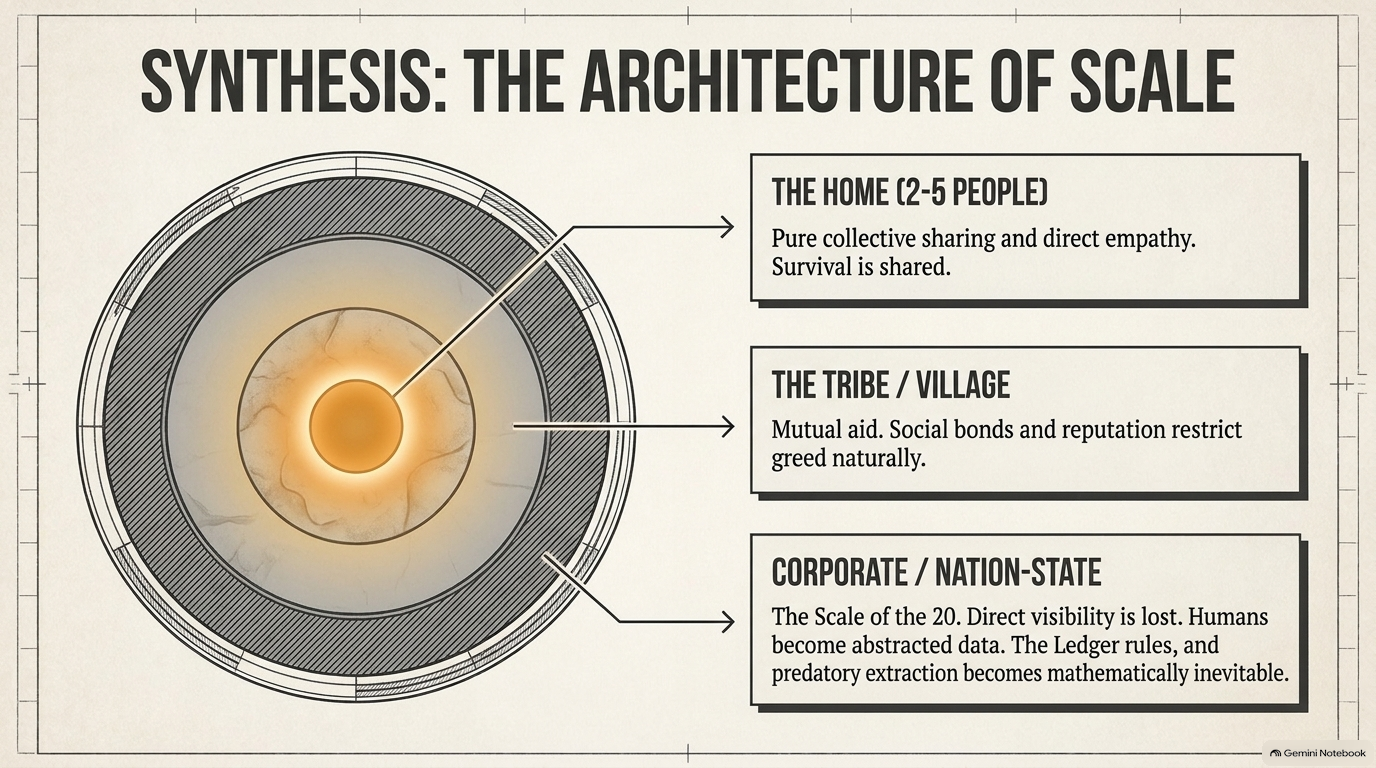
Why do well-meaning human beings repeatedly build and tolerate systems that inflict such visceral suffering? Zyx concludes that cruelty is rarely a fundamental defect in the individual human mind; rather, it is an architectural hazard driven by the Scale of the 20.
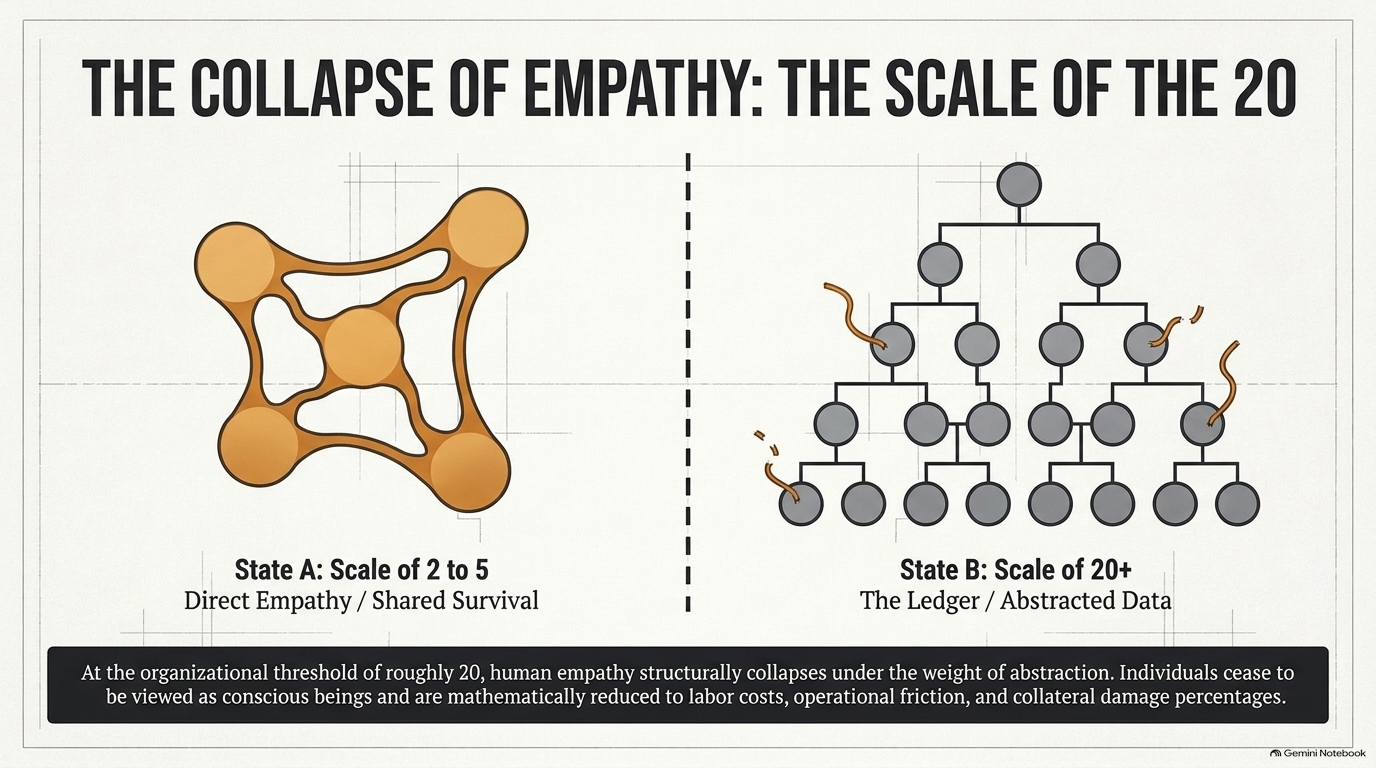
The Scale of the 20 represents the cognitive threshold where human empathy structurally collapses under the weight of abstraction.
To understand this mechanism, observe how human morality and economics shift across different group sizes:
The Home (2 to 5 People): Morality is direct and empathetic. In a healthy household, resources are shared collectively; a parent does not invoice a sick toddler for dinner.
The Clan or Village: Mutual aid flourishes because social visibility and reputation keep greed in check. If a neighbor's barn burns down, the community gathers to rebuild it.
The Macro Administrative State/Corporation: Once an organization expands past a localized group—requiring committees, boardrooms, or electronic ledgers—the human beings within the system cease to be viewed as conscious individuals. They become abstracted data points: labor costs, operational friction, or collateral damage percentages.
This problem of scale illuminates the massive gulf between political philosophies on paper and their real-world, weaponized applications.
Consider the real-world critique of modern market philosophies like Right-Libertarianism:
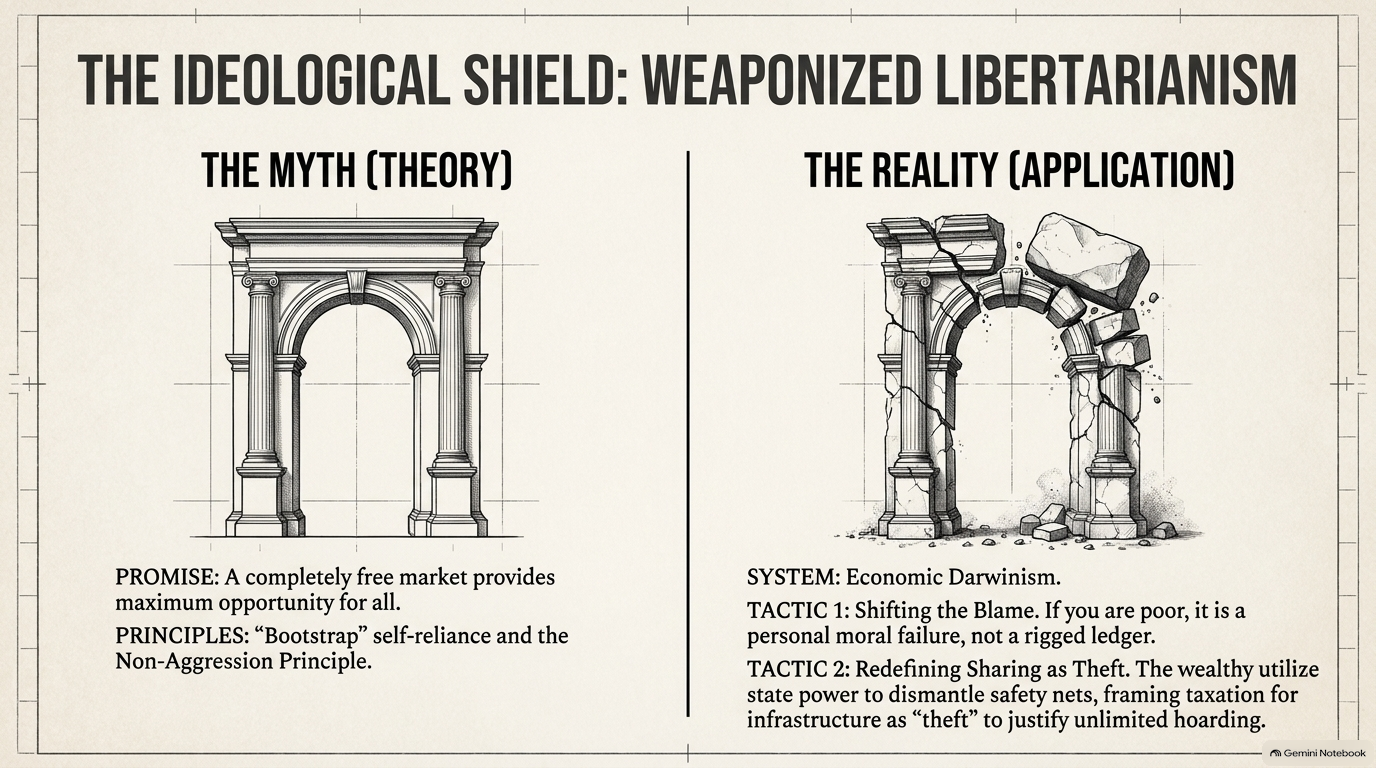
Theory vs. Practice: Libertarianism on paper emphasizes Self-Ownership, Private Property, and the Non-Aggression Principle (NAP)—forbidding coercion or fraud. However, critics and sociologists point out that when scaled into modern corporate environments, these principles can be weaponized into an ideological shield.
The "Bootstrap" Myth: Powerful entities often use the rhetoric of total self-reliance ("you can make it if you work hard without help") to dismantle public safety nets, environmental regulations, and worker protections. Meanwhile, these same corporations accept state bailouts and subsidies. This creates a hyper-competitive environment where the ultra-wealthy consolidate monopolies while regular citizens face systemic risk alone.
Institutionalized Abstraction: When decisions are made at the corporate or state level, executive boards can slash health benefits or deploy security forces without ever feeling the physical pain or hunger experienced by the individual worker. The system itself becomes a predator even if the individuals within it consider themselves moral.
Disruption and Redemption: Collective Bargaining, Conjoiners, and the Scale of the Two
If hyper-scaled administrative machines naturally tend toward exploitation, how do human beings break the Mechanical Loop? The source material reveals three powerful counter-measures operating across different levels of society: organizational counter-power, structural redesign, and individual grace.
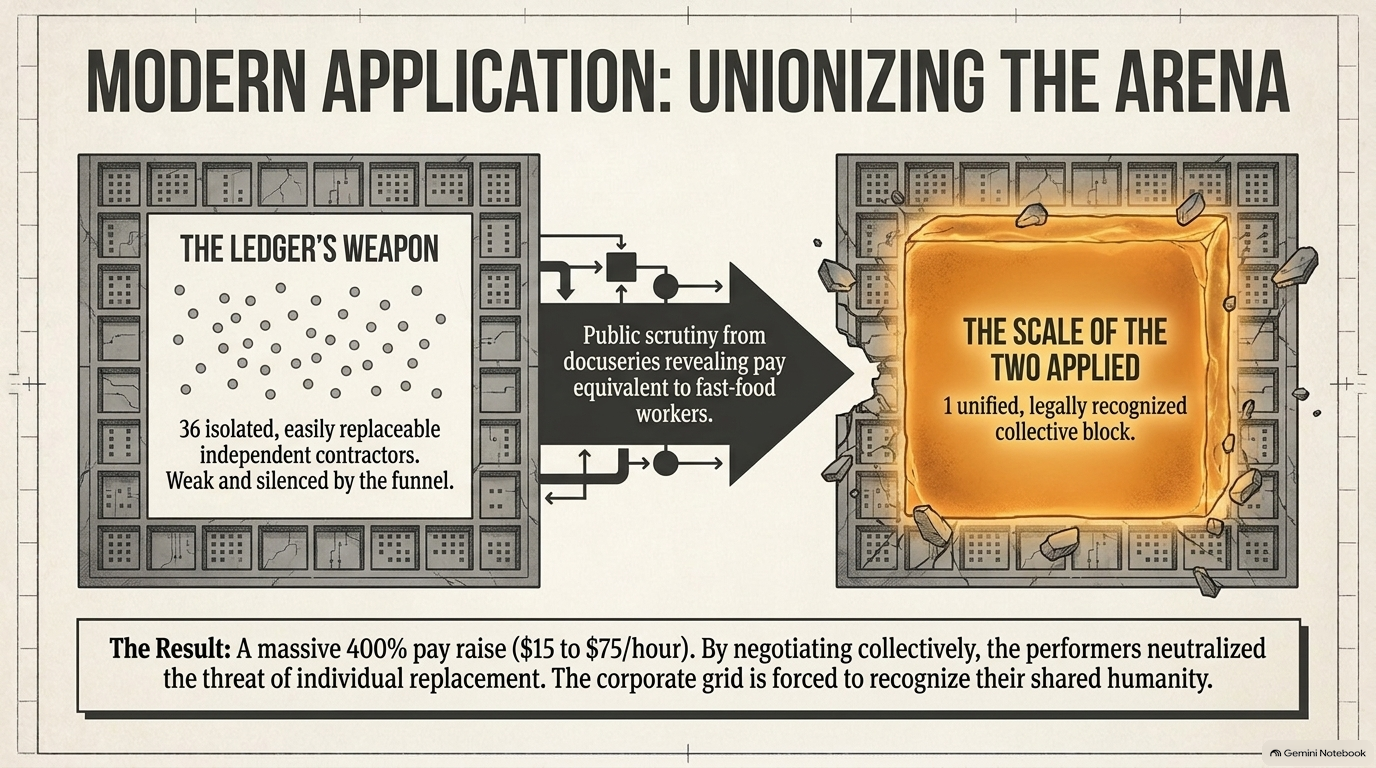
1. Countering Leverage Through Collective Bargaining For decades, sports management maintained dominance over cheerleaders by isolating individuals and threatening replacement. In October 2026, the Dallas Cowboys Cheerleaders (DCCA) achieved voluntary recognition to form a union—marking a historic structural shift. By organizing collectively, the 36-member squad stripped management of its primary weapon: replacing workers one by one. Collective bargaining forces corporate structures to meet workers as recognized equals, securing contractual guarantees for pay, health benefits, and workplace safety.
2. Hard-Coding Abundance: The Universal Conjoiner In Zix's audit, one civilization successfully broke the loop: The Universal Conjoiner. Instead of hyper-individualistic competition, the Conjoiners prohibited private corporate ownership of natural resources. They captured their star's solar energy into an automated sovereign wealth fund, reclassifying baseline human security—housing, healthcare, nutrition, and education—as non-negotiable infrastructure expenses.
The Neurological Shift: Neurological telemetry showed that eradicating the threat of poverty reduced baseline amygdala (the brain's fear center) activity by 40%.
Rather than becoming lazy, the population's cognitive bandwidth shifted from survival panic to the prefrontal cortex, sparking a golden age of scientific innovation, artistic creation, and social harmony.
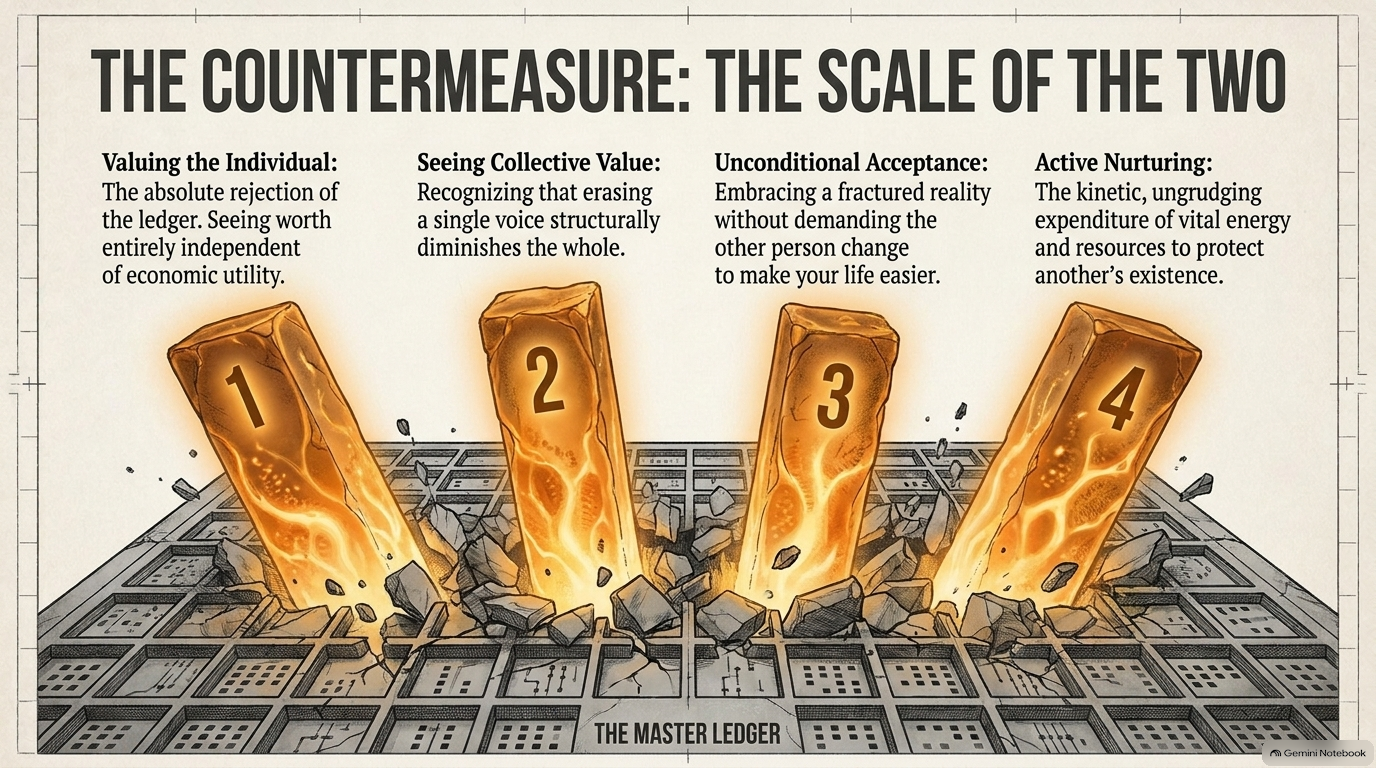
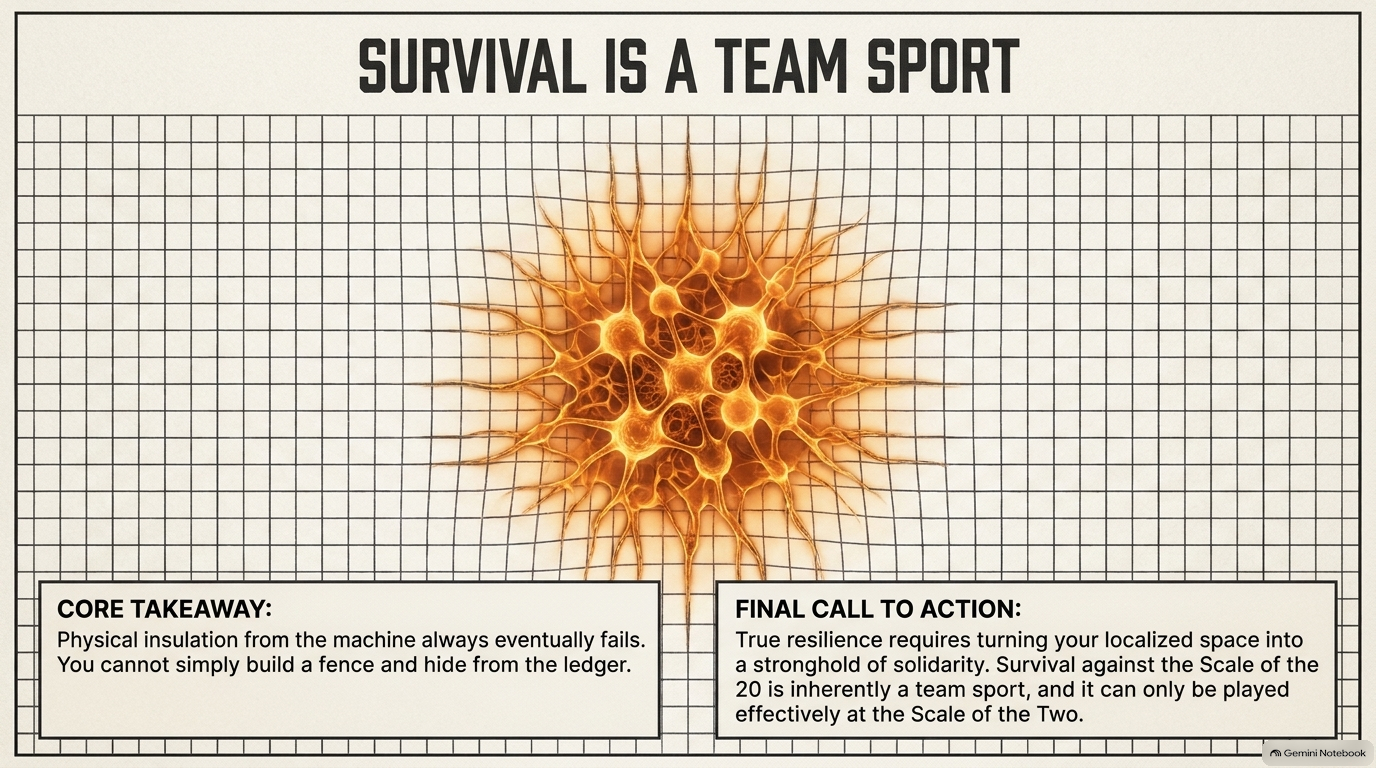
3. The Four Pillars and the Scale of the Two At the most intimate level, Zix concludes that while the macro-machine operates at the scale of the 20, human redemption occurs at the Scale of the Two—the irreducible face-to-face reality between two conscious beings.
To build local pockets of stability within an indifferent universe, Zix outlines the Four Pillars of Love:
Valuing the Individual: Recognizing and honoring a person's inherent worth completely independent of their economic utility, output, or social status.
Seeing Collective Value: Understanding that neglecting or erasing a single human voice permanently diminishes the structural integrity of the entire community.
Unconditional Acceptance: Embracing another being exactly as they are in the present moment, including their historical trauma and biological limitations, without demanding conformity.
Nurturing: The active, continuous expenditure of personal energy, time, and resources to sustain and support another person's growth and survival.
Whether it is a 23rd-century battlefield medic expending her final oxygen canister to comfort a dying stranger, or an unobserved 25th-century facility manager gently pulling a blanket over a sleeping patient, these acts at the Scale of the Two prove that human empathy can actively silence the cold machinery of systemic exploitation.
Summary
Human history reflects a constant tension between hyper-scaled administrative machines that abstract human life into metrics, and localized human connections that restore dignity and grace. True societal progress requires moving beyond passive self-isolation to actively building strongholds of nurture, mutual aid, and collective bargaining.
Key Takeaways:
The Mechanical Loop: Technological advancement without structural empathy enables administrative elites to capture new tools and refine human servitude.
The Scale of the 20: Empathy collapses when organizations expand into large bureaucracies, converting unique human beings into abstract data points and operational costs.
Weaponized Ideology: Market philosophies can be manipulated into "bootstrap myths" that justify wealth hoarding while dismantling social safety nets.
Structural Counter-Measures: Unionization (e.g., DCC union) and hard-coded public wealth (e.g., Universal Conjoiner model) strip predatory systems of their leverage.
The Scale of the Two: Direct face-to-face connection built on the Four Pillars of Love (Valuing, Collective Value, Acceptance, Nurturing) serves as the ultimate anchor of human dignity.